Why most space telescope images could be blurry in next decade?
The advent of space telescopes has revolutionized our understanding of the universe, allowing us to capture stunning images of distant galaxies, stars, and planets. However, a recent NASA-linked study has raised concerns that the increasing number of satellites in Earth’s orbit could contaminate many space-telescope images in the coming decade. The study warns that satellite reflections could make it difficult for telescopes to capture clear images of the universe, potentially leading to a significant loss of astronomical data.
The problem lies in the fact that many satellites, particularly those in low-Earth orbit, are designed to reflect sunlight back to Earth. This reflection can cause a phenomenon known as “satellite trailing,” where the reflected light creates a bright streak across an image captured by a space telescope. The effect is similar to when a plane flies across the field of view of a telescope, leaving a trail of light behind it. However, whereas planes are relatively rare and can be easily accounted for, satellites are becoming increasingly common, and their reflections could potentially overwhelm the images captured by space telescopes.
According to the study, some telescopes may see more than 96% of exposures affected if planned megaconstellations launch in the coming years. Megaconstellations refer to large groups of satellites that are launched into orbit to provide global internet coverage. Companies like SpaceX, Amazon, and OneWeb are planning to launch thousands of satellites in the next few years, which could significantly increase the amount of satellite reflections in Earth’s orbit.
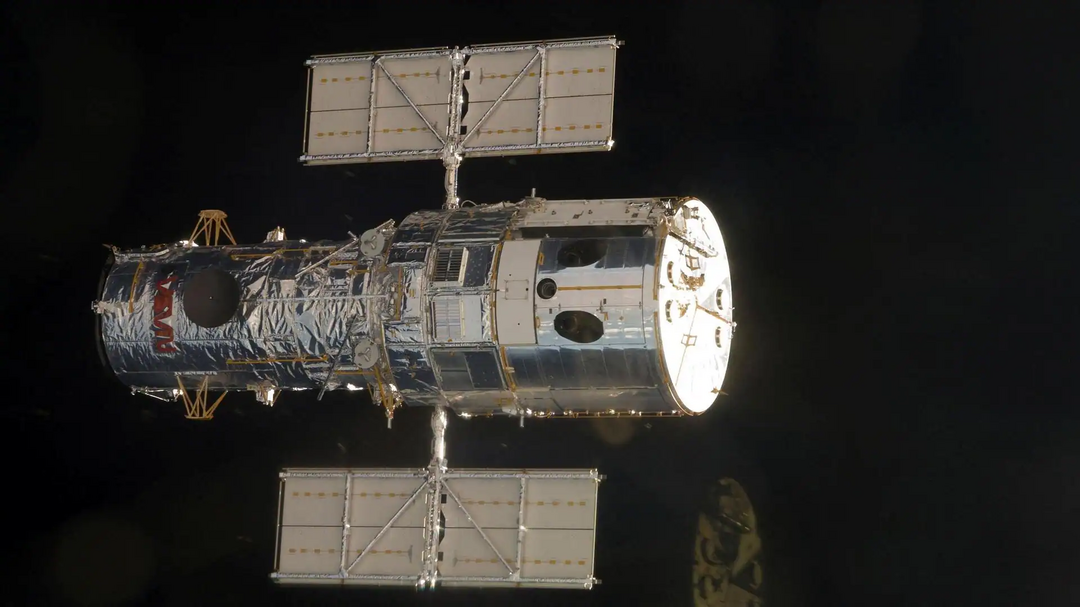
The impact of satellite reflections on space telescopes will vary depending on the location and design of the telescope. Telescopes like the Hubble Space Telescope, which is in a higher orbit and has a narrower field of view, may face fewer problems, with around 40% of exposures affected. However, other telescopes, such as the Wide Field Infrared Survey Telescope (WFIRST), which is designed to capture wide-field images of the universe, may be more severely impacted.
The consequences of satellite reflections on space telescope images could be significant. Astronomical events, such as supernovae or gamma-ray bursts, could be lost when satellite trails cross critical observations. This could lead to a significant loss of scientific data and potentially hinder our understanding of the universe. Furthermore, the increased noise and distortion caused by satellite reflections could make it more difficult for scientists to analyze images and extract meaningful information from them.
The study’s findings have sparked concerns among astronomers and scientists, who are calling for greater regulation and coordination between satellite operators and the astronomical community. One potential solution is to design satellites with lower reflectivity, which could reduce the impact of satellite trailing on space telescope images. Another approach could be to implement mitigation strategies, such as scheduling observations during times when satellites are less active or using software to remove satellite trails from images.
The issue of satellite reflections is not new, and astronomers have been aware of the problem for several years. However, the increasing number of satellites in Earth’s orbit has brought the issue to the forefront of the astronomical community. As the number of satellites continues to grow, it is essential that scientists, policymakers, and industry leaders work together to find solutions to this problem.
In conclusion, the increasing number of satellites in Earth’s orbit could contaminate many space-telescope images in the coming decade, potentially leading to a significant loss of astronomical data. The study’s findings highlight the need for greater regulation and coordination between satellite operators and the astronomical community. By working together, we can find solutions to this problem and ensure that space telescopes continue to capture stunning images of the universe.
The study’s warnings are a reminder that the increasing use of space is not without its challenges. As we continue to explore and utilize space, we must be mindful of the potential impacts on our ability to study the universe. By addressing the issue of satellite reflections, we can ensure that future generations of scientists and astronomers are able to continue exploring the cosmos with clarity and precision.
News Source: https://www.newsbytesapp.com/news/science/satellite-reflections-could-ruin-over-95-of-space-telescope-images/story
About the Author