Why most space telescope images could be blurry in next decade?
The universe has always been a subject of fascination for humans, with scientists and astronomers constantly seeking to explore and understand its vast expanse. Space telescopes have been instrumental in this pursuit, capturing stunning images of celestial bodies and events that have helped us learn more about the cosmos. However, a recent NASA-linked study has raised concerns that the next decade may see a significant degradation in the quality of space telescope images. The culprit behind this potential problem is not a technical glitch or a lack of funding, but rather the growing number of satellites in Earth’s orbit.
The study warns that satellite reflections could contaminate many space-telescope images in the coming decade, potentially affecting up to 96% of exposures for some telescopes. This is a staggering figure, and it has significant implications for the field of astronomy. The main culprits behind this issue are the planned megaconstellations of satellites, which are being launched by companies like SpaceX, Amazon, and OneWeb. These constellations are designed to provide global internet coverage, but they also pose a significant threat to the quality of space telescope images.
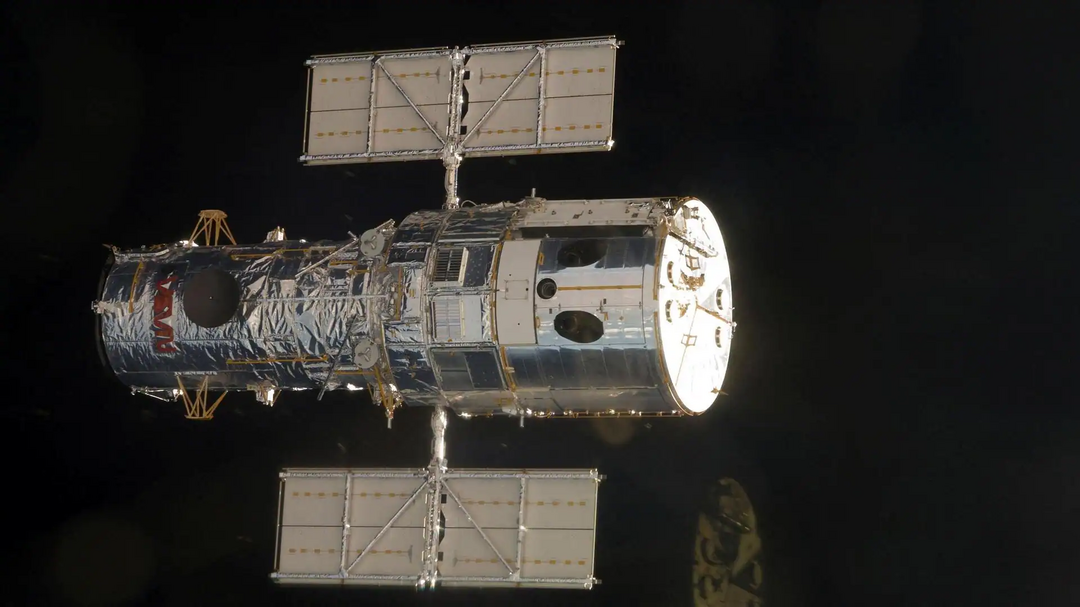
The problem arises when the satellites reflect sunlight, which can then be captured by space telescopes. This can create streaks or trails in the images, making it difficult or impossible to obtain accurate data. The issue is not limited to a specific type of telescope, as even the Hubble Space Telescope, one of the most iconic and successful space telescopes, is expected to face significant challenges. According to the study, Hubble may see around 40% of its exposures affected by satellite reflections.
The impact of satellite reflections on space telescope images is not just a matter of aesthetics; it has significant scientific implications. Astronomical events, such as supernovae or gamma-ray bursts, are often brief and fleeting, and they require accurate and timely observations to be properly studied. If satellite trails cross critical observations, these events could be lost, and the data collected could be compromised. This would not only hinder our understanding of the universe but also undermine the significant investments made in space telescopes and astronomical research.
The study’s findings are based on simulations that take into account the planned launch of thousands of satellites in the next decade. The researchers used data from the European Space Agency’s Gaia spacecraft to model the reflections from the satellites and estimate their impact on space telescope images. The results are alarming, and they highlight the need for urgent action to mitigate the effects of satellite reflections.
So, what can be done to address this issue? One possible solution is to implement strategies to reduce the reflectivity of satellites, such as using specialized coatings or designing the satellites to minimize their reflective surfaces. Another approach is to develop algorithms that can remove satellite trails from images, although this can be a complex and challenging task.
The study’s authors also suggest that policymakers and regulatory bodies need to take a more proactive role in addressing the issue of satellite reflections. This could involve establishing guidelines or regulations for the launch of satellites, as well as encouraging companies to adopt best practices for minimizing the impact of their satellites on space telescope images.
In conclusion, the next decade may see a significant degradation in the quality of space telescope images due to satellite reflections. This is a concerning trend, and it has significant implications for the field of astronomy. While there are potential solutions to this problem, it will require a concerted effort from scientists, policymakers, and industry leaders to address the issue. As we continue to explore and understand the universe, it is essential that we take steps to protect the integrity of our observations and ensure that our space telescopes can continue to capture the stunning images that have inspired generations of scientists and astronomers.
About the Author