Why most space telescope images could be blurry in next decade?
The advent of space telescopes has revolutionized our understanding of the universe, allowing us to capture stunning images of distant galaxies, stars, and planets. However, a recent study linked to NASA has raised concerns that the next decade may see a significant decline in the quality of space telescope images. The culprit behind this potential degradation is not a technical glitch or equipment failure, but rather the increasing number of satellites in Earth’s orbit. According to the study, satellite reflections could contaminate many space-telescope images, rendering them blurry and potentially useless for scientific research.
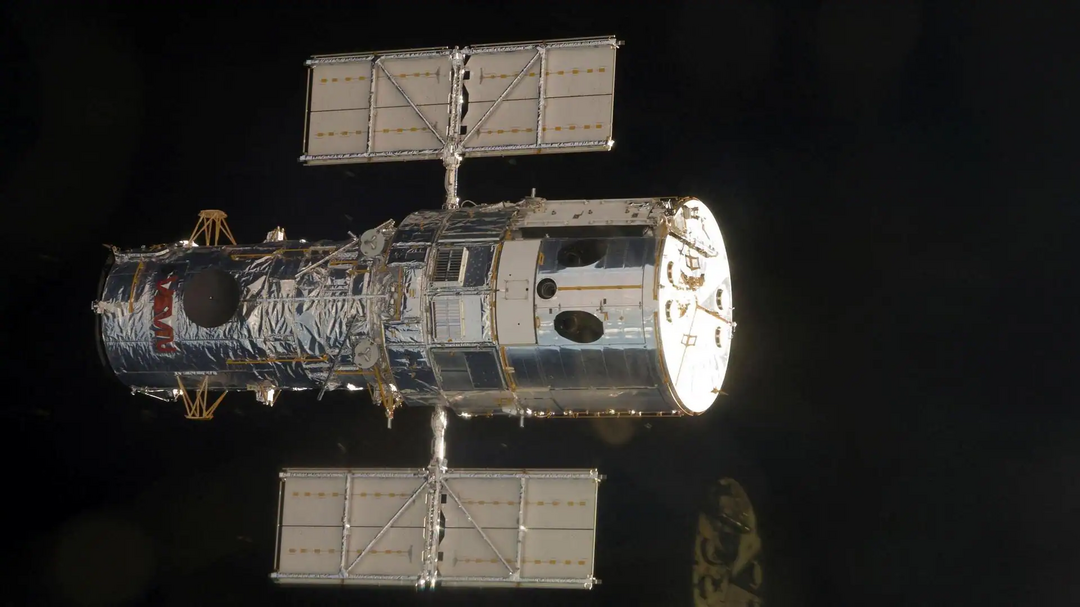
The problem lies in the fact that many private companies, such as SpaceX and Amazon, are planning to launch massive constellations of satellites into Earth’s orbit. These satellites will be designed to provide global internet coverage, but they will also reflect sunlight, potentially interfering with the observations of space telescopes. The study warns that some telescopes may see more than 96% of exposures affected by satellite trails, while even the Hubble Space Telescope, one of the most iconic and successful space telescopes, would face about 40% contamination.
The implications of this phenomenon are far-reaching and alarming. Astronomers rely on space telescopes to study celestial events, such as supernovae, black holes, and the formation of galaxies. If satellite reflections contaminate these images, scientists may miss critical observations, and our understanding of the universe may be hindered. For instance, if a satellite trail crosses the field of view of a telescope during a rare astronomical event, such as a gamma-ray burst, the observation may be rendered useless.
The study’s findings are based on simulations of the expected number of satellites in Earth’s orbit over the next decade. The researchers used data from the Federal Communications Commission (FCC) to estimate the number of satellites that will be launched by private companies. They then simulated the reflections from these satellites and their potential impact on space telescope images. The results are disturbing, with some telescopes facing contamination levels of over 90%.
The affected telescopes will not be limited to those in Earth’s orbit. Even telescopes on the ground, such as the Atacama Large Millimeter/submillimeter Array (ALMA) in Chile, may be impacted by satellite reflections. The study warns that the contamination will be most pronounced during the summer months when the sun is higher in the sky, and the satellites are more reflective.
The researchers are cautioning that the astronomical community needs to take immediate action to mitigate the effects of satellite reflections. One possible solution is to coordinate the launch of satellites with the observations of space telescopes. By scheduling satellite launches during periods when telescopes are not observing critical events, the contamination can be minimized. Another solution is to develop new technologies that can remove satellite trails from images. However, these technologies are still in their infancy, and it may take several years to develop them.
The study’s findings have significant implications for the future of space astronomy. As private companies continue to launch satellites into Earth’s orbit, the risk of contamination will only increase. The astronomical community needs to work together with regulatory agencies and private companies to find solutions to this problem. Otherwise, the next decade may see a decline in the quality of space telescope images, and our understanding of the universe may be hindered.
In conclusion, the study’s warning that satellite reflections could contaminate many space-telescope images is a pressing concern for the astronomical community. The potential impact on our understanding of the universe is significant, and immediate action is needed to mitigate the effects of satellite reflections. As we continue to explore the universe, we must also ensure that our technological advancements do not hinder our ability to observe and study the cosmos.
News Source: https://www.newsbytesapp.com/news/science/satellite-reflections-could-ruin-over-95-of-space-telescope-images/story
About the Author