Ancient Chinese text helps to know more about Earth’s rotation
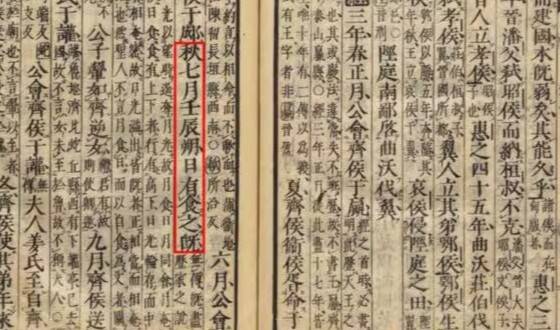
The study of the Earth’s rotation is a complex and fascinating field that has captivated scientists for centuries. Recently, a team of researchers has made a groundbreaking discovery that sheds new light on the Earth’s rotation speed, using an unlikely source: ancient Chinese texts. A paper published in The Astrophysical Journal Letters presents new data on the Earth’s rotation speed, which was calculated by analyzing ancient Chinese texts describing a solar eclipse that occurred in 709 BCE.
The solar eclipse in question is a significant event that was recorded by ancient Chinese astronomers, who meticulously documented celestial events in their texts. By studying these texts, researchers were able to recreate the conditions of the eclipse and calculate how the Sun would have appeared from the city of Qufu, which is located in the Shandong province of China. What they found was surprising: the total eclipse was not visible from Qufu, which suggests that the city was located about eight kilometers off from the path of totality.
This discovery may seem insignificant at first, but it has profound implications for our understanding of the Earth’s rotation. By analyzing the ancient Chinese texts and recreating the conditions of the eclipse, researchers were able to determine that the Earth rotates slower now than it did 2,700 years ago. This finding is a significant contribution to the field of astronomy, as it provides new insights into the Earth’s rotation and its variations over time.
The study of the Earth’s rotation is a complex field that involves the analysis of various celestial and terrestrial phenomena. The Earth’s rotation is not a constant phenomenon, but rather it varies over time due to a variety of factors, including the gravitational pull of the Moon and the Sun, as well as the movement of the Earth’s core. By studying the Earth’s rotation, scientists can gain valuable insights into the Earth’s internal structure, its magnetic field, and its interactions with the surrounding environment.
The use of ancient Chinese texts to study the Earth’s rotation is a novel approach that highlights the importance of interdisciplinary research. By combining astronomy, history, and anthropology, researchers were able to gain new insights into the Earth’s rotation and its variations over time. This approach also underscores the significance of preserving and studying ancient texts, which can provide valuable information about the past and its relevance to the present.
The discovery that the Earth rotates slower now than it did 2,700 years ago has significant implications for our understanding of the Earth’s internal structure and its evolution over time. It suggests that the Earth’s rotation has slowed down over the centuries, possibly due to the gravitational pull of the Moon and the Sun, as well as the movement of the Earth’s core. This finding also has implications for our understanding of the Earth’s magnetic field, which is generated by the movement of the Earth’s core.
The study of the Earth’s rotation is also relevant to our understanding of climate change and its effects on the Earth’s environment. The Earth’s rotation plays a crucial role in the distribution of heat around the globe, and changes in the Earth’s rotation can have significant effects on climate patterns. By studying the Earth’s rotation and its variations over time, scientists can gain valuable insights into the Earth’s climate system and its response to external factors.
In conclusion, the discovery that ancient Chinese texts can help us understand the Earth’s rotation is a significant breakthrough that highlights the importance of interdisciplinary research. By combining astronomy, history, and anthropology, researchers were able to gain new insights into the Earth’s rotation and its variations over time. This finding has significant implications for our understanding of the Earth’s internal structure, its magnetic field, and its interactions with the surrounding environment. As scientists continue to study the Earth’s rotation and its effects on the environment, we can gain a deeper understanding of the complex and fascinating processes that shape our planet.
About the Author