Govt announces maximum fares that airlines can charge amid IndiGo chaos
The Civil Aviation Ministry has taken a significant step to regulate the airline industry, particularly in the wake of the recent chaos caused by mass flight cancellations by IndiGo. In a bid to curb surge pricing and protect the interests of passengers, the ministry has imposed temporary fare ceilings across various routes. This move is expected to bring relief to travelers who have been facing exorbitant fares, especially during peak travel seasons.
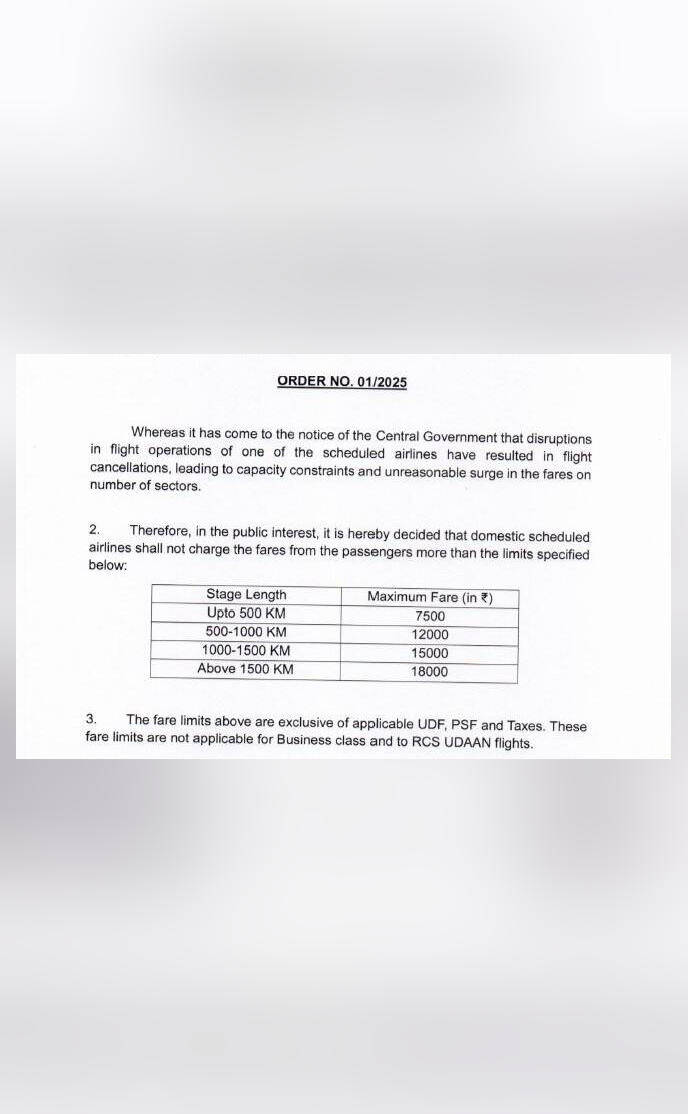
According to the new regulations, airlines will not be allowed to charge more than a certain maximum fare for flights across different distance slabs. For flights with a distance of up to 500km, airlines can charge a maximum fare of ₹7,500. This will apply to popular short-haul routes such as Delhi-Chandigarh, Mumbai-Pune, and Bangalore-Hyderabad, among others.
For flights with a distance between 500km and 1,000km, a maximum fare of ₹12,000 can be charged. This slab will cover a wide range of routes, including Delhi-Mumbai, Chennai-Bangalore, and Kolkata-Delhi, among others. These routes are some of the busiest in the country, and the fare ceiling will help to regulate prices and prevent airlines from taking advantage of passengers.
For flights with a distance above 1,500km, the maximum fare that can be charged is ₹18,000. This will apply to long-haul routes such as Delhi-Bangalore, Mumbai-Kolkata, and Chennai-Delhi, among others. These routes often see significant demand, especially during peak travel seasons, and the fare ceiling will help to keep prices in check.
The move to impose fare ceilings is a welcome step, particularly in the context of the recent chaos caused by IndiGo’s mass flight cancellations. The airline had canceled several flights due to a shortage of pilots, leaving thousands of passengers stranded. The cancellations had led to a surge in fares on other airlines, with some passengers being forced to pay exorbitant prices to reach their destinations.
The fare ceilings will help to regulate prices and prevent airlines from taking advantage of passengers during times of high demand. The move is also expected to promote competition among airlines, as they will be forced to operate within the prescribed fare slabs. This will ultimately benefit passengers, who will have access to more affordable and reliable air travel options.
The Civil Aviation Ministry’s decision to impose fare ceilings is a significant step towards regulating the airline industry. The move is expected to bring relief to passengers who have been facing exorbitant fares, particularly during peak travel seasons. The fare ceilings will also help to promote competition among airlines, leading to more affordable and reliable air travel options for passengers.
In recent years, the airline industry has seen significant growth, with more and more passengers taking to the skies. However, this growth has also led to concerns about surge pricing and the lack of regulation in the industry. The Civil Aviation Ministry’s move to impose fare ceilings is a welcome step towards addressing these concerns and promoting a more competitive and passenger-friendly airline industry.
The imposition of fare ceilings is also expected to have a positive impact on the tourism industry, which is a significant contributor to the country’s economy. By making air travel more affordable and accessible, the fare ceilings will help to boost tourism and promote economic growth.
In conclusion, the Civil Aviation Ministry’s decision to impose fare ceilings is a significant step towards regulating the airline industry and promoting competition among airlines. The move is expected to bring relief to passengers who have been facing exorbitant fares, particularly during peak travel seasons. With the fare ceilings in place, passengers can look forward to more affordable and reliable air travel options, which will ultimately benefit the economy and promote growth.
News source: https://x.com/NDTVProfitIndia/status/1997255961241919681
About the Author