Chidambaram blames duopoly model amid IndiGo flight crisis
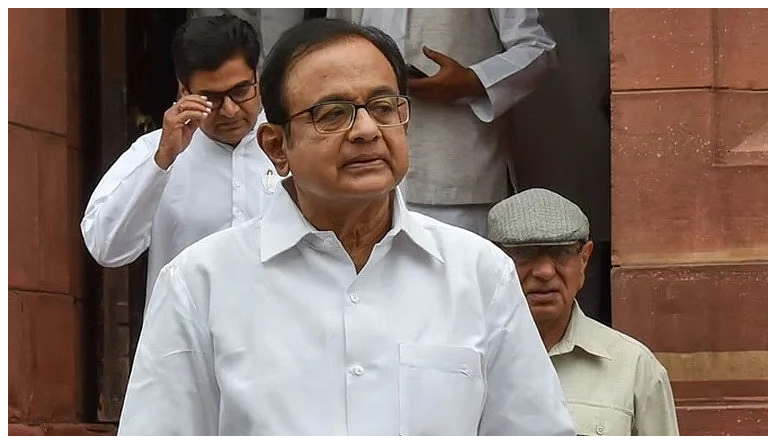
The recent chaos surrounding IndiGo flights has sent shockwaves throughout the country, with thousands of passengers left stranded due to cancellations and delays. Amidst this crisis, Congress leader P Chidambaram has come out in support of Rahul Gandhi’s statement that the “monopoly/duopoly model is ill-suited for a developing country” like India. Chidambaram’s comments have sparked a heated debate about the efficacy of the duopoly model in various sectors, including the airline industry.
According to Chidambaram, the duopoly model exists in many sectors, including the airline industry, where a few large players dominate the market, stifling competition and innovation. He argued that the liberalization and open economy policies adopted by the government are based on the principles of competition, which is essential for the growth and development of any industry. However, in the absence of competition, the consequences can be severe, as is evident in the current crisis faced by the airline industry.
The IndiGo flight crisis has exposed the vulnerabilities of the duopoly model, where a few large players, including IndiGo and other major airlines, have a stranglehold on the market. With limited competition, these airlines have been able to dictate prices, schedules, and services, often to the detriment of consumers. The lack of competition has also led to a lack of innovation, with airlines focusing more on expanding their market share rather than improving their services.
Chidambaram’s comments have been backed by many experts, who argue that the duopoly model is not suitable for a developing country like India, where the economy is still growing, and the population is increasingly becoming more aspirational. The duopoly model can lead to a lack of choice for consumers, who are forced to opt for services that may not be of the best quality or value for money. Moreover, the absence of competition can also lead to a lack of investment in infrastructure, research, and development, which is essential for the growth and development of any industry.
The government has taken note of the crisis and has ordered a probe into the matter. The Ministry of Civil Aviation has also announced relief steps, including the deployment of additional staff and equipment to manage the situation. However, many experts believe that these measures are only temporary and that a more permanent solution is needed to address the underlying issues that have led to the crisis.
One of the possible solutions is to encourage more competition in the airline industry by reducing barriers to entry and providing incentives to new players. This can be done by simplifying the regulatory framework, reducing taxes, and providing subsidies to new airlines. Additionally, the government can also consider implementing policies that promote competition, such as slot allocation, which can help to reduce the dominance of a few large players.
Another possible solution is to promote public-private partnerships in the airline industry, which can help to increase investment and improve services. The government can partner with private players to develop new airports, expand existing ones, and improve infrastructure, such as runways, terminals, and air traffic control systems. This can help to increase capacity, reduce congestion, and improve the overall quality of services.
In conclusion, the IndiGo flight crisis has highlighted the need for a more competitive airline industry in India. The duopoly model, which has dominated the industry for many years, has been blamed for the crisis, and many experts believe that it is not suitable for a developing country like India. Chidambaram’s comments, which have backed Rahul Gandhi’s statement, have sparked a heated debate about the need for more competition in the industry. The government has taken steps to address the crisis, but more needs to be done to promote competition and innovation in the airline industry.
As the industry continues to evolve, it is essential to promote policies that encourage competition, innovation, and investment. This can be done by reducing barriers to entry, providing incentives to new players, and promoting public-private partnerships. Only then can we hope to create a more vibrant and competitive airline industry that provides better services to consumers and contributes to the growth and development of the economy.
The IndiGo flight crisis is a wake-up call for the government and the industry to take a closer look at the duopoly model and its consequences. It is time to rethink the model and promote policies that encourage competition, innovation, and investment. Only then can we hope to create a more efficient, effective, and customer-friendly airline industry that meets the needs of a growing and aspirational population.
About the Author