Govt announces maximum fares that airlines can charge amid IndiGo chaos
The Civil Aviation Ministry has taken a significant step to regulate the airline industry in India, particularly in the wake of the recent chaos caused by mass flight cancellations by IndiGo. The ministry has imposed temporary fare ceilings across various routes to curb surge pricing, which has been a major concern for passengers. This move is expected to bring relief to air travelers who have been facing exorbitant fares, especially during peak travel seasons.
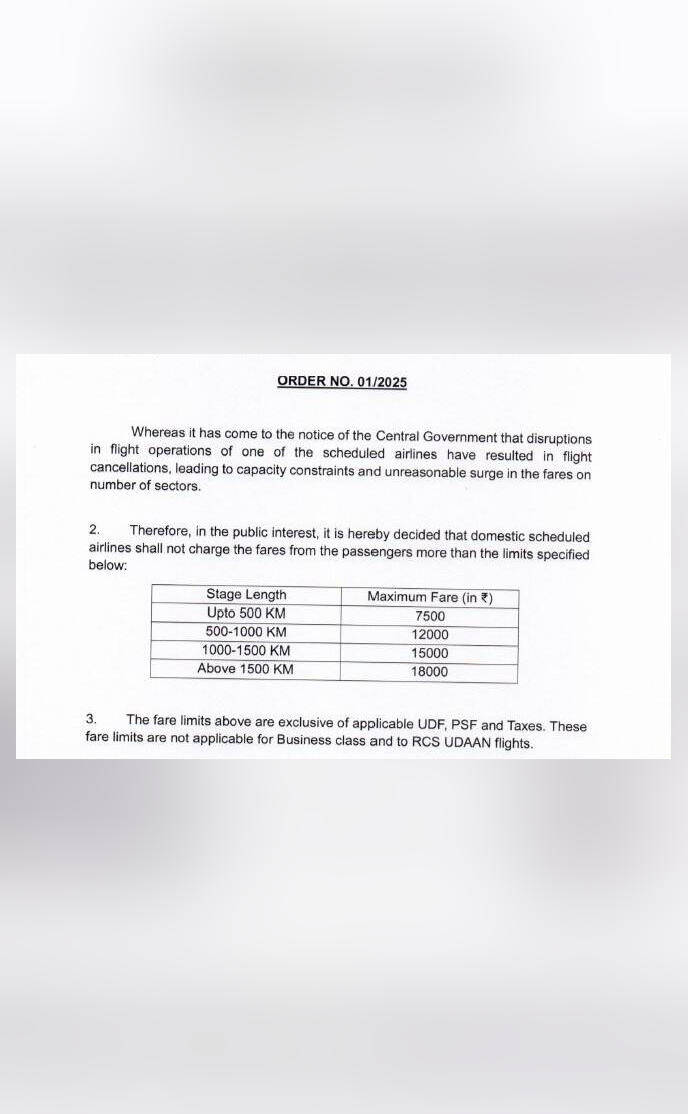
According to the new regulations, airlines will not be allowed to charge more than a certain maximum fare for flights across different distance categories. For flights with a distance of up to 500 kilometers, the maximum fare that airlines can charge is ₹7,500. This will apply to short-haul flights connecting major cities and towns within a region. For instance, flights from Delhi to Chandigarh or Mumbai to Pune will fall under this category.
For flights with a distance between 500 kilometers and 1,000 kilometers, the maximum fare that airlines can charge is ₹12,000. This will cover a significant number of domestic routes, including flights from Delhi to Mumbai, Bengaluru to Hyderabad, and Chennai to Kolkata. These routes are among the busiest in the country, and the fare ceiling is expected to benefit a large number of passengers.
Finally, for flights with a distance of above 1,500 kilometers, the maximum fare that airlines can charge is ₹18,000. This will apply to long-haul flights, including those connecting major cities to destinations in the Northeast, such as Guwahati and Imphal. Flights from Delhi to Port Blair, the capital of the Andaman and Nicobar Islands, will also fall under this category.
The imposition of fare ceilings is a welcome move, given the recent surge in airfares following the mass cancellations of flights by IndiGo. The airline had canceled hundreds of flights, citing technical issues and crew shortages, leaving thousands of passengers stranded. The resulting shortage of seats had led to a sharp increase in fares, with some tickets being sold for as much as ₹50,000 or more.
The Civil Aviation Ministry’s decision to regulate fares is expected to prevent such price gouging in the future. By capping fares, the government aims to ensure that air travel remains affordable for the common man, while also preventing airlines from taking undue advantage of passengers during times of high demand.
The move is also seen as a response to the growing concerns about the lack of transparency and fairness in the airline industry. Passengers have long complained about the arbitrary and exorbitant fares charged by airlines, particularly during peak travel seasons. The fare ceilings are expected to bring some much-needed relief to passengers, who can now plan their travel with greater certainty and affordability.
It is worth noting that the fare ceilings are temporary and will be reviewed by the government after a certain period. The ministry will monitor the situation and adjust the fare ceilings as needed to ensure that they remain effective in regulating airfares.
In conclusion, the government’s decision to impose fare ceilings on airlines is a significant step towards regulating the industry and protecting the interests of passengers. By capping fares, the government aims to prevent price gouging and ensure that air travel remains affordable for the common man. As the airline industry continues to evolve, it is essential that the government remains vigilant and takes steps to address the concerns of passengers.
The recent chaos caused by IndiGo’s mass flight cancellations has highlighted the need for greater regulation and oversight in the industry. The imposition of fare ceilings is a welcome move, and it remains to be seen how the airlines will respond to this new regulatory framework. One thing is certain, however: the government’s decision to regulate fares is a step in the right direction, and it will go a long way in ensuring that air travel remains accessible and affordable for all.
News Source: https://x.com/NDTVProfitIndia/status/1997255961241919681
About the Author