Why do foreign leaders receive 21-gun salute in India?
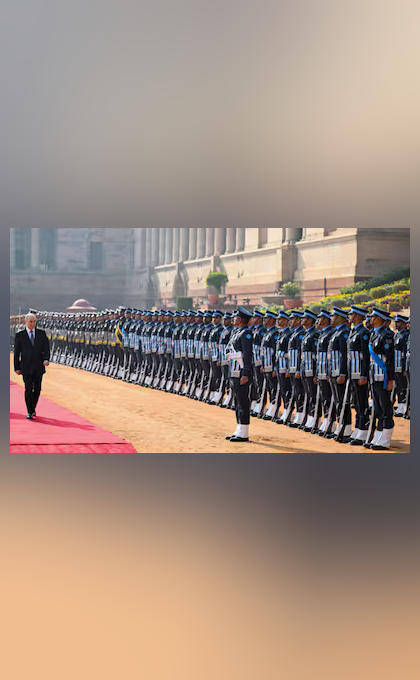
During official visits to India, it has become a common sight to see foreign leaders being accorded a ceremonial 21-gun salute at the Rashtrapati Bhavan, the official residence of the President of India. Recently, Russian President Vladimir Putin received this honour during his visit to India, sparking curiosity about the significance and history behind this tradition. In this blog post, we will delve into the origins of the 21-gun salute and explore why it is an essential part of India’s protocol for receiving foreign dignitaries.
The 21-gun salute is a time-honoured tradition that dates back to the British era. In the 17th and 18th centuries, the British Navy used a system of salutes to communicate with other ships and coastal fortifications. The number of guns fired in a salute was determined by the rank of the visiting dignitary, with higher-ranking officials receiving more guns. Over time, the 21-gun salute became the standard for heads of state, symbolizing the highest form of ceremonial respect.
When India gained independence in 1947, the country inherited many of the British-era practices and traditions, including the 21-gun salute. The salute was incorporated into India’s protocol for receiving foreign dignitaries, with the President of India serving as the host. Today, the 21-gun salute is an integral part of the ceremonial welcome extended to foreign heads of state and their families during official visits to India.
The 21-gun salute is not just a formality; it holds significant symbolic value. The number 21 is considered auspicious, representing the unity of the country and the solidarity of its people. The salute is also a gesture of respect and friendship, signifying India’s commitment to fostering strong diplomatic relationships with other nations. When a foreign leader receives a 21-gun salute, it is a testament to the importance India attaches to the visit and the bilateral ties between the two countries.
The ceremony itself is a grand affair, with the President of India, accompanied by other high-ranking officials, welcoming the visiting dignitary at the Rashtrapati Bhavan. The salute is typically fired from a battery of guns, usually located in the vicinity of the presidential palace. The sound of the guns is accompanied by the playing of the national anthems of both countries, adding to the pomp and grandeur of the occasion.
In addition to the 21-gun salute, foreign leaders also receive other ceremonial honours during their visits to India. These include a guard of honour, a ceremonial reception, and a meeting with the President and Prime Minister of India. The visit is often accompanied by discussions on bilateral trade, defense, and cultural cooperation, highlighting the significance of the relationship between India and the visiting country.
The 21-gun salute has been accorded to numerous foreign leaders over the years, including heads of state, prime ministers, and monarchs. The tradition has been continued by successive Indian governments, reflecting the country’s commitment to maintaining its diplomatic protocols and honoring its international relationships.
In conclusion, the 21-gun salute is a significant aspect of India’s protocol for receiving foreign dignitaries. The tradition, inherited from British-era practices, symbolizes the country’s highest form of ceremonial respect and is a gesture of friendship and solidarity. As India continues to engage with the world and strengthen its bilateral relationships, the 21-gun salute will remain an essential part of the country’s diplomatic ceremonies, welcoming foreign leaders and dignitaries to the country.
About the Author