Why do foreign leaders receive 21-gun salute in India?
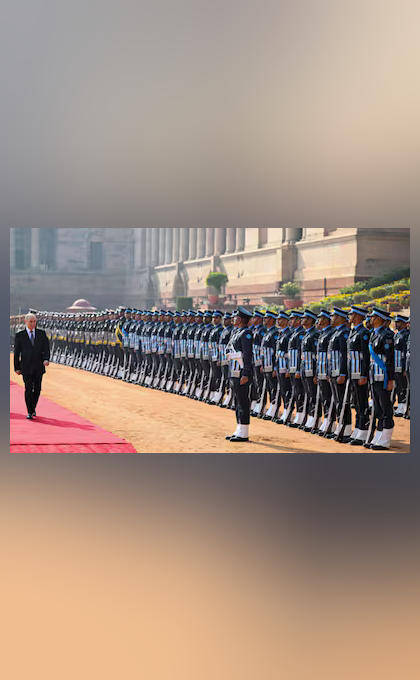
Recently, Russian President Vladimir Putin received a ceremonial 21-gun salute at Rashtrapati Bhavan during his visit to India. This honour, reserved for the highest offices of state, is accorded to foreign heads of state and their families as part of India’s traditional protocol. But have you ever wondered why foreign leaders receive a 21-gun salute in India? The answer lies in the country’s rich history and the traditions inherited from the British era.
The 21-gun salute is a time-honoured tradition that symbolises the country’s highest form of ceremonial respect. It is a mark of respect and honour bestowed upon visiting dignitaries, including heads of state, heads of government, and members of royal families. The salute is typically fired from a location of significance, such as the Rashtrapati Bhavan, the official residence of the President of India, or other prominent locations in the national capital.
The origins of the 21-gun salute date back to the 17th century, when the British Navy used to fire a seven-gun salute to announce the arrival of a senior officer or a dignitary. Over time, the number of guns was increased to 21, which was considered a more impressive and respectful salute. The tradition was later adopted by other countries, including India, which was a British colony at the time.
In India, the 21-gun salute is an integral part of the country’s ceremonial protocol. It is a way of showing respect and hospitality to visiting dignitaries, and is typically accompanied by other ceremonial honours, such as a guard of honour, a ceremonial welcome, and a meeting with the President or the Prime Minister of India.
The 21-gun salute is not just a matter of firing guns; it is a carefully choreographed ceremony that involves a lot of planning and precision. The salute is typically fired by a team of artillerymen, who are trained to fire the guns in a specific sequence and rhythm. The guns used for the salute are usually field guns or howitzers, which are capable of firing blanks or ceremonial rounds.
The significance of the 21-gun salute lies in its symbolism. The number 21 is considered a significant number in many cultures, and in the context of the salute, it represents the highest form of respect and honour. The salute is a way of saying that the visiting dignitary is being accorded the highest level of respect and hospitality, and that the host country values its relationship with the dignitary’s country.
In addition to the 21-gun salute, visiting dignitaries are also accorded other ceremonial honours, such as a guard of honour, a ceremonial welcome, and a meeting with the President or the Prime Minister of India. These ceremonies are an important part of India’s diplomatic protocol, and are designed to showcase the country’s rich cultural heritage and its commitment to international relations.
The 21-gun salute is not just limited to foreign heads of state; it is also accorded to other dignitaries, such as heads of government, members of royal families, and other high-ranking officials. The salute is a way of showing respect and hospitality to these dignitaries, and is an important part of India’s ceremonial protocol.
In conclusion, the 21-gun salute is a time-honoured tradition that symbolises the country’s highest form of ceremonial respect. It is a way of showing respect and hospitality to visiting dignitaries, and is an important part of India’s diplomatic protocol. The salute is a reminder of the country’s rich history and its commitment to international relations, and is a significant part of the country’s ceremonial heritage.
As we reflect on the significance of the 21-gun salute, it is worth noting that the tradition is not just a relic of the past; it is a living and breathing part of India’s cultural heritage. The salute is a way of connecting with the country’s history and its traditions, and is an important part of the country’s identity.
In recent years, the 21-gun salute has been accorded to several visiting dignitaries, including heads of state, heads of government, and members of royal families. The salute is a way of showing respect and hospitality to these dignitaries, and is an important part of India’s diplomatic protocol.
As India continues to play an increasingly important role in global affairs, the 21-gun salute is likely to remain an important part of the country’s ceremonial protocol. The salute is a way of showcasing the country’s rich cultural heritage and its commitment to international relations, and is a significant part of the country’s diplomatic tradition.
In the end, the 21-gun salute is a reminder of the importance of tradition and ceremony in international relations. It is a way of showing respect and hospitality to visiting dignitaries, and is an important part of India’s diplomatic protocol. As we look to the future, it is worth noting that the 21-gun salute is likely to remain an important part of India’s ceremonial heritage, and will continue to play a significant role in the country’s international relations.
About the Author