Why do foreign leaders receive 21-gun salute in India?
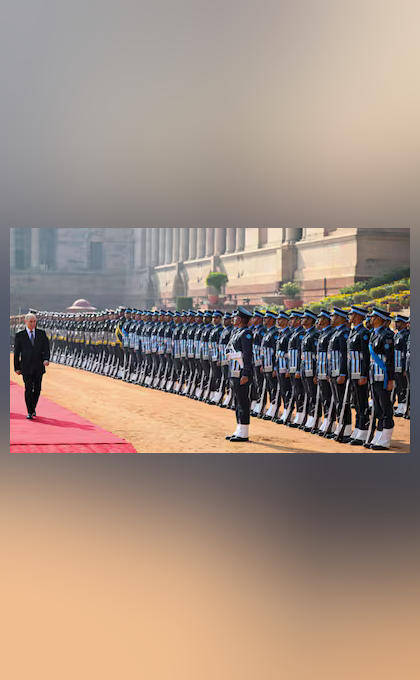
The ceremonial 21-gun salute is a time-honored tradition in India, reserved for the highest offices of state and accorded to foreign heads of state and their families as part of the country’s traditional protocol. Recently, Russian President Vladimir Putin received this prestigious honor at Rashtrapati Bhavan during his visit to India. But have you ever wondered where this tradition originated and what it symbolizes? In this blog post, we will delve into the history and significance of the 21-gun salute in India.
The 21-gun salute has its roots in the British era, when India was a colony under British rule. During this period, the British Army would fire a 21-gun salute to honor the visit of high-ranking officials, including the monarch and other dignitaries. This practice was inherited by India after it gained independence in 1947 and has since been continued as a mark of respect for visiting foreign leaders.
So, why 21 guns? The number 21 is not arbitrary; it has a specific significance. In the 17th and 18th centuries, the standard salute was a seven-gun salute, which was considered a mark of respect for naval vessels. However, as the British Empire expanded, the salute was increased to 21 guns to signify the highest level of respect. The number 21 was chosen because it was considered a multiple of the number 7, which was deemed sacred in many cultures.
The 21-gun salute is a complex ceremony that involves a series of precise steps. The ceremony begins with the arrival of the visiting dignitary at the Rashtrapati Bhavan, the official residence of the President of India. The dignitary is then escorted to the ceremonial platform, where the salute is to be fired. The salute is typically fired by a battery of field guns, which are specially decorated for the occasion.
As the dignitary arrives at the platform, the guns are fired in a sequence, with each gun firing a blank round. The salute is usually accompanied by the playing of the national anthem of the visiting country, as well as the national anthem of India. The entire ceremony is carefully choreographed to ensure that it is conducted with precision and dignity.
The 21-gun salute is a symbol of the country’s highest form of ceremonial respect, and it is reserved for the highest offices of state. In India, the salute is typically accorded to visiting heads of state, including presidents, prime ministers, and monarchs. The salute is also accorded to the President of India on special occasions, such as Republic Day and Independence Day.
The significance of the 21-gun salute extends beyond its ceremonial value. It is also a symbol of the country’s commitment to international diplomacy and cooperation. The salute is a mark of respect for the visiting leader and their country, and it serves as a reminder of the strong ties between India and the visiting country.
In recent years, the 21-gun salute has been accorded to several visiting foreign leaders, including US President Donald Trump, Chinese President Xi Jinping, and French President Emmanuel Macron. The salute has also been accorded to royalty, including the King of Saudi Arabia and the Sultan of Oman.
In conclusion, the 21-gun salute is a time-honored tradition in India that symbolizes the country’s highest form of ceremonial respect. The salute has its roots in the British era and has been continued as a mark of respect for visiting foreign leaders. The significance of the salute extends beyond its ceremonial value, serving as a symbol of India’s commitment to international diplomacy and cooperation.
As we reflect on the significance of the 21-gun salute, we are reminded of the importance of tradition and protocol in international relations. The salute serves as a reminder of the strong ties between India and the visiting country, and it underscores the country’s commitment to building strong relationships with nations around the world.
About the Author