Why do foreign leaders receive 21-gun salute in India?
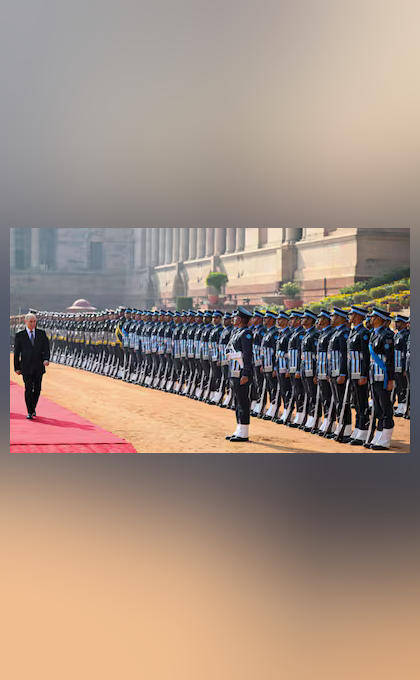
The pomp and circumstance of a state visit are always a sight to behold, with dignitaries and officials going to great lengths to ensure that the occasion is marked with the utmost respect and ceremony. One of the most striking aspects of these visits is the 21-gun salute, a tradition that is steeped in history and significance. Recently, Russian President Vladimir Putin received a ceremonial 21-gun salute at Rashtrapati Bhavan during his visit to India, highlighting the importance of this tradition in the country’s protocol.
The 21-gun salute is a mark of respect and honour, reserved for the highest offices of state, and is accorded to foreign heads of state and their families as part of India’s traditional protocol. But where did this tradition come from, and what is the significance of the 21-gun salute? To understand this, we need to delve into the history of the practice and its evolution over time.
The origins of the 21-gun salute can be traced back to the British era, when it was used as a way to celebrate important occasions such as the birth of a royal child or the visit of a foreign dignitary. The tradition is believed to have originated in the 17th century, when the British Navy would fire a 21-gun salute to signal the arrival of a high-ranking official or to mark a significant event. The number 21 was chosen because it was considered a high number, signifying the importance of the occasion.
When India gained independence in 1947, the country inherited many of the British-era practices and traditions, including the 21-gun salute. The salute was incorporated into India’s protocol, and it has since become an integral part of the country’s ceremonial practices. Today, the 21-gun salute is accorded to foreign heads of state and their families as a mark of respect and honour, and is typically fired during official visits to the country.
The 21-gun salute is a complex ceremony that involves a great deal of planning and coordination. The salute is typically fired by the Indian Army’s ceremonial units, who use specially designed guns that are capable of firing blank rounds. The ceremony begins with the arrival of the foreign dignitary, who is greeted by the President of India and other high-ranking officials. The salute is then fired, with the guns being fired in a sequence of 21 rounds.
The significance of the 21-gun salute lies in its symbolism, which represents the country’s highest form of ceremonial respect. The salute is a way of showing respect and honour to the visiting dignitary, and is considered a mark of the highest esteem. The 21-gun salute is also a way of signifying the importance of the occasion, and is often used to mark significant events such as state visits, national days, and other important celebrations.
In addition to its symbolic significance, the 21-gun salute also has a practical purpose. The salute serves as a way of announcing the arrival of the foreign dignitary, and is often used to signal the start of official ceremonies and events. The salute is also a way of showing the country’s military prowess and capabilities, and is often accompanied by other ceremonial displays such as marching bands and drill teams.
The 21-gun salute has been accorded to many foreign leaders who have visited India over the years, including heads of state, prime ministers, and other high-ranking officials. The salute is a way of showing respect and honour to these dignitaries, and is considered an important part of India’s diplomatic protocol. The salute has also been the subject of controversy on occasion, with some critics arguing that it is a relic of the colonial era and has no place in modern India.
Despite these criticisms, the 21-gun salute remains an important part of India’s ceremonial practices, and is likely to continue to be used for many years to come. The salute is a way of showing respect and honour to foreign dignitaries, and is considered an important part of the country’s diplomatic protocol. As India continues to evolve and grow as a nation, it is likely that the 21-gun salute will remain an important part of the country’s ceremonial traditions.
In conclusion, the 21-gun salute is a significant tradition that is steeped in history and symbolism. The salute is a way of showing respect and honour to foreign dignitaries, and is considered an important part of India’s diplomatic protocol. As we continue to learn more about the significance and importance of this tradition, we can appreciate the complexity and nuance of India’s ceremonial practices. Whether you are a history buff, a diplomat, or simply someone who is interested in learning more about India’s cultural traditions, the 21-gun salute is certainly worth exploring further.
About the Author