Why do foreign leaders receive 21-gun salute in India?
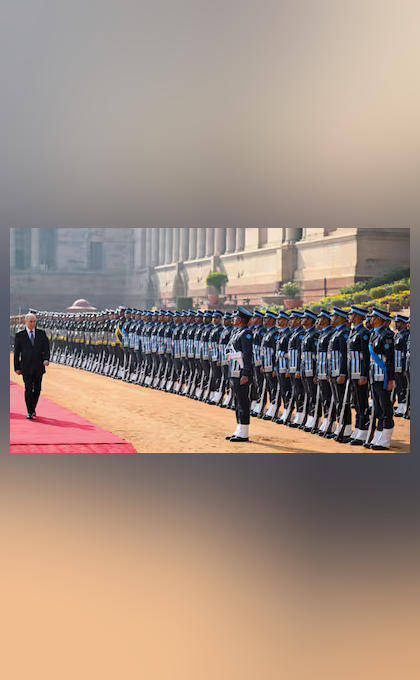
The ceremonial 21-gun salute is a time-honored tradition in India, reserved for the highest offices of state and accorded to foreign heads of state and their families as part of the country’s traditional protocol. Recently, Russian President Vladimir Putin received a ceremonial 21-gun salute at Rashtrapati Bhavan during his India visit, sparking curiosity about the history and significance of this honor. In this blog post, we will delve into the origins of the 21-gun salute and its evolution over time, as well as its significance in modern-day India.
The tradition of the 21-gun salute has its roots in the British era, when India was a colony of the British Empire. During this period, the British monarch was the supreme authority, and the 21-gun salute was a way to pay respects to the monarch and other high-ranking officials. The number 21 was chosen because it was considered a sacred number, symbolizing the unity of the country and the monarch’s absolute power. The salute was typically fired from cannons or guns, and the sound of the salute was meant to be heard from a distance, signifying the importance of the occasion.
After India gained independence in 1947, the country inherited many of the British-era practices, including the 21-gun salute. However, the salute was modified to reflect India’s new status as a sovereign nation. Today, the 21-gun salute is accorded to foreign heads of state and their families as a symbol of respect and friendship. The salute is typically fired from the forecourt of Rashtrapati Bhavan, the official residence of the President of India, and is accompanied by other ceremonial honors such as the playing of the national anthem and the presentation of a guard of honor.
The 21-gun salute is a significant honor in India, and it is reserved for the highest offices of state. The salute is typically accorded to foreign heads of state and their families, as well as to other high-ranking officials such as the Prime Minister of India and the Chief of the Army Staff. The salute is also accorded to Indian dignitaries on certain occasions, such as during the Republic Day celebrations on January 26.
The significance of the 21-gun salute lies in its symbolism of respect and friendship. The salute is a way for India to show its respect and admiration for the visiting dignitary, and it is also a way to strengthen ties between India and the visiting country. The salute is often accompanied by other ceremonial honors, such as the presentation of a guard of honor and the playing of the national anthem, which adds to the grandeur and solemnity of the occasion.
In addition to its symbolic significance, the 21-gun salute also has a practical purpose. The salute serves as a way to announce the arrival of the visiting dignitary, and it is often used to signal the start of official ceremonies and events. The salute is also a way to showcase India’s military might and its ability to host high-level diplomatic events.
Despite its significance, the 21-gun salute has not been without controversy. Some critics have argued that the salute is a relic of the colonial era and that it is no longer relevant in modern-day India. Others have argued that the salute is a waste of resources and that it could be better spent on more pressing issues such as poverty and education.
However, the 21-gun salute remains an important part of India’s diplomatic protocol, and it continues to be accorded to foreign heads of state and their families. The salute is a way for India to show its respect and admiration for the visiting dignitary, and it is also a way to strengthen ties between India and the visiting country.
In conclusion, the 21-gun salute is a time-honored tradition in India, reserved for the highest offices of state and accorded to foreign heads of state and their families as part of the country’s traditional protocol. The salute has its roots in the British era, but it has been modified over time to reflect India’s new status as a sovereign nation. The salute is a symbol of respect and friendship, and it is a way for India to show its admiration for the visiting dignitary. Despite some controversy, the 21-gun salute remains an important part of India’s diplomatic protocol, and it continues to be an important symbol of India’s respect and friendship for visiting dignitaries.
About the Author