Why do foreign leaders receive 21-gun salute in India?
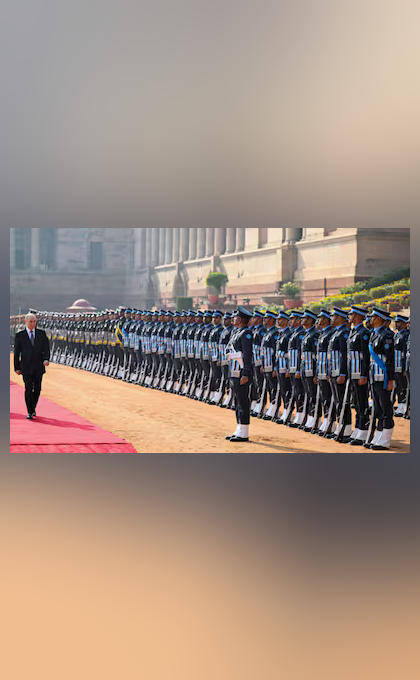
The recent visit of Russian President Vladimir Putin to India was marked by a ceremonial 21-gun salute at Rashtrapati Bhavan, the official residence of the President of India. This honour, reserved for the highest offices of state, is accorded to foreign heads of state and their families as part of India’s traditional protocol. But have you ever wondered why foreign leaders receive a 21-gun salute in India? In this blog post, we will delve into the history of this honour and explore its significance in the context of Indian protocol.
The 21-gun salute is a time-honoured tradition that originated in the British era. During the 17th and 18th centuries, the British Navy used to fire a seven-gun salute to announce the arrival of a ship. The number of guns was later increased to 21, which was considered the highest form of ceremonial respect. The 21-gun salute was reserved for the British monarch and other high-ranking officials, and it was a symbol of the country’s respect and admiration for the visiting dignitary.
After India gained independence in 1947, the country inherited many of the British-era practices, including the 21-gun salute. The salute was retained as a mark of respect for foreign heads of state and their families, and it has since become an integral part of India’s traditional protocol. Today, the 21-gun salute is accorded to visiting heads of state, heads of government, and other high-ranking officials, including royalty and nobility.
The 21-gun salute is a complex ceremony that involves a lot of planning and coordination. The salute is typically fired by a battery of artillery guns, which are positioned in a prominent location, such as the Rashtrapati Bhavan or the India Gate. The guns are fired in a sequence, with each gun firing a single shot. The salute is usually accompanied by a guard of honour, which is composed of soldiers from the Indian Army, Navy, and Air Force.
The 21-gun salute is a symbol of India’s respect and admiration for the visiting dignitary. It is a way of showing that the country values the relationship with the visiting leader’s country and is committed to strengthening ties between the two nations. The salute is also a mark of respect for the visiting leader’s office, and it is a way of acknowledging their importance and stature on the global stage.
In addition to the 21-gun salute, visiting foreign leaders are also accorded other honours and privileges, including a guard of honour, a reception at the Rashtrapati Bhavan, and a meeting with the Indian Prime Minister and other senior officials. These honours and privileges are a way of showing that India values the visiting leader’s presence and is committed to building strong relationships with their country.
The 21-gun salute has been accorded to many foreign leaders over the years, including heads of state, heads of government, and royalty. Some notable examples include former US President Barack Obama, former British Prime Minister David Cameron, and King Abdullah of Saudi Arabia. The salute is a way of showing that India is committed to building strong relationships with other countries and is willing to go the extra mile to make visiting leaders feel welcome and respected.
In conclusion, the 21-gun salute is a time-honoured tradition that is an integral part of India’s traditional protocol. It is a symbol of the country’s respect and admiration for visiting foreign leaders and is a way of showing that India values the relationship with their country. The salute is a complex ceremony that involves a lot of planning and coordination, and it is a mark of respect for the visiting leader’s office. Whether it is a head of state, head of government, or royalty, the 21-gun salute is a way of acknowledging their importance and stature on the global stage.
As India continues to build strong relationships with other countries, the 21-gun salute will remain an important part of the country’s protocol. It is a way of showing that India is committed to strengthening ties with other nations and is willing to go the extra mile to make visiting leaders feel welcome and respected. So the next time you hear the sound of guns firing in salute, remember that it is a symbol of India’s respect and admiration for the visiting dignitary and a mark of the country’s commitment to building strong relationships with other countries.
About the Author