Trump’s ‘drill baby drill’ energy policy saved AI industry: Huang
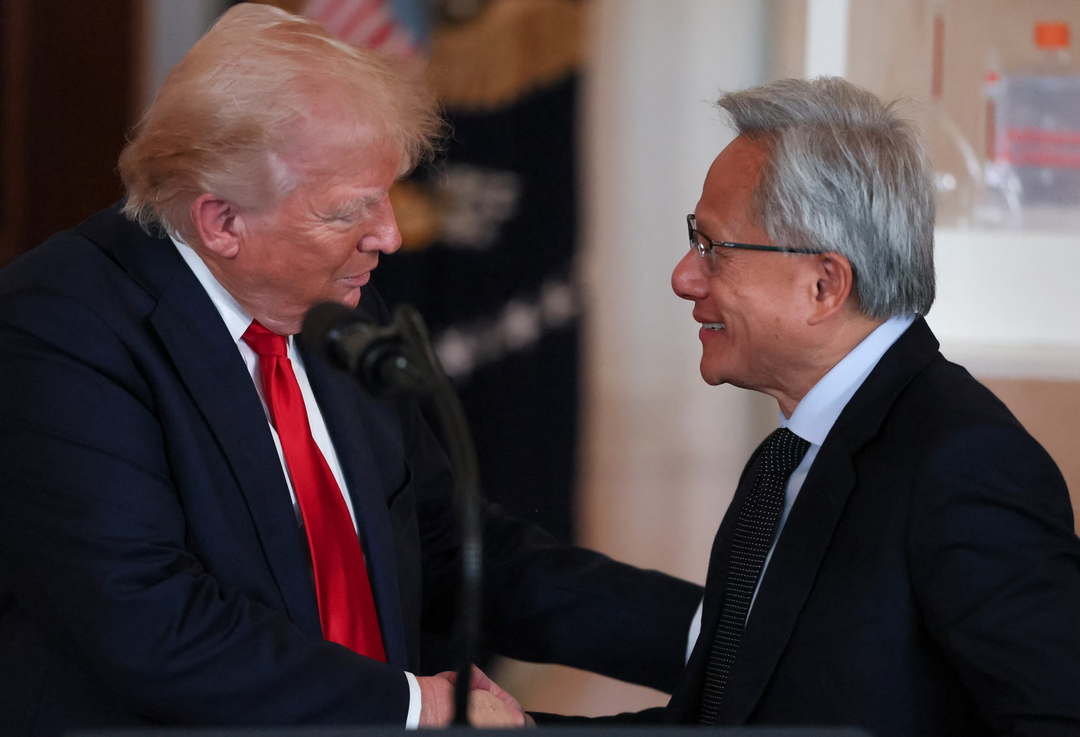
The artificial intelligence (AI) industry has experienced tremendous growth in recent years, and according to NVIDIA CEO Jensen Huang, this growth can be attributed, in part, to the pro-growth energy policy of former US President Donald Trump. In a surprising statement, Huang praised Trump’s “drill, baby, drill” energy policy, saying it played a crucial role in saving the AI industry.
Huang’s comments came after an alleged meeting with Trump, where he expressed his gratitude for the former President’s energy policies. “He came into office and the first thing…he said was ‘drill, baby, drill’. His point is…we need energy growth,” Huang said. “If not for his…policies, we’d not be able to build factories for AI…We surely wouldn’t be able to build supercomputer factories,” he added.
The “drill, baby, drill” slogan was a hallmark of Trump’s 2016 presidential campaign, emphasizing the need for increased domestic energy production. Trump’s energy policy focused on reducing regulations and increasing access to fossil fuels, which led to a significant increase in US energy production. According to the US Energy Information Administration (EIA), US crude oil production increased by over 50% during Trump’s presidency, making the US the world’s largest oil producer.
Huang’s statement highlights the often-overlooked connection between energy policy and the growth of the AI industry. The development and training of AI models require massive amounts of computational power, which in turn requires significant amounts of energy. The construction of large-scale data centers and supercomputer factories necessary for AI development is energy-intensive, and access to reliable and affordable energy is crucial for the industry’s growth.
The AI industry’s energy requirements are staggering. Training a single AI model can consume as much energy as 284,000 gallons of gasoline, according to a study by the University of Massachusetts Amherst. The study also found that the carbon footprint of training a large AI model is equivalent to the annual greenhouse gas emissions of 17 cars. As the AI industry continues to grow, its energy requirements will only increase, making access to reliable and affordable energy essential.
Trump’s energy policy, which focused on increasing domestic energy production, helped to reduce energy costs and increase energy availability. This, in turn, made it possible for companies like NVIDIA to build large-scale data centers and supercomputer factories, which are necessary for AI development. Huang’s statement suggests that without Trump’s energy policy, the AI industry may not have been able to grow at the same rate.
The connection between energy policy and the AI industry is not limited to the US. As the AI industry continues to grow globally, access to reliable and affordable energy will become increasingly important. Countries with pro-growth energy policies, like the US, will be better positioned to attract AI investment and drive industry growth.
While Huang’s statement has been met with surprise by some, it highlights the complex and often unexpected relationships between different policy areas. The AI industry’s growth is not just dependent on technological advancements, but also on a range of other factors, including energy policy.
In conclusion, NVIDIA CEO Jensen Huang’s statement that Trump’s “drill, baby, drill” energy policy saved the AI industry highlights the important connection between energy policy and the growth of the AI industry. As the AI industry continues to grow and evolve, it will be important to consider the role of energy policy in supporting this growth. With the global AI market projected to reach $190 billion by 2025, according to a report by MarketsandMarkets, the importance of access to reliable and affordable energy will only continue to increase.
About the Author