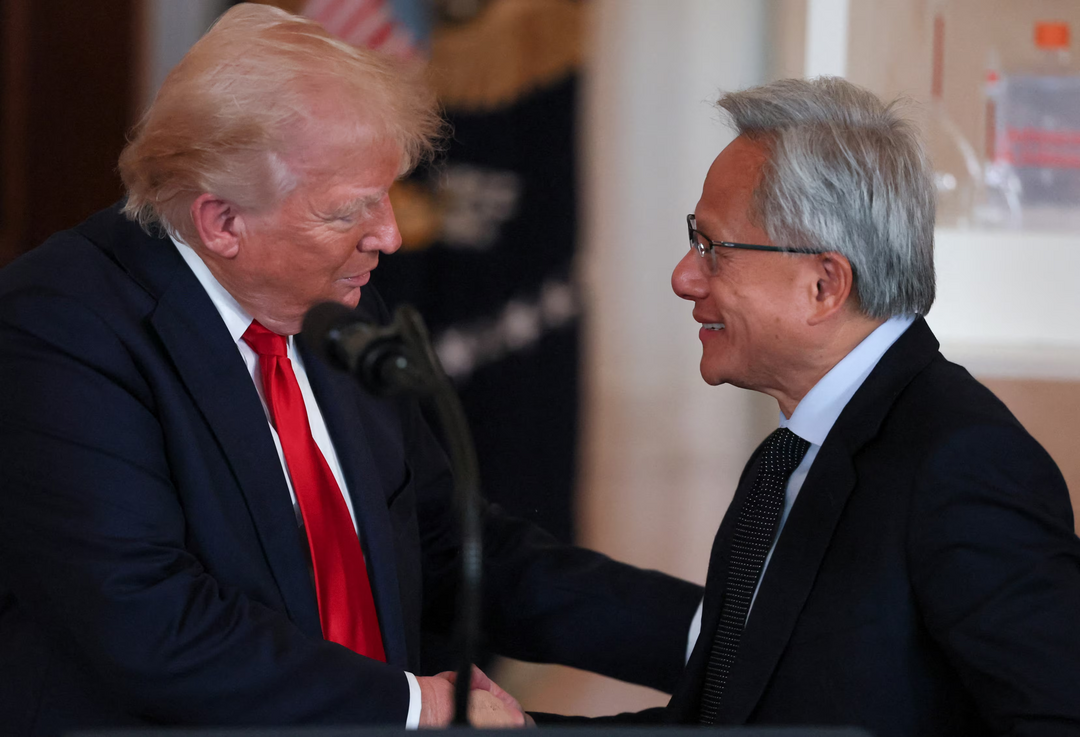
Trump’s ‘drill baby drill’ energy policy saved AI industry: Huang
The artificial intelligence (AI) industry has experienced tremendous growth in recent years, with advancements in computing power, data storage, and machine learning algorithms. However, according to NVIDIA CEO Jensen Huang, the industry’s success can be attributed, in part, to the pro-growth energy policy of former US President Donald Trump. In a recent statement, Huang praised Trump’s “drill, baby, drill” approach to energy production, saying it played a crucial role in the development of the AI industry.
Huang’s comments came as a surprise to many, given the controversial nature of Trump’s energy policies. The “drill, baby, drill” slogan, which was a hallmark of Trump’s 2016 presidential campaign, was seen by many as a symbol of the administration’s prioritization of fossil fuel production over environmental concerns. However, according to Huang, the increased energy production that resulted from Trump’s policies was essential for the growth of the AI industry.
“He came into office and the first thing…he said was ‘drill, baby, drill’,” Huang said. “His point is…we need energy growth.” Huang explained that the increased energy production that resulted from Trump’s policies allowed companies like NVIDIA to build the factories and infrastructure needed to support the development of AI technologies. “If not for his…policies, we’d not be able to build factories for AI…We surely wouldn’t be able to build supercomputer factories,” he added.
The connection between energy production and the AI industry may not be immediately apparent. However, the development and training of AI models requires vast amounts of computing power, which in turn requires significant amounts of energy. The process of training a single AI model can consume as much energy as a small town, and the production of the specialized computer chips needed to support AI development requires large amounts of power.
As a result, the growth of the AI industry is closely tied to the availability of reliable and affordable energy. The increased energy production that resulted from Trump’s “drill, baby, drill” policies helped to support the growth of the AI industry by providing the necessary power to support the development of AI technologies.
Huang’s comments have sparked a debate about the role of energy production in the growth of the AI industry. While some have praised Trump’s energy policies for supporting the development of AI, others have criticized the administration’s prioritization of fossil fuel production over environmental concerns.
Despite the controversy surrounding Trump’s energy policies, it is clear that the growth of the AI industry has had a significant impact on the global economy. The development of AI technologies has created new industries and job opportunities, and has helped to drive innovation and growth in a wide range of fields.
In addition to the economic benefits, the growth of the AI industry has also raised important questions about the future of work and the potential risks and benefits of AI. As AI technologies become increasingly ubiquitous, there is a growing need for policymakers and industry leaders to consider the potential implications of AI on society and to develop strategies for mitigating any negative consequences.
In conclusion, the growth of the AI industry is a complex and multifaceted phenomenon that is influenced by a wide range of factors. While the role of energy production in supporting the development of AI may not be immediately apparent, it is clear that the increased energy production that resulted from Trump’s “drill, baby, drill” policies played a crucial role in the growth of the industry.
As the AI industry continues to evolve and grow, it is likely that energy production will remain a critical factor in its development. Policymakers and industry leaders must consider the potential implications of energy production on the growth of the AI industry, and must develop strategies for balancing the need for energy with the need to protect the environment.
About the Author