Trump’s ‘drill baby drill’ energy policy saved AI industry: Huang
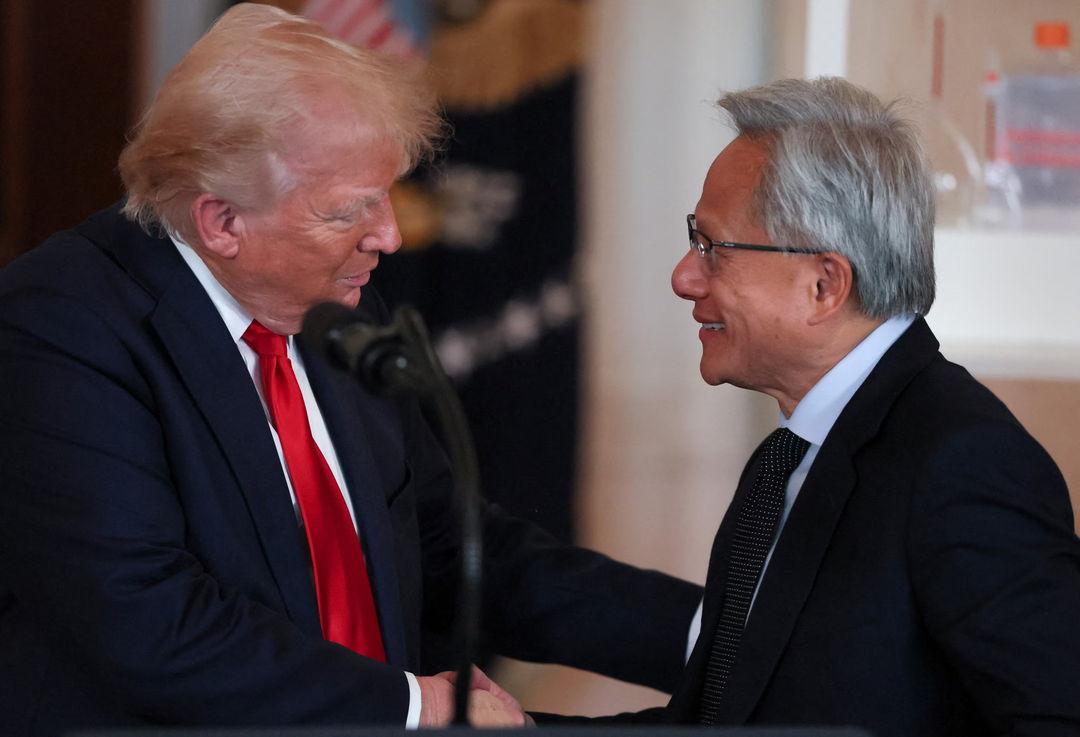
The artificial intelligence (AI) industry has been booming in recent years, with advancements in machine learning, natural language processing, and computer vision. However, according to NVIDIA CEO Jensen Huang, the industry’s success can be attributed, in part, to the pro-growth energy policy of former US President Donald Trump. In a recent statement, Huang praised Trump’s “drill, baby, drill” approach to energy production, saying it helped save the AI industry.
Huang’s comments came after an alleged meeting with Trump, where the NVIDIA CEO reportedly discussed the impact of Trump’s energy policies on the AI industry. According to Huang, Trump’s emphasis on increasing energy production was a crucial factor in the growth of the AI sector. “He came into office and the first thing…he said was ‘drill, baby, drill’,” Huang recalled. “His point is…we need energy growth.” Huang explained that Trump’s policies helped create an environment where companies like NVIDIA could build factories and produce the high-performance computing hardware needed for AI applications.
The “drill, baby, drill” slogan was a hallmark of Trump’s 2016 presidential campaign, where he promised to increase domestic oil and gas production to reduce the country’s reliance on foreign energy sources. While the policy was criticized by environmental groups, Huang argued that it had a positive impact on the AI industry. “If not for his…policies, we’d not be able to build factories for AI…We surely wouldn’t be able to build supercomputer factories,” he said.
Huang’s comments highlight the often-overlooked connection between energy production and the tech industry. The development and deployment of AI systems require massive amounts of computational power, which in turn require significant amounts of energy. The construction of data centers, server farms, and other infrastructure needed to support AI applications also relies on access to affordable and reliable energy sources.
The Trump administration’s energy policies, including the expansion of oil and gas production, helped to increase the availability of energy in the US. This, in turn, made it more feasible for companies like NVIDIA to build and operate the large-scale manufacturing facilities needed to produce AI hardware. The reduced energy costs also helped to make AI applications more competitive and attractive to businesses and consumers.
The impact of Trump’s energy policies on the AI industry can be seen in the growth of NVIDIA’s business during his presidency. The company’s revenue increased significantly during the Trump era, driven in part by the adoption of its graphics processing units (GPUs) in AI applications such as deep learning and natural language processing. The company’s success also led to the expansion of its manufacturing capabilities, including the construction of new factories and data centers.
While Huang’s comments have sparked controversy, they highlight the complex and often interconnected nature of economic policy and technological innovation. The growth of the AI industry is a testament to the power of innovation and entrepreneurship, but it also relies on a range of factors, including access to energy, talent, and investment.
In conclusion, the “drill, baby, drill” energy policy of former US President Donald Trump may have been controversial, but according to NVIDIA CEO Jensen Huang, it played a crucial role in the growth of the AI industry. By increasing energy production and reducing costs, Trump’s policies helped create an environment where companies like NVIDIA could build and operate the large-scale manufacturing facilities needed to produce AI hardware. As the AI industry continues to evolve and grow, it will be important to consider the broader economic and policy context that supports its development.
About the Author