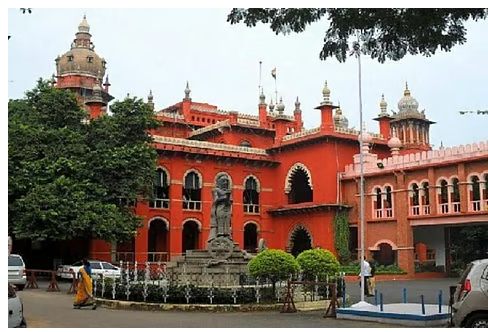
HC Rejects TN Govt’s Plea Against Lighting Holy ‘Deep’ Near Dargah
The Madras High Court on Thursday made a significant ruling, dismissing the Tamil Nadu government’s appeal against the court’s order directing the lighting of a holy ‘deep’ near a dargah. The court’s decision comes after the Tamil Nadu government had filed an appeal against the earlier order, which had directed the lighting of the holy ‘deep’ near the dargah at Thiruparankundram hill. The court, however, was not convinced with the government’s arguments and dismissed the appeal, stating that it was filed with an “ulterior motive”.
The controversy surrounding the lighting of the holy ‘deep’ near the dargah had been ongoing for some time. The court had earlier directed that the ‘deep’ be lit at a specific spot near the dargah, but the authorities had failed to comply with the order. Instead, the ‘deep’ was lit at a different location, which was not in accordance with the court’s directions. This move was seen as an attempt to circumvent the court’s order and avoid any potential controversy.
The Madras High Court’s decision to dismiss the Tamil Nadu government’s appeal is significant, as it upholds the principle of religious freedom and the right to practice one’s faith without hindrance. The court’s order directing the lighting of the holy ‘deep’ near the dargah was intended to ensure that the devotees were able to practice their faith in a peaceful and dignified manner. The government’s appeal against this order was seen as an attempt to restrict the rights of the devotees and impose unnecessary restrictions on their religious practices.
The court’s observation that the appeal was filed with an “ulterior motive” is also significant. It suggests that the government’s actions were not driven by a genuine concern for public order or safety, but rather by a desire to appease certain sections of society or to advance a particular agenda. This is a serious allegation, and one that highlights the need for transparency and accountability in government decision-making.
The controversy surrounding the lighting of the holy ‘deep’ near the dargah is not an isolated incident. It is part of a larger pattern of attempts to restrict religious freedom and impose unnecessary restrictions on the rights of devotees. In recent years, there have been several instances of governments and authorities trying to restrict the rights of devotees, often under the guise of maintaining public order or safety.
However, such restrictions are often arbitrary and unjustified, and they can have a chilling effect on the rights of devotees. The Madras High Court’s decision to dismiss the Tamil Nadu government’s appeal is a welcome move, as it upholds the principle of religious freedom and the right to practice one’s faith without hindrance.
The court’s decision is also a reminder that the judiciary plays a crucial role in protecting the rights of citizens and ensuring that the government does not overstep its authority. The Madras High Court’s decision is a testament to the independence and impartiality of the judiciary, and it highlights the need for the government to respect the rule of law and the rights of citizens.
In conclusion, the Madras High Court’s decision to dismiss the Tamil Nadu government’s appeal against the lighting of the holy ‘deep’ near the dargah is a significant ruling that upholds the principle of religious freedom and the right to practice one’s faith without hindrance. The court’s observation that the appeal was filed with an “ulterior motive” is a serious allegation, and one that highlights the need for transparency and accountability in government decision-making. The controversy surrounding the lighting of the holy ‘deep’ near the dargah is a reminder that the rights of devotees must be protected and respected, and that the government must not attempt to restrict these rights without justification.
About the Author