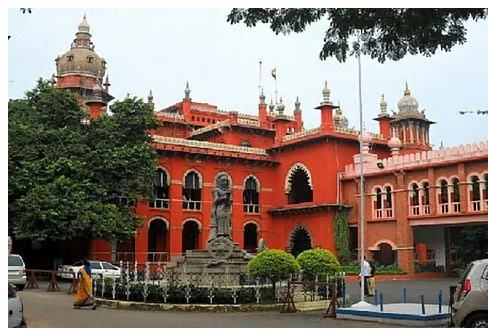
HC rejects TN govt’s plea against lighting holy ‘deep’ near dargah
In a significant development, the Madras High Court on Thursday rejected the Tamil Nadu government’s appeal against the court’s order directing the lighting of a holy ‘deep’ near a dargah. The court’s decision comes after the Tamil Nadu government had filed an appeal against the earlier order, which had directed the lighting of the holy ‘deep’ near the dargah located near the Thiruparankundram hill. The court, while dismissing the appeal, observed that it was filed with an “ulterior motive”.
The controversy surrounding the lighting of the holy ‘deep’ near the dargah had been ongoing for some time. The court had earlier directed that the holy ‘deep’ be lit near the dargah, but the directive was not complied with. Instead, the ‘deep’ was lit at a different spot, leading to further tensions between the parties involved.
The Madras High Court’s decision to reject the Tamil Nadu government’s appeal is significant, as it upholds the principle of religious freedom and the right to practice one’s faith without interference. The court’s observation that the appeal was filed with an “ulterior motive” suggests that the government’s actions were driven by considerations other than a genuine concern for the well-being of the community.
The dispute over the lighting of the holy ‘deep’ near the dargah is a complex one, with roots in the historical and cultural context of the region. The Thiruparankundram hill is a sacred site for Hindus, and the dargah located near the hill is a revered shrine for Muslims. The area has been a flashpoint for tensions between the two communities in the past, with disputes over issues such as access to the shrine and the use of the surrounding land.
The Madras High Court’s decision to reject the Tamil Nadu government’s appeal is a welcome development, as it helps to reduce tensions and promote communal harmony in the region. The court’s directive to light the holy ‘deep’ near the dargah is a symbolic gesture of respect for the religious beliefs and practices of the Hindu community, and it is hoped that it will help to promote greater understanding and cooperation between the different communities in the region.
The Tamil Nadu government’s decision to file an appeal against the court’s order had been widely criticized, with many seeing it as an attempt to politicize the issue and exploit communal tensions for electoral gain. The court’s rejection of the appeal is a rebuke to such tactics, and it sends a strong message that the judiciary will not tolerate attempts to use religion as a tool for political mobilization.
In recent years, there have been several instances of communal tensions and conflicts in Tamil Nadu, often sparked by disputes over issues such as temple entry, cow slaughter, and the use of religious symbols. The Madras High Court’s decision to reject the Tamil Nadu government’s appeal is a significant development in this context, as it helps to promote a culture of tolerance and respect for diversity in the state.
The court’s decision is also a reminder of the importance of the judiciary in protecting the rights of minority communities and promoting communal harmony. The Madras High Court has a long tradition of upholding the principles of secularism and protecting the rights of marginalized communities, and its decision to reject the Tamil Nadu government’s appeal is a testament to its commitment to these values.
In conclusion, the Madras High Court’s decision to reject the Tamil Nadu government’s appeal against the lighting of the holy ‘deep’ near the dargah is a significant development that promotes communal harmony and upholds the principles of religious freedom. The court’s directive to light the holy ‘deep’ near the dargah is a symbolic gesture of respect for the religious beliefs and practices of the Hindu community, and it is hoped that it will help to reduce tensions and promote greater understanding and cooperation between the different communities in the region.
About the Author