Tata Group donates ₹758 crore to BJP, weeks after approval for semiconductor units: Report
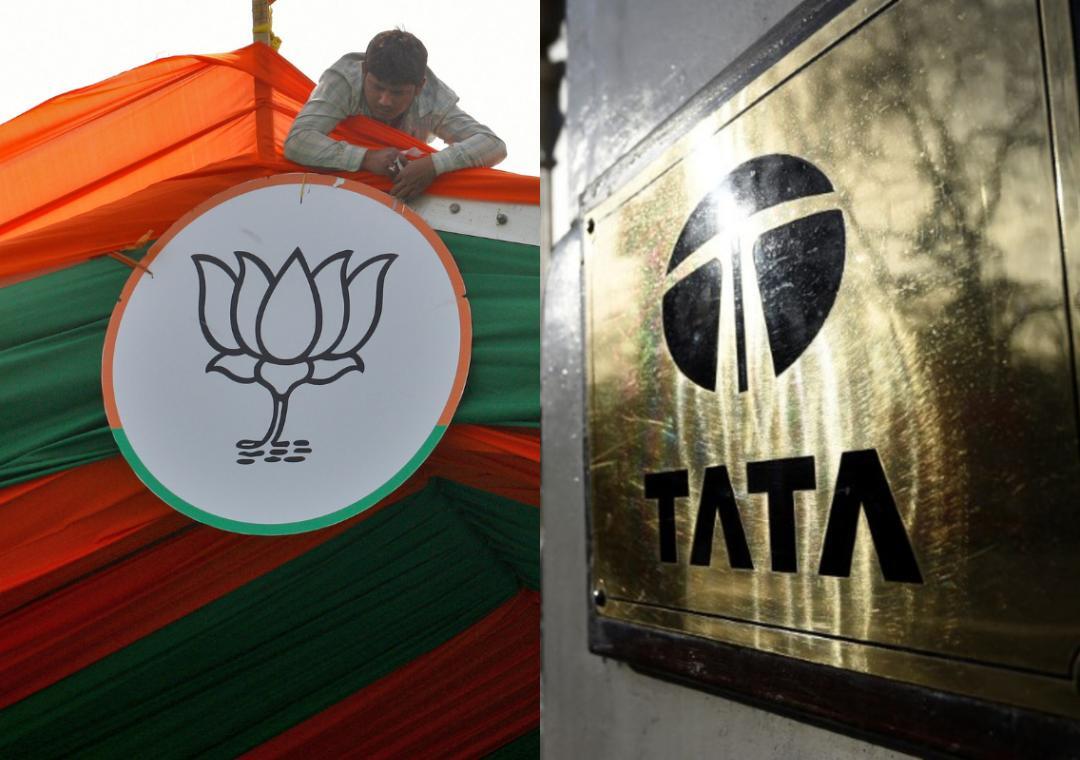
In a startling revelation, the Tata Group, one of India’s largest and most respected conglomerates, has been reported to have donated a staggering ₹758 crore to the Bharatiya Janata Party (BJP) in April 2024. This massive donation comes just weeks after the group received a whopping ₹44,000-crore subsidy for two of its semiconductor units. The sheer scale of this donation has raised eyebrows and sparked intense debate, with many questioning the timing and implications of such a large contribution.
According to reports, the donations were made just days before the 2024 Lok Sabha elections, accounting for a whopping 83% of the group’s total contributions. In stark contrast, the Indian National Congress, the main opposition party, received a paltry 8.4% of the group’s donations. The donations were sourced from 15 different Tata companies, highlighting the vast reach and influence of the conglomerate.
The approval for the semiconductor units, granted just weeks before the donation, has led many to speculate about the possible quid pro quo involved. The ₹44,000-crore subsidy is a significant amount, and the fact that the Tata Group donated such a large sum to the ruling party shortly after receiving this subsidy has raised suspicions about the nature of the relationship between the government and the conglomerate.
The Tata Group’s donation to the BJP is not only significant in terms of its amount but also in terms of its timing. The 2024 Lok Sabha elections were a crucial event in Indian politics, with the ruling party seeking to retain power and the opposition looking to unseat them. The fact that the Tata Group chose to make such a large donation to the BJP just before the elections has led many to question the motivations behind this move.
One possible explanation is that the Tata Group was seeking to curry favor with the ruling party in the hopes of receiving future benefits and subsidies. The group’s interests are diverse, ranging from steel and automobiles to hospitality and telecommunications, and having a favorable relationship with the government can be crucial for its business operations. By donating such a large sum to the BJP, the Tata Group may have been seeking to ensure that its interests are protected and promoted by the government.
Another possible explanation is that the Tata Group was seeking to influence government policy and decision-making. The group’s semiconductor units, for which it received the ₹44,000-crore subsidy, are a critical part of its business operations. By donating to the BJP, the group may have been seeking to ensure that the government’s policies and decisions align with its business interests. This could include influencing trade policies, tax rates, and regulatory frameworks, all of which can have a significant impact on the group’s bottom line.
The implications of this donation are far-reaching and have significant consequences for Indian politics and business. The fact that a single conglomerate can donate such a large sum to a political party raises questions about the role of money in politics and the influence of corporate interests on government decision-making. It also highlights the need for greater transparency and accountability in political funding, as well as stricter regulations to prevent the undue influence of corporate interests on politics.
Furthermore, this donation has also raised concerns about the concentration of economic power in the hands of a few large conglomerates. The Tata Group is one of India’s largest and most influential business groups, with interests spanning multiple sectors. The fact that it can donate such a large sum to a political party highlights the vast resources at its disposal and the significant influence it wields over Indian politics and economy.
In conclusion, the Tata Group’s donation of ₹758 crore to the BJP, weeks after receiving approval for its semiconductor units, has raised significant questions about the relationship between corporate interests and government decision-making. The sheer scale of this donation, combined with the timing and circumstances surrounding it, has sparked intense debate and speculation about the motivations behind this move. As India continues to grapple with the challenges of economic growth, political stability, and social inequality, the role of corporate interests in shaping government policy and decision-making will remain a critical issue that requires close scrutiny and attention.
About the Author