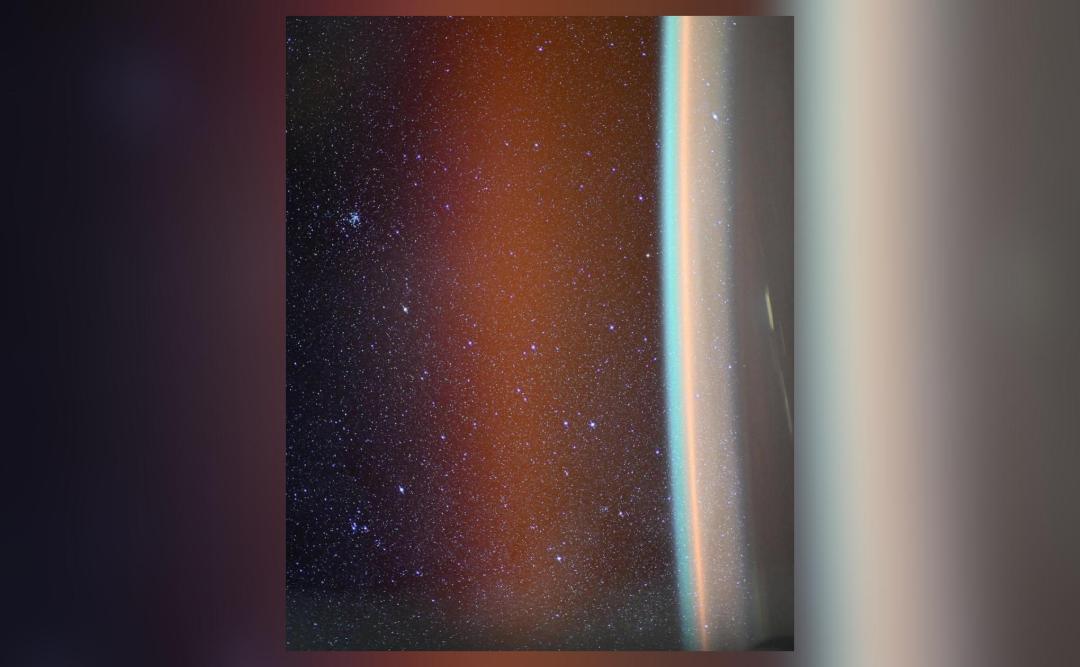
Pic shows colours of Earth’s atmosphere as seen from space
The Earth’s atmosphere is a complex and fascinating entity, comprising multiple layers of gases that surround our planet. While we are accustomed to viewing the atmosphere from the ground, a recent image captured from the International Space Station (ISS) offers a breathtaking perspective on the vibrant colors of our atmospheric envelope. The picture, shared by NASA astronaut Don Pettit, reveals the stunning hues of the Earth’s atmosphere as seen from space, showcasing the intricate dance of atomic oxygen, hydroxyl radicals, and airglow excited by solar activity.
According to Pettit, the image features “multiple vibrant layers of green atomic oxygen, orange hydroxyl radicals, and red airglow excited from solar activity.” This mesmerizing display of colors is a result of the unique chemical and physical processes that occur in the upper atmosphere. Airglow, in particular, is a phenomenon that arises when atoms and molecules in the upper atmosphere, excited by sunlight, emit light in order to shed their excess energy. This process is responsible for the spectacular colors that are visible in the image, as the excited atoms and molecules release their energy in the form of light.
The image provides a rare glimpse into the dynamics of the Earth’s atmosphere, highlighting the intricate relationships between the various layers of gases that surround our planet. The colors visible in the picture are a testament to the complex chemistry that occurs in the upper atmosphere, where the sun’s radiation interacts with the atmospheric gases to produce a kaleidoscope of hues. The green color, for example, is attributed to the presence of atomic oxygen, which is excited by the sun’s ultraviolet radiation and emits light at a wavelength of around 557.7 nanometers.
The orange color, on the other hand, is due to the presence of hydroxyl radicals, which are highly reactive molecules that play a crucial role in the chemistry of the upper atmosphere. These radicals are formed through the reaction of oxygen and hydrogen atoms, and are responsible for the emission of light at a wavelength of around 656.3 nanometers, which gives rise to the orange color visible in the image. The red color, meanwhile, is attributed to the airglow excited by solar activity, which occurs when the sun’s radiation interacts with the atmospheric gases to produce a range of emission lines.
The image captured by Pettit is not only a stunning visual representation of the Earth’s atmosphere but also provides valuable insights into the complex processes that occur in the upper atmosphere. The study of airglow and the chemistry of the upper atmosphere is an active area of research, with scientists seeking to understand the intricate relationships between the various layers of gases that surround our planet. By analyzing the colors and spectra of the airglow, scientists can gain a better understanding of the chemical and physical processes that occur in the upper atmosphere, which is essential for predicting the behavior of the atmosphere and the impact of solar activity on our planet.
The image also highlights the importance of the ISS as a platform for scientific research and observation. The ISS provides a unique vantage point for studying the Earth’s atmosphere, allowing scientists to collect data and conduct experiments in a microgravity environment. The station’s orbit, which takes it over the Earth’s polar regions, also provides a unique perspective on the atmospheric processes that occur in these regions.
In conclusion, the image captured by NASA astronaut Don Pettit offers a breathtaking perspective on the vibrant colors of the Earth’s atmosphere as seen from space. The picture provides a rare glimpse into the intricate dance of atomic oxygen, hydroxyl radicals, and airglow excited by solar activity, highlighting the complex chemistry and physics that occur in the upper atmosphere. As scientists continue to study the Earth’s atmosphere and the processes that occur within it, images like this one serve as a reminder of the beauty and complexity of our planet’s atmospheric envelope.
News Source: https://www.instagram.com/p/DRsbl4PEZJx/
About the Author