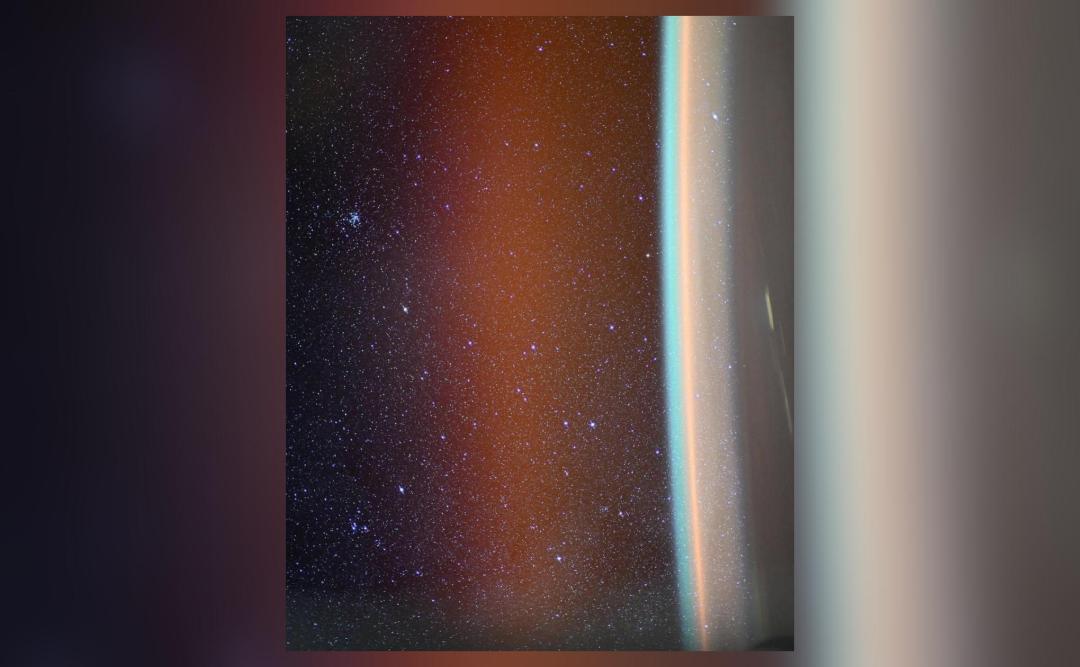
Pic shows colours of Earth’s atmosphere as seen from space
The Earth’s atmosphere is a complex and fascinating entity that has captivated human imagination for centuries. Recently, a stunning image captured from the International Space Station (ISS) has given us a glimpse into the vibrant colors of our planet’s atmosphere as seen from space. NASA astronaut Don Pettit, who is currently on board the ISS, shared the breathtaking picture on social media, leaving viewers in awe of the beauty of our planet.
The image shows multiple vibrant layers of green atomic oxygen, orange hydroxyl radicals, and red airglow excited from solar activity. These colors are a result of a phenomenon called airglow, which occurs when atoms and molecules in the upper atmosphere, excited by sunlight, emit light in order to shed their excess energy. This process is similar to the way a neon sign glows, where electricity excites the gas inside the sign, causing it to emit light.
Airglow is a common occurrence in the Earth’s atmosphere, but it is usually not visible to the naked eye. However, from space, the colors of airglow are much more pronounced, creating a stunning display of light and color. The image captured by Don Pettit is a perfect example of this, with the green, orange, and red hues of airglow visible in distinct layers.
The green color in the image is caused by atomic oxygen, which is a common component of the Earth’s atmosphere. When atomic oxygen is excited by sunlight, it emits light at a wavelength of 557.7 nanometers, which appears green to the human eye. The orange color, on the other hand, is caused by hydroxyl radicals, which are highly reactive molecules that are formed when oxygen and hydrogen atoms combine. Hydroxyl radicals emit light at a wavelength of 656.3 nanometers, which appears orange to the human eye.
The red color in the image is caused by airglow excited from solar activity. When the sun is active, it emits a large amount of radiation, including ultraviolet and X-rays, which can excite the atoms and molecules in the Earth’s atmosphere. This excitation causes the atoms and molecules to emit light, which can be seen as a red glow. The red color is also caused by the presence of oxygen molecules, which emit light at a wavelength of 630.0 nanometers when they are excited by solar radiation.
The image captured by Don Pettit is not only beautiful, but it also provides valuable insights into the Earth’s atmosphere. By studying airglow, scientists can learn more about the composition and dynamics of the atmosphere, as well as the effects of solar activity on the planet. Airglow can also be used to study the upper atmosphere, including the thermosphere and the exosphere, which are difficult to study using other methods.
The ISS is a perfect platform for studying the Earth’s atmosphere, as it orbits the planet at an altitude of around 250 miles. From this vantage point, astronauts can observe the atmosphere in great detail, using a variety of instruments and cameras. The ISS is also equipped with a range of scientific instruments, including spectrometers and radiometers, which can be used to study the composition and properties of the atmosphere.
In conclusion, the image captured by Don Pettit is a stunning example of the beauty and complexity of the Earth’s atmosphere. The vibrant colors of airglow, caused by the excitation of atoms and molecules by sunlight, create a breathtaking display of light and color. By studying airglow, scientists can gain valuable insights into the composition and dynamics of the atmosphere, as well as the effects of solar activity on the planet. The ISS provides a unique platform for studying the Earth’s atmosphere, and images like this one remind us of the importance of continued exploration and study of our planet.
For more information and to see the original image, visit: https://www.instagram.com/p/DRsbl4PEZJx/
News source: https://www.instagram.com/p/DRsbl4PEZJx/
About the Author