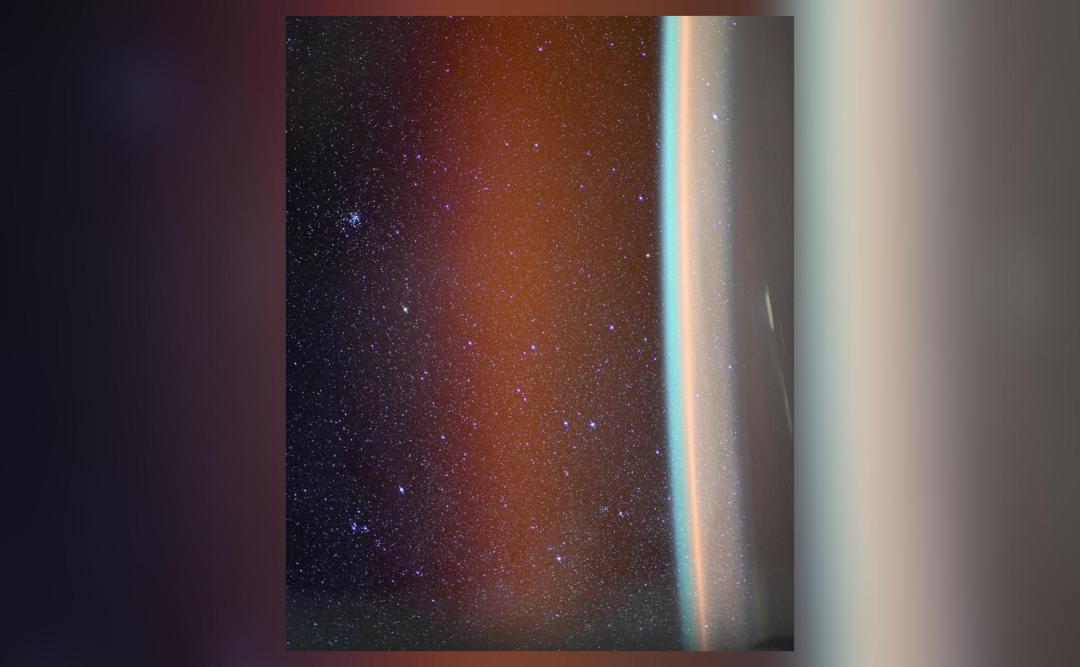
Pic shows colours of Earth’s atmosphere as seen from space
The Earth’s atmosphere is a complex and fascinating entity that has captivated the imagination of scientists and space enthusiasts alike for centuries. Recently, a breathtaking image captured from the International Space Station (ISS) has given us a glimpse into the vibrant colors of our planet’s atmosphere as seen from space. The picture, which has been making waves on social media, showcases the stunning display of colors that occur when atoms and molecules in the upper atmosphere are excited by sunlight.
According to NASA astronaut Don Pettit, who shared the image on his social media account, the picture reveals “multiple vibrant layers of green atomic oxygen, orange hydroxyl radicals, and red airglow excited from solar activity.” This phenomenon, known as airglow, occurs when atoms and molecules in the upper atmosphere, excited by sunlight, emit light in order to shed their excess energy. The result is a spectacular display of colors that can be seen from space, giving us a unique perspective on the Earth’s atmosphere.
The image, which has been widely shared and admired, is a testament to the incredible beauty of our planet and the wonders that can be observed from space. The vibrant colors of the atmosphere, which are normally invisible to the naked eye, are a reminder of the complex and dynamic processes that occur in the upper atmosphere. The green atomic oxygen, orange hydroxyl radicals, and red airglow are all products of the interaction between the Earth’s atmosphere and the solar wind, which is a stream of charged particles emitted by the sun.
Airglow is a common phenomenon that occurs in the upper atmosphere, particularly at altitudes of around 100-200 km. It is caused by the excitation of atoms and molecules by sunlight, which leads to the emission of light as they return to their ground state. The colors produced by airglow can vary depending on the altitude, the time of day, and the level of solar activity. In this particular image, the combination of green, orange, and red colors creates a breathtaking display that is both mesmerizing and awe-inspiring.
The ISS, from which the image was captured, is a unique platform for observing the Earth’s atmosphere. Orbiting the planet at an altitude of around 400 km, the ISS provides a perfect vantage point for studying the upper atmosphere and the interactions between the Earth’s atmosphere and the solar wind. The station is equipped with a range of instruments and cameras that allow astronauts to capture stunning images and collect valuable data on the Earth’s atmosphere.
The study of airglow and the upper atmosphere is an important area of research, with significant implications for our understanding of the Earth’s climate and the impact of space weather on our planet. By studying the colors and patterns of airglow, scientists can gain insights into the dynamics of the upper atmosphere and the interactions between the Earth’s atmosphere and the solar wind. This knowledge can help us better understand the complex processes that shape our planet’s climate and the potential impacts of space weather on our technological systems.
In conclusion, the image captured from the ISS is a stunning reminder of the beauty and complexity of the Earth’s atmosphere. The vibrant colors of airglow, which are normally invisible to the naked eye, are a testament to the incredible processes that occur in the upper atmosphere. As we continue to explore and study our planet from space, we are reminded of the awe-inspiring beauty and complexity of the Earth’s atmosphere, and the importance of continued research and exploration to understand the intricate workings of our planet.
The image, which has been widely shared on social media, is a powerful reminder of the importance of space exploration and the incredible discoveries that can be made through the study of our planet from space. As we look to the future and the continued exploration of our solar system, images like this one will inspire new generations of scientists, engineers, and explorers to pursue careers in space research and discovery.
Source: https://www.instagram.com/p/DRsbl4PEZJx/
About the Author