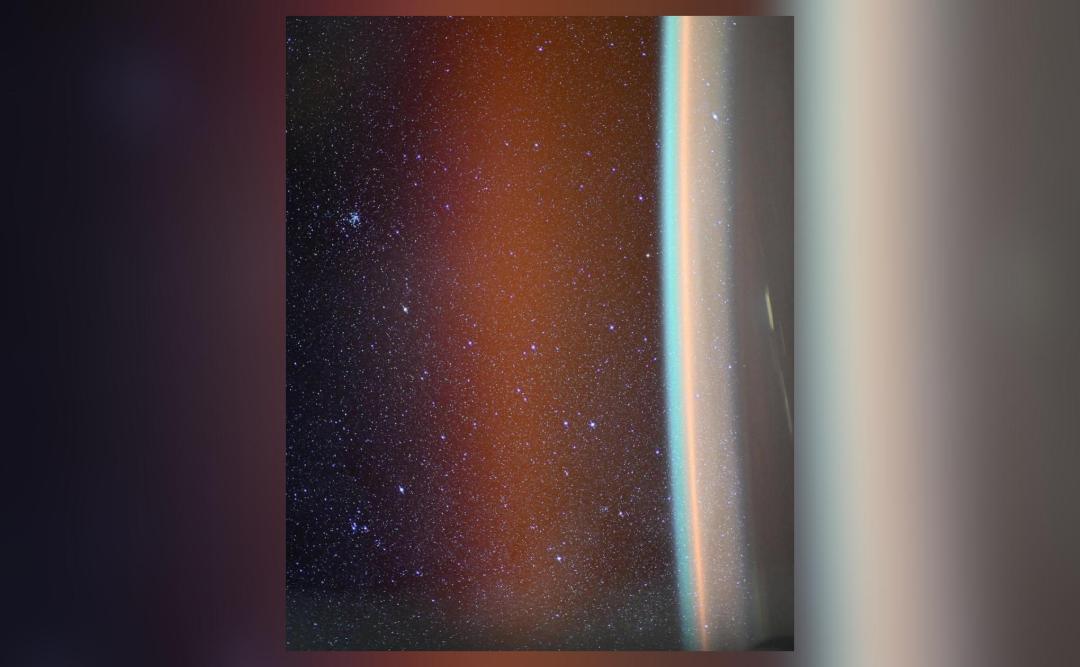
Pic shows colours of Earth’s atmosphere as seen from space
The Earth’s atmosphere is a complex and fascinating phenomenon that has captivated humans for centuries. From the deep blues and purples of the sunset to the vibrant hues of the aurora borealis, our atmosphere is a kaleidoscope of colors that are a wonder to behold. Recently, an image captured from the International Space Station (ISS) has given us a glimpse of the Earth’s atmosphere in all its glory, showcasing the bright colors that are visible from space.
The image, which was shared by NASA astronaut Don Pettit, reveals the multiple vibrant layers of the Earth’s atmosphere, including green atomic oxygen, orange hydroxyl radicals, and red airglow excited from solar activity. According to Pettit, the image captures the “multiple vibrant layers of green atomic oxygen, orange hydroxyl radicals, and red airglow excited from solar activity.” The result is a breathtaking view of the Earth’s atmosphere that is unlike anything we see from the surface.
So, what exactly is airglow, and how does it occur? Airglow is a phenomenon that occurs when atoms and molecules in the upper atmosphere, excited by sunlight, emit light in order to shed their excess energy. This process occurs when the sun’s rays interact with the atmosphere, causing the atoms and molecules to become excited and release energy in the form of light. The color of the airglow depends on the altitude and the type of atoms and molecules that are present in the atmosphere.
In the case of the image captured by Pettit, the green color is due to the presence of atomic oxygen, which is excited by the sun’s ultraviolet radiation. The orange color is caused by the presence of hydroxyl radicals, which are formed when the sun’s radiation interacts with the atmosphere’s water vapor. The red color, on the other hand, is due to the airglow excited from solar activity, which occurs when the sun’s radiation interacts with the atmosphere’s atoms and molecules.
The image is not only a stunning representation of the Earth’s atmosphere, but it also provides valuable insights into the complex processes that occur in the upper atmosphere. By studying the airglow and the colors that it produces, scientists can gain a better understanding of the Earth’s atmosphere and the interactions that occur between the sun, the atmosphere, and the planet’s magnetic field.
The ISS, from which the image was captured, is a unique platform for studying the Earth’s atmosphere. Orbiting the Earth at an altitude of around 250 miles, the ISS provides a perfect vantage point for observing the atmosphere and the phenomena that occur within it. The station’s crew, which includes astronauts like Pettit, are able to capture stunning images and conduct scientific experiments that help us better understand the Earth’s atmosphere and the universe.
The image of the Earth’s atmosphere is also a reminder of the beauty and fragility of our planet. The vibrant colors that are visible from space are a testament to the complex and delicate processes that occur in the atmosphere, and the importance of preserving and protecting our planet for future generations.
In conclusion, the image captured by NASA astronaut Don Pettit is a breathtaking representation of the Earth’s atmosphere as seen from space. The vibrant colors that are visible in the image, including the green atomic oxygen, orange hydroxyl radicals, and red airglow, are a testament to the complex and fascinating processes that occur in the upper atmosphere. By studying the airglow and the colors that it produces, scientists can gain a better understanding of the Earth’s atmosphere and the interactions that occur between the sun, the atmosphere, and the planet’s magnetic field.
News Source: https://www.instagram.com/p/DRsbl4PEZJx/
About the Author