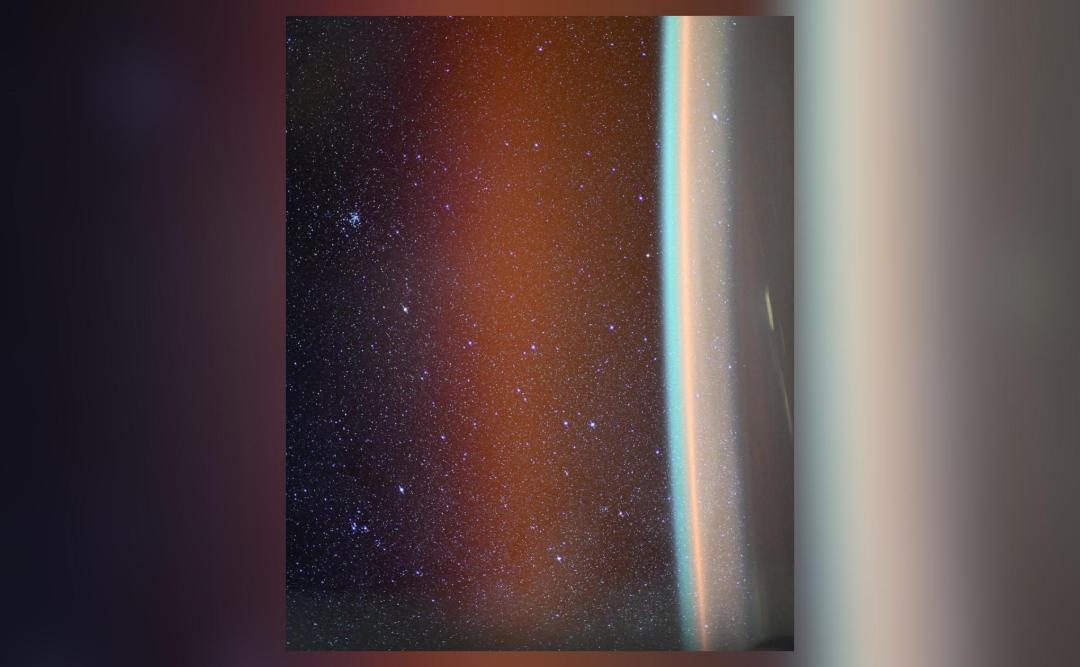
Pic shows colours of Earth’s atmosphere as seen from space
The Earth’s atmosphere is a complex and fascinating phenomenon that has captivated humans for centuries. From the deep blues and purples of the stratosphere to the vibrant greens and oranges of the aurorae, the atmosphere is a kaleidoscope of colors that reflect the dynamic interactions between our planet and the sun. Recently, an image captured from the International Space Station (ISS) has given us a breathtaking glimpse of the Earth’s atmosphere as seen from space, showcasing the intricate layers of colorful gases that surround our planet.
The image, which was shared by NASA astronaut Don Pettit, reveals the stunning beauty of the Earth’s atmosphere, with multiple vibrant layers of green atomic oxygen, orange hydroxyl radicals, and red airglow excited from solar activity. According to Pettit, the image captures the “bright colours of Earth’s atmosphere” in all their glory, offering a unique perspective on the intricate dance of gases that surrounds our planet.
But what exactly is airglow, and how does it occur? Airglow is a phenomenon that occurs when atoms and molecules in the upper atmosphere, excited by sunlight, emit light in order to shed their excess energy. This process is similar to the way that a neon sign works, where an electric current excites the gas inside the sign, causing it to emit light. In the case of airglow, the energy source is the sun, which excites the atoms and molecules in the upper atmosphere, causing them to release their excess energy as light.
The colors of the airglow are determined by the specific atoms and molecules that are present in the atmosphere, as well as the energy levels of the excited states. For example, the green color in the image is due to the presence of atomic oxygen, which is excited by the sun’s ultraviolet radiation. The orange color, on the other hand, is caused by the presence of hydroxyl radicals, which are formed when the sun’s radiation interacts with the atmosphere’s water vapor.
The red color in the image is due to the airglow excited from solar activity, which is a more intense and dynamic process than the airglow caused by the sun’s ultraviolet radiation. This type of airglow is often seen during periods of high solar activity, such as during solar flares and coronal mass ejections. The red color is caused by the excitation of the atmosphere’s nitrogen and oxygen molecules, which release their excess energy as red light.
The image captured by Pettit is not only a stunning work of art, but it also provides valuable insights into the complex processes that occur in the Earth’s atmosphere. By studying the colors and patterns of the airglow, scientists can gain a better understanding of the dynamics of the upper atmosphere, including the interactions between the sun’s radiation and the atmosphere’s gases.
The ISS, from which the image was captured, is a unique platform for studying the Earth’s atmosphere. The station’s orbit takes it above the Earth’s atmosphere, providing a panoramic view of the planet’s atmospheric layers. The ISS is also equipped with a range of scientific instruments, including spectrometers and cameras, which allow scientists to study the atmosphere in unprecedented detail.
The study of the Earth’s atmosphere is not only important for understanding our planet’s climate and weather patterns, but it also has significant implications for space exploration. As humans venture further into space, it is essential to understand the dynamics of the upper atmosphere, including the effects of solar activity and the behavior of the atmosphere’s gases. By studying the airglow and other atmospheric phenomena, scientists can gain valuable insights into the complex interactions between the Earth’s atmosphere and the space environment.
In conclusion, the image captured from the ISS is a breathtaking reminder of the beauty and complexity of the Earth’s atmosphere. The vibrant colors of the airglow, caused by the excitation of atoms and molecules in the upper atmosphere, offer a unique perspective on the dynamic interactions between our planet and the sun. As we continue to explore and study the Earth’s atmosphere, we are reminded of the awe-inspiring beauty and complexity of our planet, and the importance of understanding the intricate processes that shape our world.
News source: https://www.instagram.com/p/DRsbl4PEZJx/
About the Author