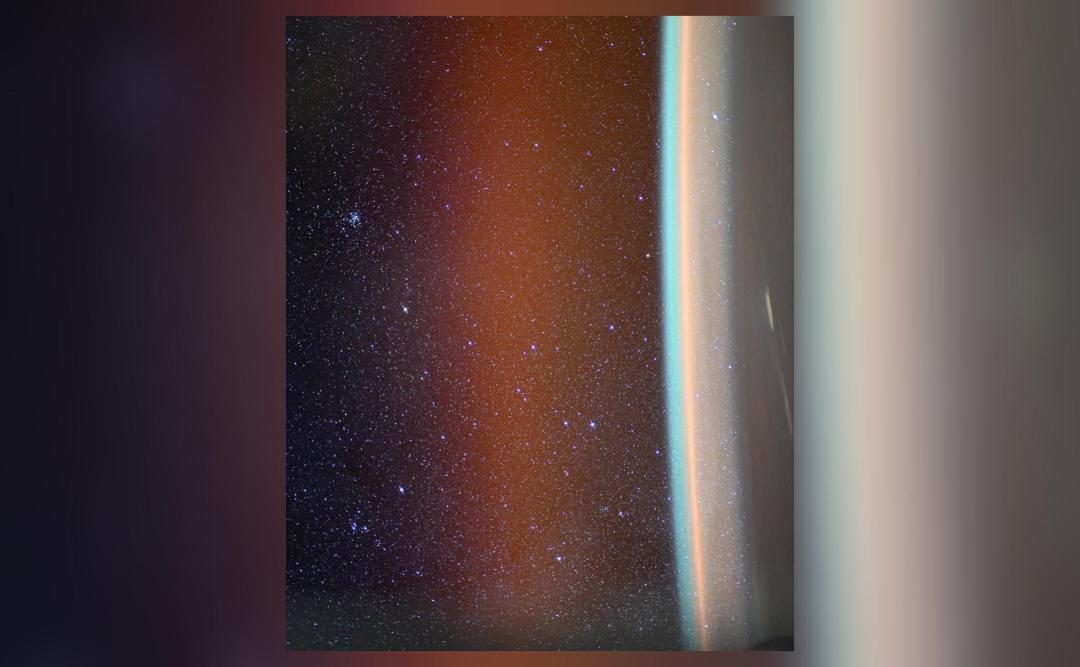
Pic shows colours of Earth’s atmosphere as seen from space
The Earth’s atmosphere is a complex and fascinating entity that has captivated the imagination of scientists and space enthusiasts alike. Recently, an image captured from the International Space Station (ISS) has given us a glimpse into the vibrant colors of our planet’s atmosphere as seen from space. The breathtaking picture, which has been shared by NASA astronaut Don Pettit, showcases the multiple layers of colored light that surround our planet.
According to Pettit, the image reveals “multiple vibrant layers of green atomic oxygen, orange hydroxyl radicals, and red airglow excited from solar activity.” This stunning display of colors is a result of a phenomenon known as airglow, which occurs when atoms and molecules in the upper atmosphere, excited by sunlight, emit light in order to shed their excess energy. The resulting colors are a testament to the incredible beauty and complexity of the Earth’s atmosphere.
The image, which has been widely shared on social media, has sparked a sense of wonder and awe among space enthusiasts and scientists alike. The vibrant colors of the atmosphere, which are normally invisible to the naked eye, are a reminder of the incredible beauty and complexity of our planet. The fact that we can see these colors from space is a testament to the incredible advancements that have been made in space exploration and technology.
But what exactly is airglow, and how does it occur? Airglow is a natural phenomenon that occurs when atoms and molecules in the upper atmosphere are excited by sunlight. When these atoms and molecules absorb energy from the sun, they become excited and start to vibrate. As they return to their normal state, they release this excess energy in the form of light, which is what we see as airglow.
The colors of airglow are determined by the type of atoms and molecules that are present in the atmosphere. For example, green airglow is produced by atomic oxygen, while orange airglow is produced by hydroxyl radicals. The red airglow, which is visible in the image, is excited by solar activity and is a result of the interaction between the sun’s energy and the Earth’s magnetic field.
The study of airglow is an important area of research for scientists, as it can provide valuable insights into the composition and dynamics of the upper atmosphere. By studying airglow, scientists can learn more about the interactions between the Earth’s atmosphere and the sun, as well as the impact of solar activity on our planet.
The image of the Earth’s atmosphere as seen from space is not only a reminder of the beauty and complexity of our planet, but it also highlights the importance of space exploration and research. The ISS, which has been orbiting the Earth since 1998, has provided scientists with a unique platform for studying the Earth’s atmosphere and the effects of solar activity on our planet.
In conclusion, the image of the Earth’s atmosphere as seen from space is a breathtaking reminder of the beauty and complexity of our planet. The vibrant colors of the atmosphere, which are produced by airglow, are a testament to the incredible beauty and wonder of the natural world. As we continue to explore and study the Earth’s atmosphere, we are reminded of the importance of space research and the incredible advancements that have been made in this field.
The fact that we can see the colors of the Earth’s atmosphere from space is a reminder of the incredible progress that has been made in space technology and exploration. As we look to the future, it is exciting to think about the new discoveries and advancements that will be made in this field.
In the meantime, we can marvel at the beauty of the Earth’s atmosphere as seen from space, and appreciate the incredible complexity and wonder of our planet. Whether you are a scientist, a space enthusiast, or simply someone who appreciates the beauty of the natural world, the image of the Earth’s atmosphere is a reminder of the incredible beauty and wonder that surrounds us.
News source: https://www.instagram.com/p/DRsbl4PEZJx/
About the Author