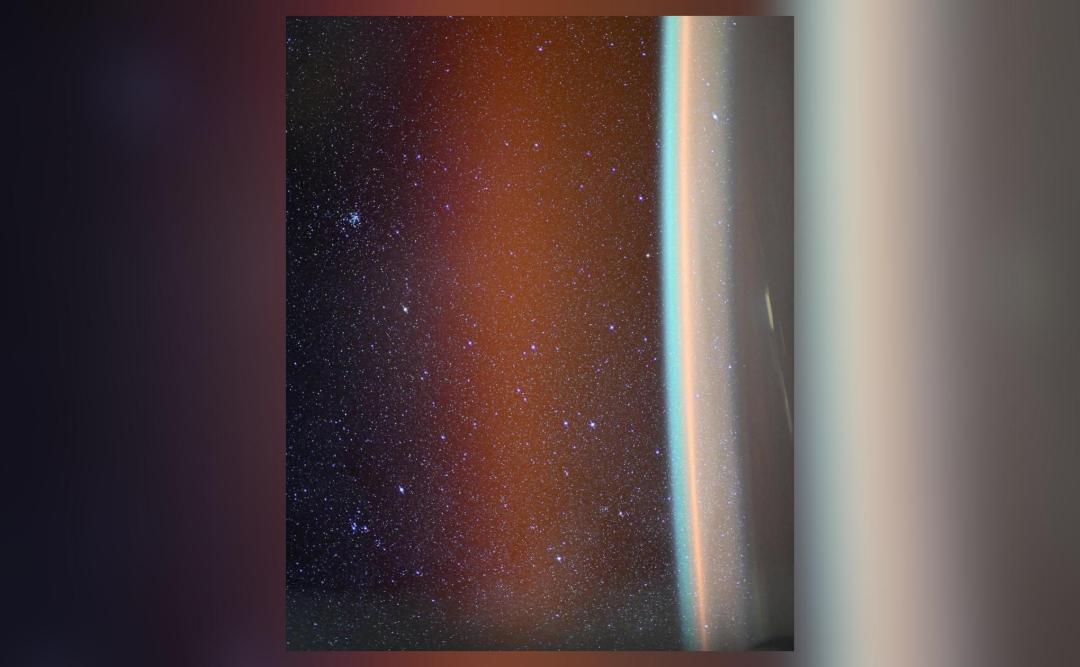
Pic shows colours of Earth’s atmosphere as seen from space
The Earth’s atmosphere is a complex and fascinating system that surrounds our planet, protecting us from the harsh conditions of space. While we can’t see the atmosphere with our naked eye, a stunning image captured from the International Space Station (ISS) reveals the vibrant colors of our atmosphere as seen from space. The image, shared by NASA astronaut Don Pettit, showcases the breathtaking beauty of the Earth’s atmosphere, with multiple layers of green, orange, and red hues.
According to Pettit, the image captures “multiple vibrant layers of green atomic oxygen, orange hydroxyl radicals, and red airglow excited from solar activity.” This phenomenon is known as airglow, which occurs when atoms and molecules in the upper atmosphere, excited by sunlight, emit light in order to shed their excess energy. The result is a spectacular display of colors that are normally invisible to the human eye.
The image shows the Earth’s atmosphere as a series of layered colors, with the green layer of atomic oxygen visible at the bottom, followed by the orange layer of hydroxyl radicals, and finally the red layer of airglow excited by solar activity. The colors are so vivid and intense that they seem almost otherworldly, giving us a glimpse into the hidden world of the Earth’s atmosphere.
Airglow is a natural phenomenon that occurs when the atoms and molecules in the upper atmosphere are excited by sunlight. This excitement causes the atoms and molecules to emit light, which is then visible as a glow. The color of the airglow depends on the type of atoms and molecules that are excited, as well as the energy level of the excitement. In this case, the green color is due to the excitation of atomic oxygen, while the orange color is due to the excitation of hydroxyl radicals.
The image also highlights the importance of the Earth’s atmosphere in protecting our planet from the harsh conditions of space. The atmosphere acts as a shield, absorbing and scattering the sun’s radiation, and regulating the temperature of the planet. Without the atmosphere, the Earth would be a barren and lifeless rock, unable to support the diverse range of life that we see today.
The image was captured by Pettit using a camera on board the ISS, which orbits the Earth at an altitude of around 250 miles. The ISS is a unique platform for observing the Earth’s atmosphere, as it provides a stable and consistent view of the planet from space. The station is equipped with a range of scientific instruments, including cameras, spectrometers, and sensors, which allow scientists to study the Earth’s atmosphere in unprecedented detail.
The study of the Earth’s atmosphere is an important area of research, as it helps us to understand the complex interactions between the atmosphere, oceans, and land. By studying the atmosphere, scientists can gain insights into the Earth’s climate, weather patterns, and the impact of human activities on the environment. The image shared by Pettit is a stunning reminder of the beauty and complexity of the Earth’s atmosphere, and the importance of continuing to study and protect our planet.
In conclusion, the image captured by NASA astronaut Don Pettit is a breathtaking reminder of the beauty and complexity of the Earth’s atmosphere. The vibrant colors of the atmosphere, visible as a series of layered hues, are a result of the airglow phenomenon, which occurs when atoms and molecules in the upper atmosphere are excited by sunlight. The image highlights the importance of the Earth’s atmosphere in protecting our planet from the harsh conditions of space, and the need to continue studying and protecting our planet.
The image is a powerful reminder of the beauty and wonder of the natural world, and the importance of continuing to explore and study our planet. As we gaze upon the stunning colors of the Earth’s atmosphere, we are reminded of the incredible complexity and beauty of the world around us, and the need to protect and preserve it for future generations.
News Source: https://www.instagram.com/p/DRsbl4PEZJx/
About the Author