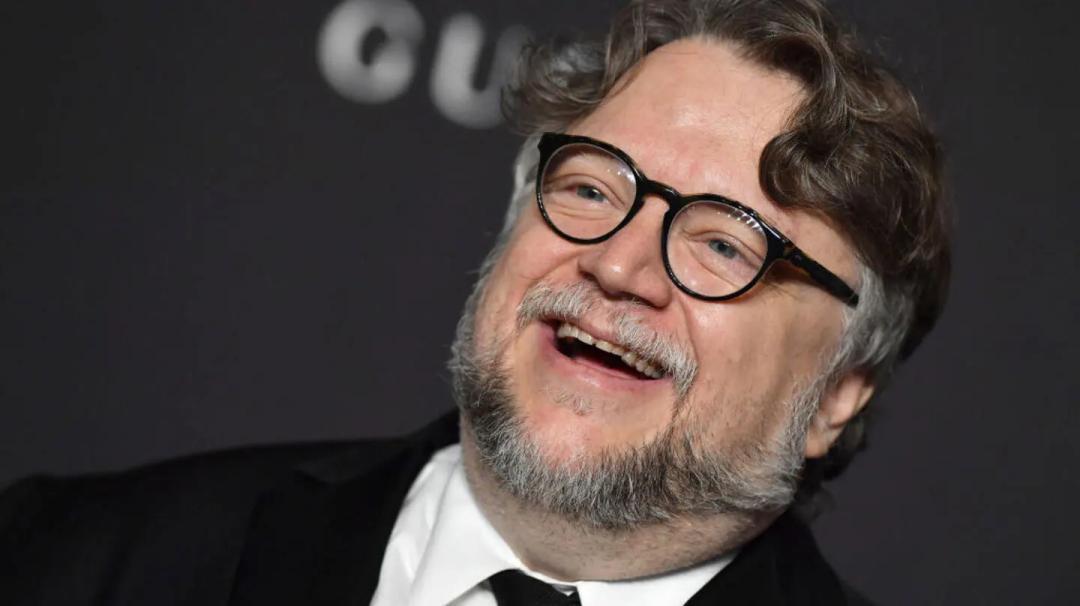
Fk AI: Frankenstein Director Guillermo del Toro at Gotham Awards
The Gotham Film Awards 2025 was a night to remember, with many talented filmmakers and actors in attendance. However, one moment that stole the show was when Guillermo del Toro, the renowned director of the upcoming film Frankenstein, took to the stage to receive the Vanguard Tribute. Del Toro was joined by the lead actors of his film, Jacob Elordi and Oscar Isaac, and it was during his acceptance speech that he made a bold statement that left the audience in awe.
As del Toro began his speech, he expressed his gratitude to the Gotham Film Awards for the honor. He then shifted his focus to his film, Frankenstein, and the team that worked tirelessly to bring it to life. It was at this moment that he made a striking comment about the role of artificial intelligence (AI) in filmmaking. “Every single frame of this film…was wilfully made by humans, for humans,” he said, emphasizing the importance of human creativity and effort in the making of Frankenstein.
But del Toro didn’t stop there. In a move that was both surprising and thought-provoking, he directly addressed the growing trend of using AI in the film industry. “I would like to extend our gratitude and say: F**k AI,” the director added, his words met with applause and cheers from the audience. This statement was not only a testament to del Toro’s passion for traditional filmmaking but also a commentary on the potential risks and consequences of relying too heavily on AI in the creative process.
Del Toro’s criticism of AI is not unfounded. In recent years, the film industry has seen a significant increase in the use of AI-powered tools and technologies. From automated editing software to AI-generated visual effects, these tools have made it possible for filmmakers to work more efficiently and effectively. However, as del Toro’s statement suggests, there is a growing concern that the over-reliance on AI could lead to a loss of human touch and creativity in filmmaking.
The use of AI in filmmaking is a complex issue, with both proponents and critics presenting valid arguments. On the one hand, AI can help streamline the filmmaking process, reducing costs and increasing productivity. AI-powered tools can also help with tasks such as color correction, sound design, and visual effects, allowing filmmakers to focus on the creative aspects of their work.
On the other hand, the increasing use of AI in filmmaking raises important questions about authorship, creativity, and the role of human filmmakers. As del Toro’s statement suggests, there is a risk that the use of AI could lead to a homogenization of film styles and a loss of individuality and creativity. Furthermore, the use of AI-powered tools could also lead to job losses and a devaluation of the skills and expertise of human filmmakers.
In the context of del Toro’s film, Frankenstein, the issue of AI takes on a particularly interesting dimension. As a classic tale of creation and monstrosity, Frankenstein raises important questions about the boundaries between human and non-human, creator and created. In this sense, del Toro’s criticism of AI can be seen as a commentary on the potential risks and consequences of playing God with technology.
As the film industry continues to evolve and adapt to new technologies, it is essential to consider the implications of AI on the creative process. While AI can be a powerful tool for filmmakers, it is crucial to remember that filmmaking is, at its core, a human endeavor. As del Toro’s statement suggests, the value of filmmaking lies not just in the technology used to create it, but in the human imagination, creativity, and passion that goes into every frame.
In conclusion, Guillermo del Toro’s statement at the Gotham Film Awards 2025 was a powerful commentary on the role of AI in filmmaking. As the film industry continues to grapple with the implications of AI, it is essential to consider the potential risks and consequences of relying too heavily on technology. By emphasizing the importance of human creativity and effort, del Toro’s statement serves as a reminder of the value and significance of traditional filmmaking.
About the Author