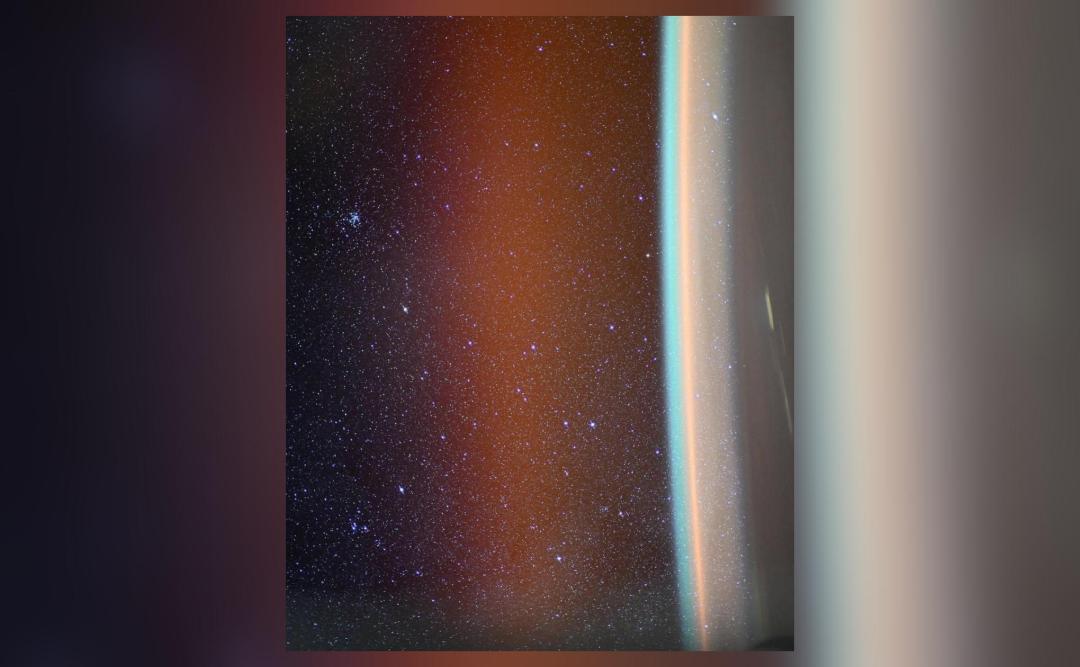
Pic shows colours of Earth’s atmosphere as seen from space
An image captured from the International Space Station (ISS) has given us a breathtaking glimpse of the vibrant colours of Earth’s atmosphere as seen from space. The stunning picture, which has been making rounds on social media, showcases the multiple layers of the atmosphere, each with its unique hue. NASA astronaut Don Pettit, who captured the image, described it as “Multiple vibrant layers of green atomic oxygen, orange hydroxyl radicals, and red airglow excited from solar activity.”
The image is a perfect representation of the beauty and complexity of our planet’s atmosphere. The different colours in the picture are a result of various chemical reactions that take place in the upper atmosphere. The green layer, for instance, is composed of atomic oxygen, which is a common component of the Earth’s atmosphere. The orange layer, on the other hand, is made up of hydroxyl radicals, which are highly reactive molecules that play a crucial role in the Earth’s atmospheric chemistry.
The red layer, which is visible at the top of the image, is a result of airglow, a phenomenon that occurs when atoms and molecules in the upper atmosphere, excited by sunlight, emit light in order to shed their excess energy. Airglow is a common occurrence in the Earth’s atmosphere, but it is usually not visible to the naked eye. However, from space, it can be seen as a bright red glow, which is a result of the excited atoms and molecules releasing their excess energy.
The image captured by Don Pettit is a testament to the beauty and complexity of the Earth’s atmosphere. It is a reminder of the incredible processes that take place in our planet’s atmosphere, which are essential for life on Earth. The atmosphere is a delicate balance of different gases and chemicals, which work together to create the perfect conditions for life to thrive.
The Earth’s atmosphere is made up of several layers, each with its unique characteristics and functions. The lowest layer, known as the troposphere, is where the weather occurs, and it is home to most of the Earth’s air. The next layer, known as the stratosphere, is where the ozone layer is located, which protects the Earth from harmful ultraviolet radiation.
The mesosphere, which is the third layer, is where the airglow occurs, and it is also home to many of the Earth’s atmospheric phenomena, such as meteors and noctilucent clouds. The thermosphere, which is the fourth layer, is where the aurorae occur, and it is also home to many of the Earth’s satellites.
The image captured by Don Pettit is a reminder of the incredible beauty and complexity of the Earth’s atmosphere. It is a testament to the incredible work that NASA and other space agencies are doing to study and understand our planet’s atmosphere. By studying the Earth’s atmosphere from space, scientists can gain a better understanding of the complex processes that take place in our planet’s atmosphere, which is essential for predicting weather patterns, understanding climate change, and protecting the Earth’s environment.
The image is also a reminder of the importance of space exploration and the role that it plays in our understanding of the Earth and the universe. By exploring space, we can gain a better understanding of the Earth’s place in the universe, and we can also gain a new perspective on the beauty and complexity of our planet.
In conclusion, the image captured by Don Pettit is a breathtaking glimpse of the vibrant colours of the Earth’s atmosphere as seen from space. It is a testament to the incredible beauty and complexity of our planet’s atmosphere, and it is a reminder of the importance of space exploration and the role that it plays in our understanding of the Earth and the universe.
The image is a perfect representation of the beauty and complexity of the Earth’s atmosphere, and it is a reminder of the incredible work that NASA and other space agencies are doing to study and understand our planet’s atmosphere. By studying the Earth’s atmosphere from space, scientists can gain a better understanding of the complex processes that take place in our planet’s atmosphere, which is essential for predicting weather patterns, understanding climate change, and protecting the Earth’s environment.
Source: https://www.instagram.com/p/DRsbl4PEZJx/
About the Author