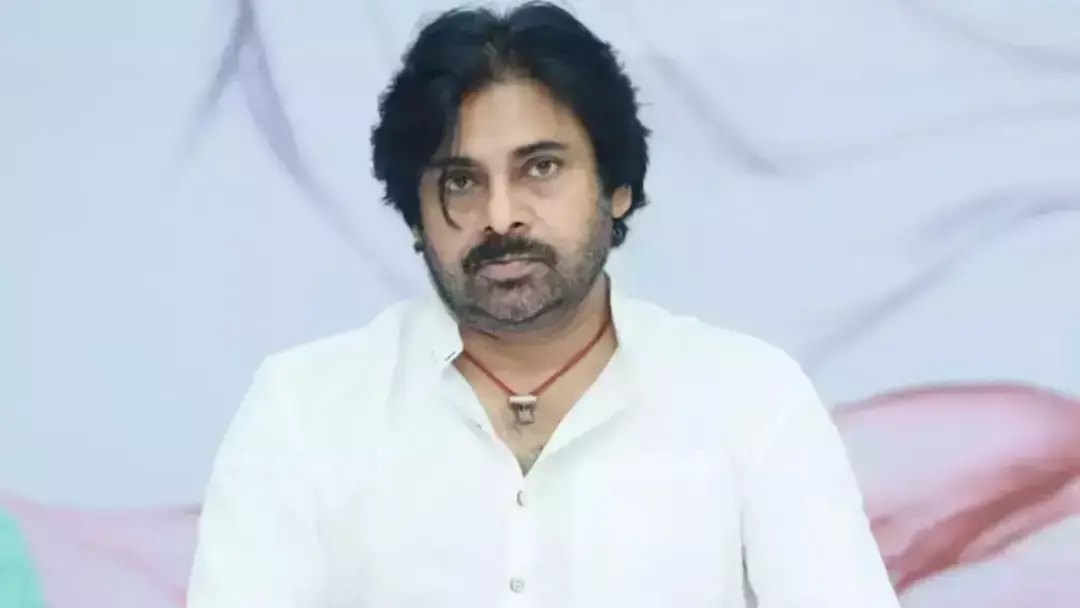
T’gana minister slams Pawan for ‘evil eye’ remark, warns film ban
The world of politics and cinema often collide, and the recent controversy surrounding Telugu actor and politician Pawan Kalyan is a prime example. The Deputy Chief Minister of Andhra Pradesh, who is also a well-known actor, has landed himself in hot water after making a remark about the dying coconut trees in the Konaseema region. According to reports, Kalyan blamed the “evil eye” for the demise of the coconut trees, a statement that has not gone down well with the Telangana government.
Telangana Cinematography Minister Komatireddy Venkat Reddy has come out strongly against Kalyan’s remark, demanding an apology from the actor-turned-politician. Reddy’s reaction is not surprising, given the significance of the coconut trees in the region and the potential impact of Kalyan’s statement on the local farmers and economy. The Minister’s warning is clear: if Kalyan apologizes, his movies will be screened in Telangana, but if he fails to do so, his films will not be released in the state.
The controversy surrounding Kalyan’s remark has sparked a heated debate, with many questioning the logic behind blaming the “evil eye” for the dying coconut trees. The scientific community has long attributed the decline of coconut trees in the region to climate change, soil degradation, and other environmental factors. By shifting the blame to the “evil eye,” Kalyan’s statement has been perceived as an attempt to deflect attention from the real issues affecting the region.
The demand for an apology from Kalyan has also raised questions about the role of politicians in addressing environmental concerns. As a public figure, Kalyan’s statement has the potential to influence public opinion and shape the narrative around environmental issues. By blaming the “evil eye” for the dying coconut trees, Kalyan may have inadvertently contributed to the spread of misinformation and undermined the efforts of environmental activists and scientists working to address the real causes of the problem.
The warning issued by Minister Reddy has also sparked concerns about the potential impact on the film industry. Kalyan is a popular actor in Telugu cinema, and a ban on his films in Telangana could have significant financial implications for the industry. The move could also be seen as an attempt to censor artistic expression and limit the freedom of filmmakers to produce and distribute their work.
In recent years, the film industry has faced numerous challenges, including piracy, competition from international films, and censorship. The threat of a ban on Kalyan’s films in Telangana could further exacerbate these challenges and create uncertainty for filmmakers and producers. The issue has also raised questions about the role of politicians in regulating the film industry and the potential for political interference in artistic expression.
As the controversy continues to unfold, it remains to be seen whether Kalyan will apologize for his remark and whether the Telangana government will follow through on its threat to ban his films. The incident has highlighted the complex relationships between politics, cinema, and environmental issues, and the need for public figures to be mindful of the impact of their words and actions on the public discourse.
In conclusion, the controversy surrounding Pawan Kalyan’s remark about the dying coconut trees in the Konaseema region has sparked a heated debate about the role of politicians in addressing environmental concerns and the potential impact on the film industry. The demand for an apology from Kalyan and the warning issued by Minister Reddy have raised important questions about the relationship between politics and cinema, and the need for public figures to be responsible and informed in their statements and actions.
About the Author