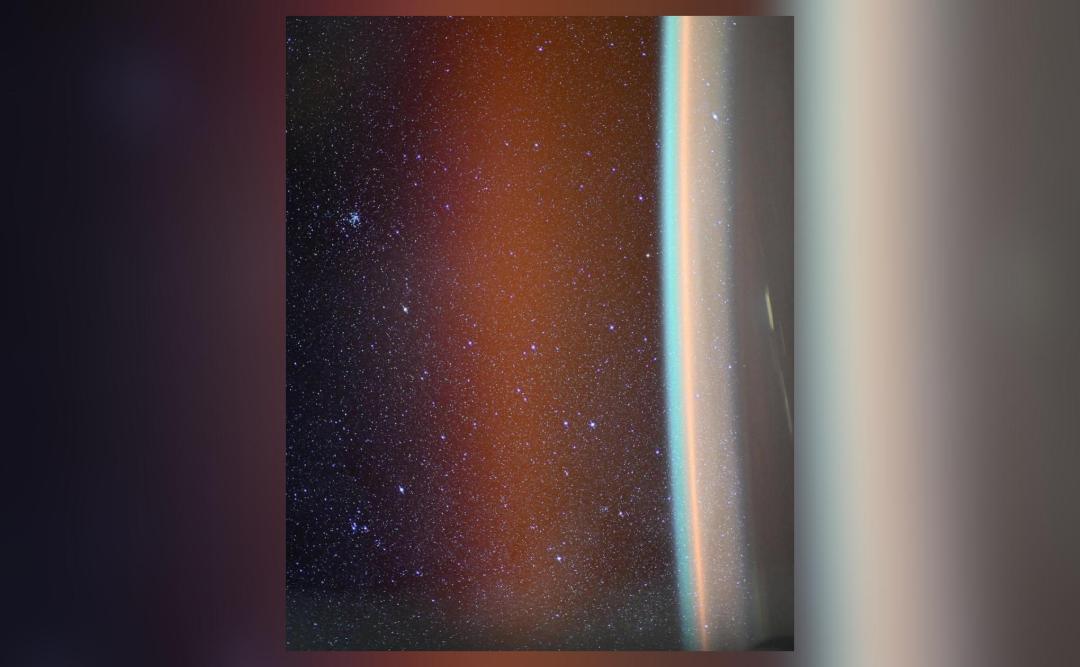
Pic shows colours of Earth’s atmosphere as seen from space
The Earth’s atmosphere is a breathtaking sight to behold, and a recent image captured from the International Space Station (ISS) showcases its vibrant colors in all their glory. The photo, shared by NASA astronaut Don Pettit, reveals the multiple layers of green atomic oxygen, orange hydroxyl radicals, and red airglow that make up our planet’s atmospheric landscape.
As Pettit described the image, “Multiple vibrant layers of green atomic oxygen, orange hydroxyl radicals, and red airglow excited from solar activity” can be seen in the stunning photo. The airglow, a phenomenon that occurs when atoms and molecules in the upper atmosphere are excited by sunlight, emits light in order to shed their excess energy. This process results in the spectacular display of colors that we see in the image.
The ISS, orbiting the Earth at an altitude of approximately 250 miles, provides a unique vantage point for astronauts to capture the beauty of our planet’s atmosphere. The space station’s orbit takes it over the Earth’s surface, allowing astronauts to witness the sunrise and sunset 16 times a day. This frequent exposure to the Earth’s atmospheric displays has given astronauts like Pettit a front-row seat to the breathtaking views of our planet’s atmospheric wonders.
The image captured by Pettit is a testament to the awe-inspiring beauty of the Earth’s atmosphere. The vibrant colors on display are a result of the complex interactions between the atmosphere, the sun, and the Earth’s magnetic field. The green atomic oxygen, for example, is a result of the excitation of oxygen atoms by ultraviolet radiation from the sun. Similarly, the orange hydroxyl radicals are produced when hydrogen and oxygen atoms react with each other in the presence of sunlight.
The red airglow, on the other hand, is a result of the excitation of atoms and molecules in the upper atmosphere by solar activity. This phenomenon is more pronounced during periods of high solar activity, such as during solar flares and coronal mass ejections. The red airglow can also be affected by the Earth’s magnetic field, which can influence the trajectory of charged particles from the sun and enhance the excitation of atoms and molecules in the upper atmosphere.
The image shared by Pettit is not only a stunning display of the Earth’s atmospheric colors but also a reminder of the complex and dynamic nature of our planet’s atmosphere. The atmosphere is a critical component of the Earth’s system, playing a crucial role in regulating the planet’s climate, weather patterns, and overall habitability.
The study of the Earth’s atmosphere is an active area of research, with scientists using a range of techniques to understand the complex interactions between the atmosphere, the sun, and the Earth’s surface. The ISS, with its unique vantage point and range of scientific instruments, has become an important platform for atmospheric research.
Astronauts like Pettit, who have spent extended periods of time on the ISS, have had the opportunity to witness the Earth’s atmospheric displays firsthand. Their observations and photographs have provided valuable insights into the dynamic nature of the atmosphere and have helped to raise awareness about the importance of atmospheric research.
In conclusion, the image captured by NASA astronaut Don Pettit is a breathtaking display of the Earth’s atmospheric colors as seen from space. The vibrant layers of green atomic oxygen, orange hydroxyl radicals, and red airglow are a testament to the complex and dynamic nature of our planet’s atmosphere. As we continue to explore and study the Earth’s atmosphere, we are reminded of the importance of this critical component of our planet’s system and the need to protect it for future generations.
News Source: https://www.instagram.com/p/DRsbl4PEZJx/
About the Author