Aditya-L1 set to observe Sun’s maximum in 2026
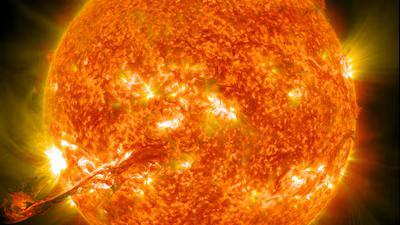
The Sun, the star at the center of our solar system, is a dynamic and ever-changing entity. Its activity cycle, which spans approximately 11 years, is characterized by periods of high and low solar activity. The peak phase of this cycle, known as the solar maximum, is a time of intense magnetic activity, solar storms, and coronal mass ejections. In 2026, the Sun is expected to reach its solar maximum, and India’s first dedicated solar observatory, Aditya-L1, will be ready to closely monitor this event.
Aditya-L1, which was launched in September 2022, is a spacecraft designed to study the Sun’s corona, the outer atmosphere of the Sun. The spacecraft is equipped with a suite of instruments that will allow scientists to study the Sun’s magnetic field, solar wind, and coronal mass ejections in unprecedented detail. With Aditya-L1, scientists will be able to gain valuable insights into the Sun’s behavior during the solar maximum, which will help us better understand the impact of space weather on our planet.
The solar maximum is a critical phase in the Sun’s 11-year cycle. During this time, the Sun’s magnetic poles flip, shifting the Sun from a period of quiet activity to one of intense activity. This pole flip leads to a significant increase in solar storms, coronal mass ejections, and rapid changes in the Sun’s magnetic field. These events can have a profound impact on our planet, causing disruptions to communication systems, power grids, and navigation systems.
One of the key objectives of Aditya-L1 is to study the Sun’s coronal mass ejections (CMEs). CMEs are massive bursts of plasma and magnetic field that are ejected from the Sun’s corona and can travel through space at incredible speeds. When a CME reaches the Earth, it can cause a geomagnetic storm, which can lead to spectacular displays of the aurora borealis (northern lights) and aurora australis (southern lights). However, CMEs can also have a negative impact on our planet, causing power outages, communication disruptions, and even damage to satellites and other spacecraft.
Aditya-L1 will also study the Sun’s solar wind, which is a stream of charged particles that flows away from the Sun at incredible speeds. The solar wind plays a critical role in shaping the Earth’s magnetic field and can have a significant impact on our planet’s atmosphere. By studying the solar wind, scientists can gain a better understanding of how the Sun’s activity affects the Earth’s magnetic field and atmosphere.
In addition to its scientific objectives, Aditya-L1 will also provide valuable insights into space weather. Space weather refers to the dynamic and variable conditions in the space environment that can affect the Earth’s magnetic field, atmosphere, and technological systems. By monitoring the Sun’s activity and predicting space weather events, scientists can provide early warnings to governments, industries, and the general public, allowing them to take necessary precautions to mitigate the effects of space weather.
The launch of Aditya-L1 is a significant milestone in India’s space program. The spacecraft is a testament to the country’s growing capabilities in space exploration and its commitment to advancing our understanding of the universe. With Aditya-L1, India joins a select group of countries that have launched dedicated solar observatories, including the United States, Europe, and Japan.
As Aditya-L1 prepares to observe the Sun’s solar maximum in 2026, scientists are eagerly anticipating the wealth of new data that the spacecraft will provide. The observations made by Aditya-L1 will help scientists to better understand the Sun’s behavior during this critical phase of its cycle and will provide valuable insights into the impact of space weather on our planet. With its advanced instruments and state-of-the-art technology, Aditya-L1 is poised to make significant contributions to our understanding of the Sun and its effects on the Earth.
In conclusion, the Aditya-L1 spacecraft is a significant step forward in India’s space program and will play a critical role in advancing our understanding of the Sun and its effects on the Earth. As the spacecraft prepares to observe the Sun’s solar maximum in 2026, scientists are eagerly anticipating the new insights that it will provide. With its advanced instruments and state-of-the-art technology, Aditya-L1 is poised to make significant contributions to the field of solar physics and space weather.
About the Author