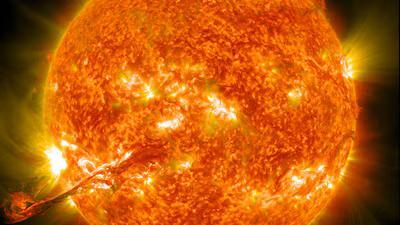
Aditya-L1 set to observe Sun’s maximum in 2026
The year 2026 is expected to be a crucial one for space weather enthusiasts and scientists alike, as the Sun is set to reach its solar maximum. This peak phase in the Sun’s 11-year cycle is characterized by heightened solar storms, frequent coronal mass ejections, and rapid magnetic activity changes. To closely monitor this phenomenon, India’s first dedicated solar observatory, Aditya-L1, is all set to play a vital role. In this blog post, we will delve into the significance of the Sun’s solar maximum, the role of Aditya-L1, and what scientists expect to learn from this event.
The Sun’s solar cycle, also known as the Schwabe cycle, is an 11-year period of fluctuating solar activity. During this cycle, the Sun’s magnetic poles flip, shifting it from a quiet phase to an intense phase of activity. This peak phase is known as the solar maximum, and it is during this time that the Sun experiences increased magnetic activity, leading to a higher frequency of solar flares and coronal mass ejections. These events can have a significant impact on space weather, affecting not only the Earth’s magnetic field but also the orbits of satellites and the communication systems that rely on them.
Aditya-L1, India’s first dedicated solar observatory, is specifically designed to study the Sun’s corona, which is the outer atmosphere of the Sun. The observatory is equipped with a range of instruments, including a coronagraph, a solar wind monitor, and a magnetometer, which will allow scientists to closely monitor the Sun’s activity during the solar maximum. By studying the Sun’s corona, scientists can gain valuable insights into the mechanisms that drive solar storms and coronal mass ejections, which can have a significant impact on space weather.
The solar maximum of 2026 is expected to be a particularly significant event, as it will offer scientists a unique opportunity to study the Sun’s magnetic activity in detail. During this time, the Sun’s magnetic poles will be at their most active, leading to a higher frequency of solar flares and coronal mass ejections. By closely monitoring the Sun’s activity during this period, scientists can gain a better understanding of the complex mechanisms that drive space weather, which will be crucial for predicting and mitigating the effects of solar storms on Earth’s magnetic field and communication systems.
One of the key areas of focus for Aditya-L1 during the solar maximum will be the study of coronal mass ejections. These events occur when a large bubble of plasma is ejected from the Sun’s corona, often accompanied by a solar flare. Coronal mass ejections can have a significant impact on space weather, causing geomagnetic storms that can affect the Earth’s magnetic field and communication systems. By studying coronal mass ejections in detail, scientists can gain a better understanding of the mechanisms that drive these events, which will be crucial for predicting and mitigating their effects on Earth.
Another area of focus for Aditya-L1 will be the study of the Sun’s magnetic activity. During the solar maximum, the Sun’s magnetic poles will be at their most active, leading to rapid changes in the magnetic field. By closely monitoring these changes, scientists can gain a better understanding of the complex mechanisms that drive the Sun’s magnetic activity, which will be crucial for predicting and mitigating the effects of solar storms on Earth’s magnetic field and communication systems.
In addition to its scientific significance, the solar maximum of 2026 will also have practical implications for space weather forecasting. By closely monitoring the Sun’s activity during this period, scientists can gain a better understanding of the complex mechanisms that drive space weather, which will be crucial for predicting and mitigating the effects of solar storms on Earth’s magnetic field and communication systems. This will be particularly important for satellite operators, who will need to take steps to protect their assets from the effects of solar storms.
In conclusion, the solar maximum of 2026 is set to be a significant event, offering scientists a unique opportunity to study the Sun’s magnetic activity in detail. Aditya-L1, India’s first dedicated solar observatory, will play a vital role in closely monitoring the Sun’s activity during this period, providing valuable insights into the mechanisms that drive space weather. By studying the Sun’s corona, coronal mass ejections, and magnetic activity, scientists can gain a better understanding of the complex mechanisms that drive solar storms, which will be crucial for predicting and mitigating their effects on Earth’s magnetic field and communication systems.
As we look ahead to the solar maximum of 2026, it is clear that Aditya-L1 will be at the forefront of space weather research, providing scientists with a unique opportunity to study the Sun’s magnetic activity in detail. With its advanced instruments and cutting-edge technology, Aditya-L1 is set to make significant contributions to our understanding of the Sun and its impact on space weather.
About the Author