Aditya-L1 set to observe Sun’s maximum in 2026
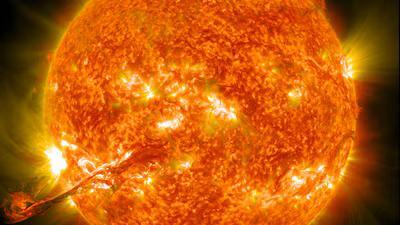
The year 2026 is expected to be a significant one for space weather enthusiasts and scientists alike, as the Sun is set to reach its solar maximum. This peak phase in the Sun’s 11-year cycle is a time of heightened activity, with increased solar storms, frequent coronal mass ejections, and rapid changes in magnetic activity. To closely monitor this event, India’s first dedicated solar observatory, Aditya-L1, will be at the forefront, providing valuable insights into the Sun’s behavior and its impact on space weather.
The Sun’s solar cycle is a periodic phenomenon that occurs every 11 years, with the solar maximum marking the peak of this cycle. During this phase, the Sun’s magnetic poles flip, shifting from a period of quiet activity to one of intense turmoil. This flipping of the magnetic poles leads to a significant increase in solar activity, including the formation of sunspots, solar flares, and coronal mass ejections. These events can have a profound impact on space weather, affecting the Earth’s magnetic field, radiation levels, and even communication systems.
Aditya-L1, launched by the Indian Space Research Organisation (ISRO), is specifically designed to study the Sun’s corona, the outer atmosphere of the Sun. The spacecraft is equipped with a range of instruments, including a coronagraph, a solar wind monitor, and a magnetometer, which will allow scientists to closely monitor the Sun’s activity during the solar maximum. By studying the Sun’s corona, scientists hope to gain a better understanding of the mechanisms that drive solar activity and how it affects the Earth’s magnetic field and upper atmosphere.
The solar maximum is expected to bring about some spectacular events, including intense solar flares and coronal mass ejections. These events can release massive amounts of energy, potentially disrupting communication systems, power grids, and even satellite operations. By monitoring the Sun’s activity during this period, scientists can provide early warnings of potential disruptions, allowing for necessary precautions to be taken.
One of the key areas of focus for Aditya-L1 will be the study of coronal mass ejections (CMEs). CMEs are massive clouds of plasma that are ejected from the Sun’s corona, often associated with solar flares and other intense magnetic activity. These events can have a significant impact on the Earth’s magnetic field, causing geomagnetically induced currents (GICs) that can disrupt power grids and communication systems. By studying CMEs in detail, scientists hope to better understand the mechanisms that drive these events and how they interact with the Earth’s magnetic field.
Another area of focus for Aditya-L1 will be the study of the Sun’s magnetic field. The Sun’s magnetic field plays a crucial role in shaping the solar wind, a stream of charged particles that flows away from the Sun. The solar wind can have a significant impact on the Earth’s magnetic field, causing changes in the radiation levels and even affecting the formation of the aurorae. By monitoring the Sun’s magnetic field during the solar maximum, scientists can gain a better understanding of how it affects the Earth’s magnetic field and the solar wind.
The data collected by Aditya-L1 during the solar maximum will be invaluable for scientists, providing insights into the Sun’s behavior and its impact on space weather. The spacecraft will provide high-resolution images of the Sun’s corona, as well as detailed measurements of the solar wind, magnetic field, and radiation levels. This data will be used to improve our understanding of the Sun’s solar cycle and how it affects the Earth’s magnetic field and upper atmosphere.
In addition to its scientific significance, the Aditya-L1 mission also marks a major milestone for India’s space program. The mission demonstrates India’s capabilities in designing and launching complex spacecraft, as well as its commitment to advancing our understanding of the Sun and its impact on space weather. The data collected by Aditya-L1 will be shared with the international scientific community, contributing to a global effort to better understand the Sun and its effects on the Earth.
In conclusion, the solar maximum of 2026 is set to be a significant event, with the Sun’s magnetic poles flipping and shifting from a period of quiet activity to one of intense turmoil. Aditya-L1, India’s first dedicated solar observatory, will be at the forefront of monitoring this event, providing valuable insights into the Sun’s behavior and its impact on space weather. The data collected by the spacecraft will be invaluable for scientists, advancing our understanding of the Sun’s solar cycle and its effects on the Earth’s magnetic field and upper atmosphere.
About the Author