Aditya-L1 set to observe Sun’s maximum in 2026
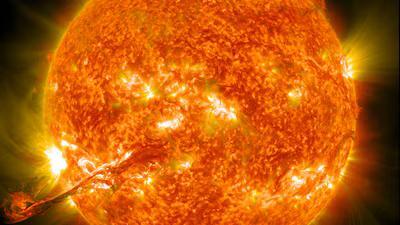
The Sun, the star at the center of our solar system, is a dynamic and ever-changing entity. Its activity ebbs and flows in an 11-year cycle, with periods of high and low activity. In 2026, the Sun is expected to reach its solar maximum, a peak phase in its cycle characterized by heightened magnetic activity, frequent coronal mass ejections, and intense solar storms. To closely monitor this event, India’s first dedicated solar observatory, Aditya-L1, is all set to observe the Sun’s maximum activity, offering valuable insights into space weather.
The Aditya-L1 mission, launched by the Indian Space Research Organisation (ISRO), is designed to study the Sun’s corona, the outer atmosphere of the Sun. The corona is a region of intense magnetic activity, where temperatures can reach millions of degrees Celsius, much hotter than the Sun’s surface. The Aditya-L1 spacecraft is equipped with a range of instruments, including a coronagraph, a solar wind monitor, and a magnetometer, which will allow scientists to study the Sun’s corona in unprecedented detail.
The solar maximum, expected to occur in 2026, is a critical phase in the Sun’s 11-year cycle. During this period, the Sun’s magnetic poles flip, shifting it from a quiet to an intense activity phase. This flipping of the magnetic poles leads to a significant increase in magnetic activity, resulting in frequent coronal mass ejections (CMEs) and solar flares. CMEs are massive bursts of plasma and magnetic field that can interact with the Earth’s magnetic field, causing geomagnetic storms and disrupting communication and navigation systems.
The Aditya-L1 spacecraft will play a crucial role in monitoring the Sun’s activity during this period. Its coronagraph instrument will study the Sun’s corona, providing valuable insights into the formation and evolution of CMEs. The solar wind monitor will measure the density, velocity, and temperature of the solar wind, which will help scientists understand the impact of CMEs on the Earth’s magnetic field. The magnetometer will measure the magnetic field of the Sun, allowing scientists to study the changes in the Sun’s magnetic field during the solar maximum.
The data collected by Aditya-L1 during the solar maximum will be invaluable for scientists studying space weather. Space weather refers to the dynamic and variable conditions in the space environment, including the Sun’s magnetic field, solar wind, and radiation. Understanding space weather is critical for predicting and mitigating the impact of solar activity on the Earth’s magnetic field, communication systems, and navigation systems.
The solar maximum is also expected to have a significant impact on the Earth’s climate. The increased magnetic activity during this period can lead to changes in the Earth’s atmospheric circulation patterns, resulting in extreme weather events such as hurricanes, droughts, and heatwaves. The data collected by Aditya-L1 will help scientists understand the relationship between the Sun’s activity and the Earth’s climate, allowing for more accurate predictions of weather patterns.
In addition to its scientific objectives, the Aditya-L1 mission also has significant technological implications. The spacecraft’s instruments and systems have been designed and developed by Indian scientists and engineers, demonstrating the country’s capabilities in space technology. The mission has also involved collaboration with international scientists and agencies, highlighting the global nature of space research.
In conclusion, the Aditya-L1 spacecraft is all set to observe the Sun’s maximum activity in 2026, providing valuable insights into space weather and the Sun’s magnetic activity. The data collected during this period will be crucial for scientists studying the Sun’s corona, solar wind, and magnetic field, and will have significant implications for our understanding of the Earth’s climate and space weather. As we look forward to the solar maximum, the Aditya-L1 mission is poised to play a critical role in advancing our knowledge of the Sun and its impact on our planet.
About the Author