Aditya-L1 set to observe Sun’s maximum in 2026
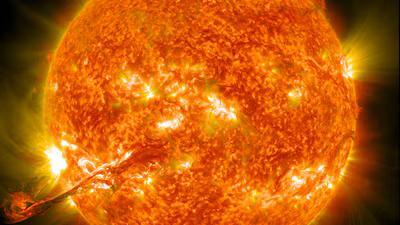
The year 2026 is expected to be a significant one for space weather enthusiasts and scientists alike, as the Sun is predicted to reach its solar maximum. This peak phase in the Sun’s 11-year cycle is characterized by heightened solar storms, frequent coronal mass ejections, and rapid magnetic activity changes. To closely monitor this phenomenon, India’s first dedicated solar observatory, Aditya-L1, is all set to play a crucial role. In this blog post, we will delve into the details of Aditya-L1 and its mission to observe the Sun’s maximum activity in 2026.
The Sun’s solar cycle, also known as the Schwabe cycle, is an 11-year period during which the Sun’s magnetic field and solar activity vary. The cycle begins with a quiet phase, known as the solar minimum, and gradually builds up to a peak phase, known as the solar maximum. During the solar maximum, the Sun’s magnetic poles flip, resulting in a significant increase in solar activity. This increased activity leads to more frequent and intense solar storms, coronal mass ejections, and changes in the Sun’s magnetic field.
Aditya-L1, India’s first dedicated solar observatory, is designed to study the Sun’s corona, the outer atmosphere of the Sun. The spacecraft is equipped with a range of instruments, including a coronagraph, a solar wind monitor, and a magnetometer, which will help scientists to closely monitor the Sun’s activity during the solar maximum. The coronagraph will study the Sun’s corona, while the solar wind monitor will track the solar wind, a stream of charged particles emitted by the Sun. The magnetometer will measure the Sun’s magnetic field, providing valuable insights into the Sun’s internal dynamics.
The solar maximum in 2026 is expected to be a significant event, with scientists predicting heightened solar storms and coronal mass ejections. These events can have a significant impact on Earth’s magnetic field, causing disruptions to communication and navigation systems. By closely monitoring the Sun’s activity during this period, scientists can gain valuable insights into the Sun’s internal dynamics and the effects of space weather on Earth’s magnetic field.
Aditya-L1 is not just a Indian mission, but a collaborative effort involving scientists and researchers from around the world. The spacecraft is designed to provide a platform for international collaboration, with scientists from various countries contributing to the mission. The data collected by Aditya-L1 will be made available to the global scientific community, providing a valuable resource for researchers studying the Sun and space weather.
The solar maximum in 2026 is also expected to provide valuable insights into the Sun’s internal dynamics. The Sun’s magnetic field is constantly changing, with the magnetic poles flipping every 11 years. This flipping of the magnetic poles is known as a magnetic reversal, and it is a significant event in the Sun’s solar cycle. By studying the Sun’s magnetic field during the solar maximum, scientists can gain a better understanding of the Sun’s internal dynamics and the processes that drive the solar cycle.
In addition to its scientific objectives, Aditya-L1 also has significant implications for space weather forecasting. Space weather refers to the dynamic and variable conditions in the space environment, including the Sun’s magnetic field, solar wind, and coronal mass ejections. By closely monitoring the Sun’s activity, scientists can provide early warnings of potential space weather events, allowing for mitigation strategies to be put in place. This can help to protect critical infrastructure, such as power grids and communication systems, from the effects of space weather.
In conclusion, the solar maximum in 2026 is expected to be a significant event, with Aditya-L1 playing a crucial role in monitoring the Sun’s activity. The spacecraft’s range of instruments will provide valuable insights into the Sun’s internal dynamics, space weather, and the effects of solar activity on Earth’s magnetic field. As we approach the solar maximum, scientists and space weather enthusiasts alike will be eagerly watching the Sun’s activity, and Aditya-L1 will be at the forefront of this effort.
About the Author