Cassini Finds Fresh Organic Molecules on Saturn’s Moon
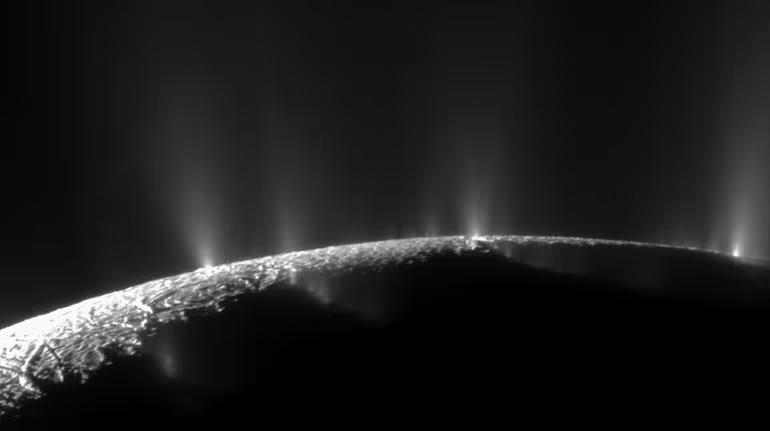
In a groundbreaking discovery, NASA’s Cassini mission has detected fresh, complex organic molecules erupting from the subsurface ocean of Saturn’s moon Enceladus. This finding has significant implications for the search for life beyond Earth and provides strong evidence that Enceladus could be habitable. The Cassini spacecraft, which flew just 13 miles above the surface of Enceladus, sampled ice grains in active plumes and found a variety of organic compounds, including aliphatic, cyclic, nitrogen- and oxygen-bearing compounds, as well as double-bonded molecules.
The discovery was made possible by the Cassini spacecraft’s close flyby of Enceladus, which allowed it to collect and analyze samples from the moon’s subsurface ocean. The spacecraft’s instruments were able to detect the presence of complex organic molecules in the plumes of water vapor and ice particles that erupt from Enceladus’s surface. These molecules are the building blocks of life and are essential for the existence of living organisms.
The findings suggest that Enceladus’s subsurface ocean is a rich source of organic molecules, which are being produced through hydrothermal processes. These processes involve the interaction of hot water with rock, which leads to the formation of complex organic compounds. The presence of these compounds in the plumes of Enceladus provides strong evidence that the moon’s subsurface ocean is capable of supporting life.
The discovery of organic molecules on Enceladus is not the first time that such compounds have been found in our solar system. Previous missions have detected organic molecules on comets and in the atmospheres of other planets. However, the discovery on Enceladus is significant because it suggests that the moon’s subsurface ocean is a potential habitat for life.
The Cassini mission has been instrumental in our understanding of the Saturn system and its moons. Launched in 1997, the mission has been exploring the Saturn system since 2004. The spacecraft has made numerous discoveries, including the detection of geysers on Enceladus and the presence of liquid methane lakes on Saturn’s moon Titan.
The discovery of organic molecules on Enceladus has significant implications for the search for life beyond Earth. The presence of complex organic compounds in the plumes of Enceladus provides strong evidence that the moon’s subsurface ocean is capable of supporting life. The finding also suggests that Enceladus may be a potential habitat for life, and that the moon’s subsurface ocean could be a suitable environment for the existence of living organisms.
The search for life beyond Earth is an ongoing effort, with scientists using a variety of methods to search for signs of life on other planets and moons. The discovery of organic molecules on Enceladus is a significant step forward in this search, and provides strong evidence that the moon’s subsurface ocean is a potential habitat for life.
In conclusion, the discovery of fresh organic molecules on Enceladus is a significant finding that has important implications for the search for life beyond Earth. The presence of complex organic compounds in the plumes of Enceladus provides strong evidence that the moon’s subsurface ocean is capable of supporting life, and suggests that Enceladus may be a potential habitat for life. The finding is a testament to the ongoing efforts of scientists to explore our solar system and to search for signs of life beyond Earth.
The Cassini mission has been a groundbreaking endeavor that has greatly expanded our understanding of the Saturn system and its moons. The discovery of organic molecules on Enceladus is a significant highlight of the mission, and provides strong evidence that the moon’s subsurface ocean is a potential habitat for life. As scientists continue to explore our solar system and search for signs of life beyond Earth, the discovery of organic molecules on Enceladus will remain an important finding that will continue to inspire and motivate future research and exploration.
The search for life beyond Earth is an ongoing effort that involves the use of a variety of methods and techniques. Scientists use telescopes and other instruments to search for signs of life on other planets and moons, and missions like Cassini have been instrumental in our understanding of the Saturn system and its potential for life. The discovery of organic molecules on Enceladus is a significant step forward in this search, and provides strong evidence that the moon’s subsurface ocean is a potential habitat for life.
As we continue to explore our solar system and search for signs of life beyond Earth, the discovery of organic molecules on Enceladus will remain an important finding that will continue to inspire and motivate future research and exploration. The search for life beyond Earth is an ongoing effort that involves the use of a variety of methods and techniques, and the discovery of organic molecules on Enceladus is a significant highlight of this effort.
About the Author