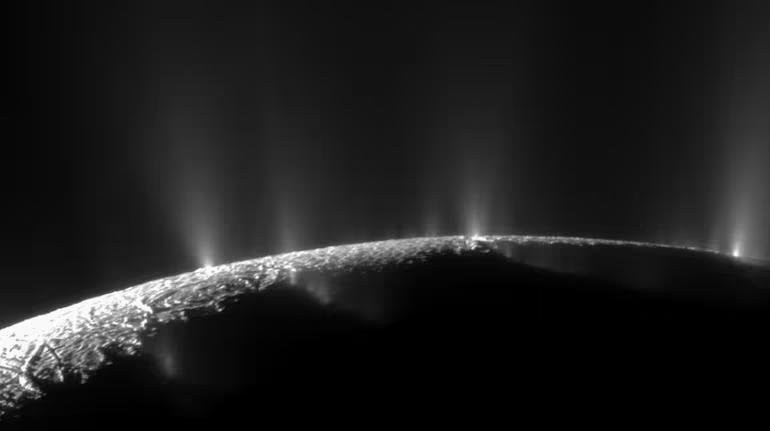
Cassini Finds Fresh Organic Molecules on Saturn’s Moon
In a groundbreaking discovery, NASA’s Cassini mission has detected fresh, complex organic molecules erupting from the subsurface ocean of Saturn’s moon Enceladus. This finding has significant implications for the search for life beyond Earth and provides strong evidence that Enceladus could be a habitable world. The Cassini spacecraft, which flew just 13 miles above the surface of Enceladus, sampled ice grains in active plumes and found a wide range of organic compounds, including aliphatic, cyclic, nitrogen- and oxygen-bearing molecules, as well as double-bonded molecules.
The discovery of organic molecules on Enceladus is a major breakthrough, as these compounds are the building blocks of life. Organic molecules are carbon-based molecules that are found in all living things on Earth, and they are essential for the development of life as we know it. The fact that Cassini has detected these molecules on Enceladus suggests that the moon may have the necessary ingredients for life to exist.
The Cassini spacecraft flew through the plumes of Enceladus in 2015, collecting data and samples that have been analyzed by scientists over the past few years. The plumes are thought to originate from a subsurface ocean that lies beneath the moon’s icy surface. This ocean is believed to be in contact with rock, which could provide the necessary energy and nutrients for life to exist. The discovery of organic molecules in the plumes suggests that the ocean may be capable of supporting life, and that the molecules could be delivered to the surface, where they could potentially be detected by future missions.
The types of organic molecules detected by Cassini are similar to those found on Earth, and they are thought to be the result of chemical reactions that occur in the subsurface ocean. The molecules are complex and include a wide range of functional groups, which are the building blocks of larger molecules. The presence of these molecules on Enceladus suggests that the moon’s subsurface ocean may be similar to those found on Earth, and that the conditions necessary for life to exist may be present.
The discovery of organic molecules on Enceladus is not the only evidence that suggests the moon may be habitable. Previous studies have shown that the moon’s subsurface ocean is likely to be in contact with rock, which could provide the necessary energy and nutrients for life to exist. The ocean is also thought to be warm enough to support life, with temperatures ranging from 0°C to 30°C. Additionally, the presence of a stable energy source, such as tidal heating, could provide the necessary energy for life to exist.
The implications of this discovery are significant, and they have major implications for the search for life beyond Earth. The fact that Enceladus, a moon of Saturn, has the necessary ingredients for life to exist suggests that the possibility of life existing elsewhere in our solar system is quite high. The discovery also highlights the importance of exploring our solar system and the potential for finding life on other planets and moons.
The Cassini mission was a groundbreaking endeavor that explored the Saturn system in unprecedented detail. The mission, which was launched in 1997, spent 13 years exploring the Saturn system, including the planet’s rings, moons, and magnetic field. The mission was a major success, and it provided a wealth of new information about the Saturn system and its potential for supporting life.
In conclusion, the discovery of fresh organic molecules on Enceladus is a major breakthrough that has significant implications for the search for life beyond Earth. The fact that the moon’s subsurface ocean may be capable of supporting life, and that the necessary ingredients for life exist, makes Enceladus a prime target for future missions. The Cassini mission has provided a wealth of new information about the Saturn system, and it has paved the way for future missions that will explore the moon and its potential for supporting life.
The search for life beyond Earth is an exciting and ongoing area of research, and the discovery of organic molecules on Enceladus is a major step forward. As we continue to explore our solar system and beyond, we may eventually find evidence of life existing elsewhere in the universe. The possibility of finding life on other planets and moons is a tantalizing one, and it is an area of research that will continue to captivate scientists and the public for years to come.
About the Author