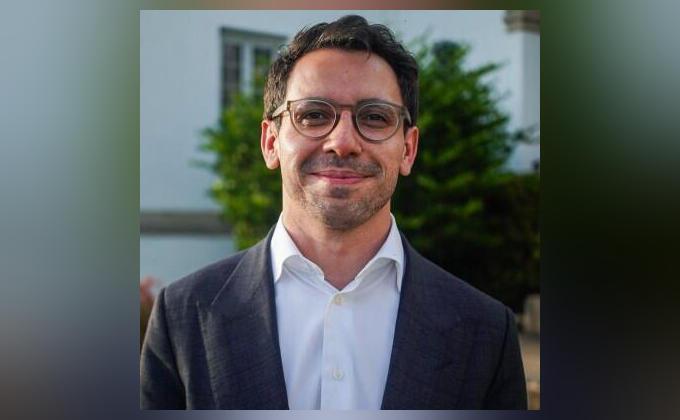
I’ll fire all H-1B workers at state agency: Florida Guv candidate
The debate over immigration and job security has been a contentious issue in the United States for years, with various politicians weighing in on the matter. Recently, James Fishback, a candidate running to succeed Ron DeSantis as Florida’s next Republican Governor, made a bold statement that has sparked controversy and discussion. According to Fishback, if he is elected, he will “fire every H-1B [visa holder] working at a state agency.” This statement has significant implications for the tech industry, the economy, and the thousands of H-1B visa holders currently working in the United States.
The H-1B visa program is a non-immigrant visa that allows U.S. employers to temporarily employ foreign workers in specialty occupations. The program is designed to help U.S. companies fill labor gaps in fields such as technology, engineering, and healthcare. However, critics of the program argue that it is often used to replace American workers with cheaper foreign labor. Fishback’s statement appears to be a response to these concerns, as he pledged to “cancel state contracts with companies that employ H-1Bs instead of qualified Floridians” and to “incentivise companies to hire Americans again.”
Fishback’s comments on H-1B visa holders are not limited to his statement on firing them from state agencies. He has also been quoted as saying, “We need to deport…illegals…[and] H-1Bs.” This statement has raised eyebrows, as it implies that Fishback views H-1B visa holders as equivalent to undocumented immigrants. However, it is essential to note that H-1B visa holders are, in fact, legal immigrants who have been authorized to work in the United States.
The implications of Fishback’s statements are far-reaching. If he were to follow through on his pledge to fire all H-1B workers at state agencies, it could lead to significant disruptions in the tech industry and other fields that rely heavily on H-1B visa holders. Many U.S. companies, including major tech firms, rely on H-1B visa holders to fill critical labor gaps. Firing these workers could lead to project delays, lost productivity, and decreased competitiveness.
Furthermore, Fishback’s statements have been criticized for being overly simplistic and failing to account for the complexities of the issue. The H-1B visa program is a federal program, and as such, it is not entirely clear whether a state governor would have the authority to unilaterally fire H-1B visa holders from state agencies. Additionally, canceling state contracts with companies that employ H-1B visa holders could have unintended consequences, such as driving businesses out of the state and reducing economic growth.
It is also worth noting that Fishback’s statements may be motivated by a desire to appeal to certain segments of the electorate. The issue of immigration and job security is a highly politicized one, and some politicians may see it as a way to gain traction with voters who are concerned about the impact of immigration on the U.S. job market. However, it is essential to approach this issue in a nuanced and informed manner, rather than relying on simplistic solutions or rhetoric.
In conclusion, James Fishback’s statement on firing all H-1B workers at state agencies has sparked controversy and discussion. While the issue of immigration and job security is a complex one, it is essential to approach it in a thoughtful and informed manner. Rather than relying on simplistic solutions or rhetoric, policymakers should work to create a comprehensive and nuanced approach to addressing the needs of the U.S. job market. This may involve reforming the H-1B visa program to ensure that it is working as intended, as well as investing in education and training programs to help American workers develop the skills they need to compete in the modern economy.
About the Author