Cassini Finds Fresh Organic Molecules on Saturn’s Moon
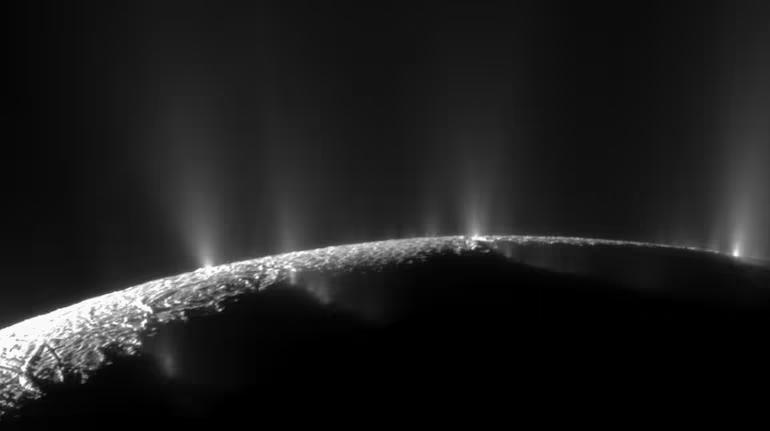
In a groundbreaking discovery, NASA’s Cassini mission has detected fresh, complex organic molecules erupting from the subsurface ocean of Saturn’s moon Enceladus. The findings, which were obtained when the spacecraft flew just 13 miles above the surface of the moon, have significant implications for the search for life beyond Earth. The presence of organic molecules, which are the building blocks of life, suggests that Enceladus may have the necessary ingredients to support life.
The Cassini spacecraft, which was launched in 1997 and orbited Saturn from 2004 to 2017, was equipped with a range of instruments designed to study the planet and its moons. One of these instruments, the Cosmic Dust Analyzer, was used to sample ice grains in the active plumes of Enceladus. The plumes, which erupt from the moon’s subsurface ocean, contain a mixture of water vapor, ice particles, and organic compounds.
The analysis of the ice grains revealed the presence of aliphatic, cyclic, nitrogen- and oxygen-bearing compounds, including double-bonded molecules. These complex organic molecules are similar to those found in meteorites and are thought to have been formed through the interaction of water and rock in the moon’s subsurface ocean. The presence of these molecules in the plumes suggests that they are being produced in the moon’s subsurface ocean and are then being ejected into space through the plumes.
The discovery of fresh organic molecules on Enceladus is significant because it provides evidence that the moon’s subsurface ocean has the necessary chemistry to support life. The presence of organic molecules, which are the building blocks of life, is a key ingredient in the search for life beyond Earth. The fact that these molecules are being produced in the moon’s subsurface ocean and are then being ejected into space suggests that Enceladus may have a habitable environment.
The findings also have implications for the search for life on other moons in our solar system. The presence of organic molecules on Enceladus suggests that other moons with subsurface oceans, such as Jupiter’s moon Europa, may also have the necessary chemistry to support life. The discovery of life on another moon in our solar system would be a major breakthrough and would have significant implications for our understanding of the origins of life in the universe.
The Cassini mission has made several significant discoveries about Enceladus, including the presence of a subsurface ocean and the existence of hydrothermal activity on the moon’s seafloor. The discovery of fresh organic molecules is the latest in a series of findings that suggest Enceladus may be habitable. The moon’s subsurface ocean, which is thought to be in contact with rock, provides a potential source of energy and nutrients for life.
The search for life on Enceladus is an ongoing area of research, with several future missions planned to study the moon in more detail. The NASA’s Dragonfly mission, which is scheduled to launch in 2027, will send a rotorcraft-lander to explore Saturn’s moons, including Enceladus. The mission will study the moon’s subsurface ocean and search for signs of life.
In conclusion, the discovery of fresh organic molecules on Enceladus is a significant finding that has implications for the search for life beyond Earth. The presence of complex organic molecules in the moon’s subsurface ocean suggests that Enceladus may have the necessary ingredients to support life. The findings also have implications for the search for life on other moons in our solar system and provide evidence that the search for life beyond Earth is an ongoing and exciting area of research.
About the Author