Cassini finds fresh organic molecules on Saturn’s Moon
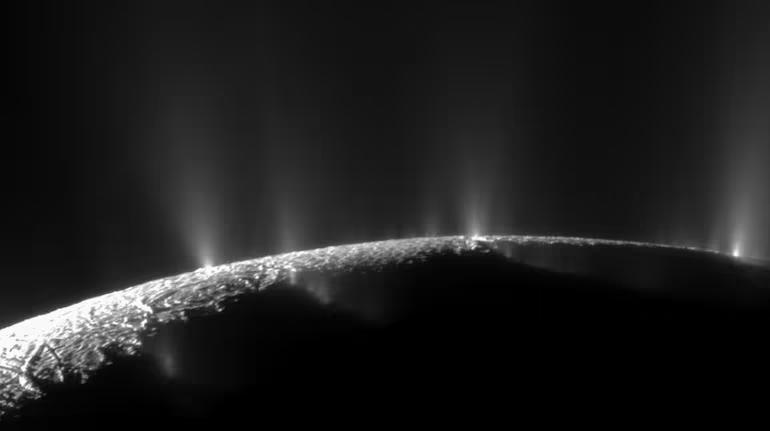
In a groundbreaking discovery, NASA’s Cassini mission has detected fresh, complex organic molecules erupting from the subsurface ocean of Saturn’s moon Enceladus. This finding has significant implications for the search for life beyond Earth, as it suggests that Enceladus, with its warm, watery environment, could be a habitable world. The Cassini spacecraft, which flew just 13 miles above the surface of Enceladus, sampled ice grains in the moon’s active plumes and found a diverse array of organic compounds, including aliphatic, cyclic, nitrogen- and oxygen-bearing molecules, as well as double-bonded molecules.
The discovery of these complex organic molecules is a major breakthrough, as it provides evidence that the necessary building blocks for life are present on Enceladus. Organic molecules are the foundation of life on Earth, and their presence on other celestial bodies is a key indicator of the potential for life to exist. The fact that these molecules are fresh and complex suggests that they are being produced by ongoing geological processes on Enceladus, rather than being the result of contamination from other sources.
The Cassini spacecraft’s flyby of Enceladus was a carefully planned maneuver, designed to allow the spacecraft to sample the moon’s plumes and gather data on its composition. The spacecraft’s Cosmic Dust Analyzer and Ion and Neutral Mass Spectrometer instruments were used to analyze the ice grains and gas in the plumes, and the data revealed a rich array of organic molecules. The findings were published in a recent study, which provides a detailed analysis of the data and its implications for our understanding of Enceladus and its potential for life.
The discovery of organic molecules on Enceladus is not the only evidence that suggests the moon could be habitable. Previous studies have shown that Enceladus has a subsurface ocean, which is thought to be in contact with rock and could provide a source of energy and nutrients for life. The moon’s ice crust is also thought to be geologically active, with water vapor and other gases being released into space through its plumes. These conditions are similar to those found on Earth, where life is known to thrive in hydrothermal environments.
The implications of this discovery are significant, as they suggest that Enceladus could be a prime target in the search for life beyond Earth. The moon’s subsurface ocean and geological activity provide a unique environment that could support life, and the presence of complex organic molecules provides the necessary building blocks. Further study of Enceladus and its plumes could provide valuable insights into the moon’s habitability and the potential for life to exist elsewhere in our solar system.
The Cassini mission, which was launched in 1997 and orbited Saturn from 2004 to 2017, has provided a wealth of information about the Saturnian system and its moons. The mission’s findings have been instrumental in shaping our understanding of the outer solar system and its potential for life. The discovery of organic molecules on Enceladus is a major highlight of the mission, and it provides a new and exciting area of research for scientists to explore.
In conclusion, the discovery of fresh, complex organic molecules on Enceladus is a major breakthrough in the search for life beyond Earth. The findings of the Cassini mission provide strong evidence that Enceladus could be a habitable world, with a subsurface ocean and geological activity that could support life. The presence of complex organic molecules on the moon provides the necessary building blocks for life, and further study of Enceladus and its plumes could provide valuable insights into the moon’s habitability and the potential for life to exist elsewhere in our solar system.
About the Author