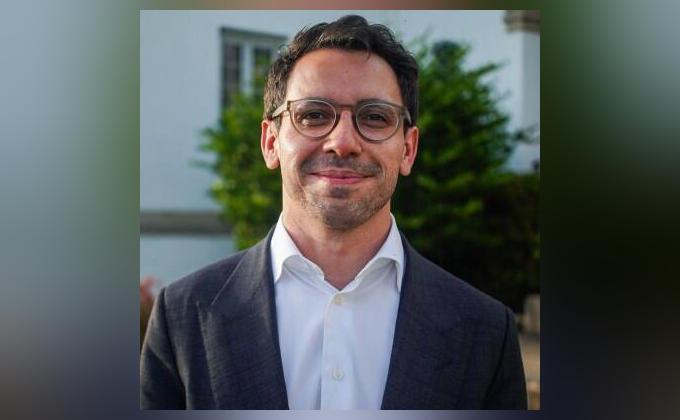
I’ll fire all H-1B workers at state agency: Florida Guv candidate
The debate over immigration and job security has been a contentious issue in the United States for years. The H-1B visa program, which allows foreign workers to temporarily work in the US, has been a particular point of contention. Recently, James Fishback, a candidate running to succeed Ron DeSantis as Florida’s next Republican Governor, made a bold statement that has sparked controversy and debate. According to Fishback, if he is elected, he will “fire every H-1B [visa holder] working at a state agency”.
Fishback’s statement is not just a simple campaign promise; it’s a reflection of a broader sentiment among some Americans who feel that foreign workers are taking jobs away from qualified American citizens. The H-1B visa program is designed to allow companies to hire foreign workers with specialized skills, but some argue that it’s being abused to bring in cheaper labor. Fishback’s proposal to cancel state contracts with companies that employ H-1B workers instead of qualified Floridians is an attempt to address this perceived issue.
“We need to incentivize companies to hire Americans again,” Fishback said. This statement suggests that Fishback believes that companies are prioritizing foreign workers over American citizens, and that this needs to change. However, it’s worth noting that the H-1B visa program is designed to supplement the US workforce, not replace it. Many companies rely on H-1B workers to fill specialized roles that they cannot find qualified American candidates for.
Fishback’s statement also included a call to “deport…illegals…[and] H-1Bs”. This raises concerns about the potential consequences of such a policy. Deporting H-1B workers who are in the US legally and contributing to the economy could have significant negative impacts on the state’s economy and reputation. Furthermore, it’s unclear how Fishback plans to distinguish between H-1B workers who are in the US legally and those who are not.
The impact of Fishback’s proposal on the tech industry, which relies heavily on H-1B workers, could be significant. Many tech companies have operations in Florida, and rely on H-1B workers to fill roles such as software engineers, data scientists, and IT specialists. If Fishback’s proposal were to become law, it could lead to a brain drain in the state, as top talent is forced to leave or is no longer able to work in the state.
It’s also worth noting that Fishback’s proposal may not be feasible from a practical perspective. H-1B workers are employed by private companies, not the state government, so it’s unclear how Fishback would be able to “fire” them. Additionally, the H-1B visa program is a federal program, and as such, it’s not clear what authority the state of Florida would have to cancel contracts with companies that employ H-1B workers.
In conclusion, James Fishback’s proposal to fire all H-1B workers at state agencies and cancel state contracts with companies that employ H-1B workers instead of qualified Floridians is a controversial and complex issue. While the intention behind the proposal may be to prioritize American workers, the potential consequences of such a policy could be far-reaching and have significant negative impacts on the state’s economy and reputation. As the debate over immigration and job security continues, it’s essential to consider the potential consequences of such policies and to prioritize solutions that balance the needs of American workers with the needs of the economy.
About the Author