What is causing the delay in India’s Samudrayaan mission?
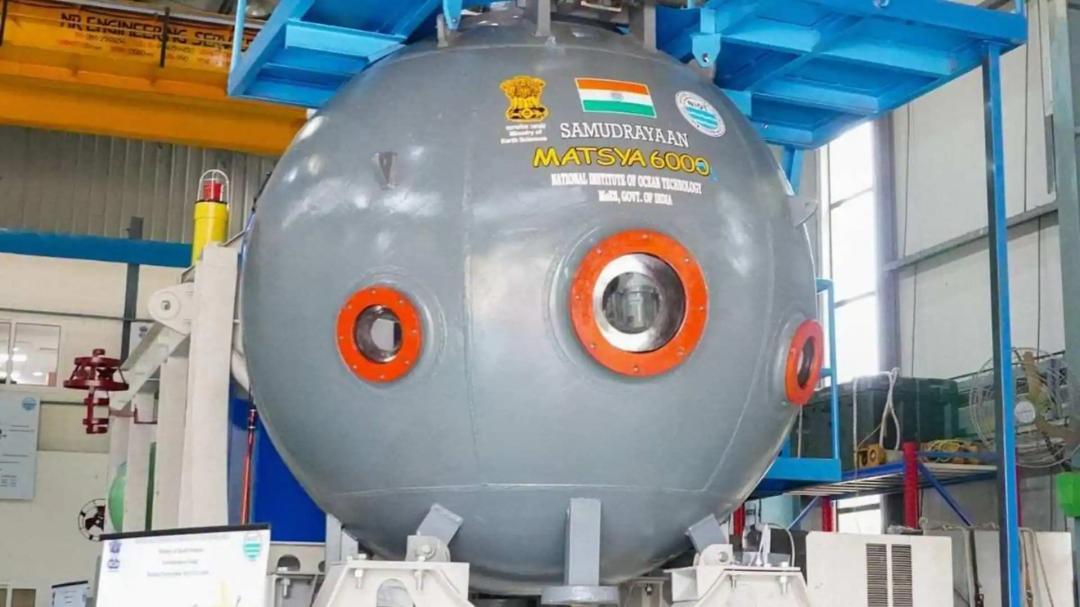
India’s ambitious Samudrayaan mission, which aims to send a manned submersible to a depth of 6,000 meters underwater, has hit a roadblock. The mission, led by the National Institute of Ocean Technology (NIOT), has been delayed due to the late delivery of a critical component – syntactic foam cladding – from France. This vital component is essential for the submersible’s buoyancy, and its delay has pushed back the testing schedule to April next year.
The Samudrayaan mission is a significant undertaking for India, as it seeks to explore the ocean floor, collect samples, and pave the way for deep-sea mining. The mission is expected to provide valuable insights into the ocean’s ecosystem, geology, and potential mineral resources. However, the delay in the delivery of the syntactic foam cladding has thrown a spanner in the works, forcing the researchers to reassess their timeline.
So, what is syntactic foam cladding, and why is it so crucial for the Samudrayaan mission? Syntactic foam is a type of composite material that is made by mixing hollow glass microspheres with a polymer resin. This unique material is incredibly lightweight, yet remarkably strong, making it an ideal choice for deep-sea applications. The syntactic foam cladding is used to provide buoyancy to the submersible, allowing it to withstand the crushing pressure of the deep ocean.
The NIOT had ordered the syntactic foam cladding from a French company, which was supposed to deliver it within a certain timeframe. However, the delivery has been delayed, and the Indian researchers are now forced to wait until the component arrives. The delay has not only pushed back the testing schedule but also raised concerns about the overall timeline of the mission.
The Samudrayaan mission is a complex undertaking that involves multiple stakeholders and components. The mission requires the development of a manned submersible that can withstand the extreme conditions of the deep ocean. The submersible must be able to collect samples, conduct experiments, and provide real-time data to the researchers. The mission also requires the development of advanced sensors, communication systems, and life support systems.
The delay in the Samudrayaan mission is not only a setback for the Indian researchers but also a reminder of the challenges involved in deep-sea exploration. The ocean is a hostile environment that poses significant technological and logistical challenges. The pressure, temperature, and darkness of the deep ocean make it difficult for humans to explore, and the development of advanced technologies is essential for overcoming these challenges.
Despite the delay, the NIOT is confident that the Samudrayaan mission will be a success. The researchers have been working tirelessly to develop the necessary technologies and components, and the mission is expected to provide valuable insights into the ocean’s ecosystem. The mission will also pave the way for deep-sea mining, which is expected to become a significant industry in the coming years.
Deep-sea mining involves the extraction of minerals and resources from the ocean floor. The ocean floor is rich in minerals such as copper, zinc, and gold, which are essential for a range of industries. However, deep-sea mining is a complex and challenging process that requires advanced technologies and equipment. The Samudrayaan mission is expected to provide valuable insights into the ocean’s geology and potential mineral resources, which will help to inform the development of deep-sea mining technologies.
In conclusion, the delay in the Samudrayaan mission is a setback for the Indian researchers, but it is not a permanent hurdle. The mission is expected to resume once the syntactic foam cladding arrives from France, and the testing schedule is expected to commence by April next year. The Samudrayaan mission is a significant undertaking that has the potential to provide valuable insights into the ocean’s ecosystem and pave the way for deep-sea mining. As India continues to push the boundaries of deep-sea exploration, the Samudrayaan mission is an important step towards unlocking the secrets of the ocean.
News source: https://www.newsbytesapp.com/news/science/samudrayaan-mission-delayed-due-to-late-delivery-of-french-foam/story
About the Author