What is causing the delay in India’s Samudrayaan mission?
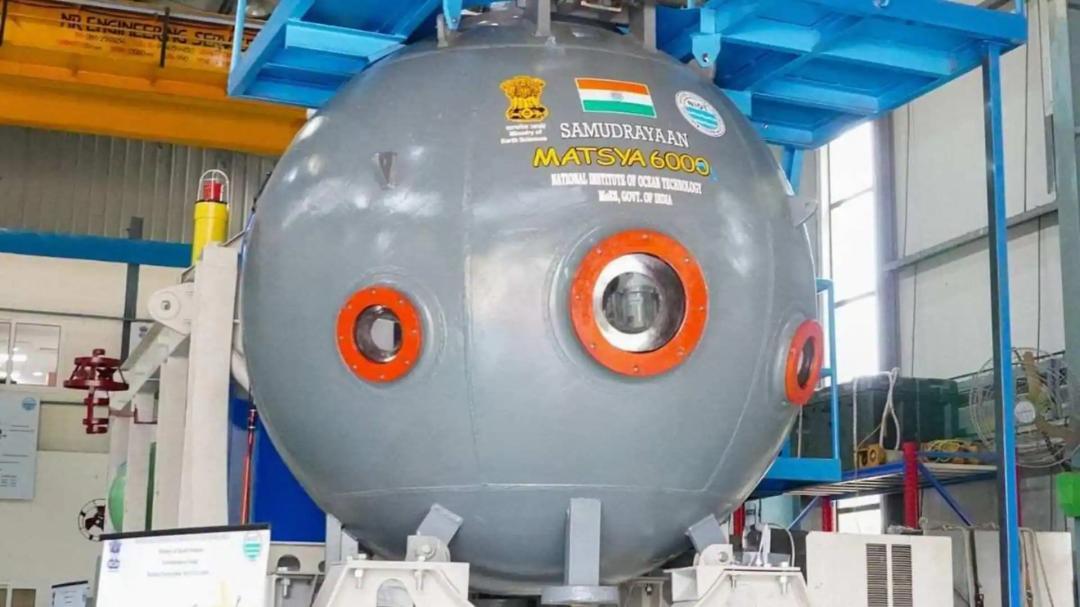
India’s ambitious Samudrayaan mission, which aims to send a manned submersible to a depth of 6,000 meters underwater, has hit a roadblock. The mission, led by the National Institute of Ocean Technology (NIOT), has been delayed due to the late delivery of a critical component from France. The component in question is syntactic foam cladding, which is vital for the submersible’s buoyancy. In this blog post, we will delve into the details of the mission, the significance of the syntactic foam cladding, and the impact of the delay on the project.
The Samudrayaan mission is a historic endeavor that seeks to explore the ocean floor, collect samples, and pave the way for deep-sea mining. The mission is a significant step forward for India’s oceanic research and development, and its success could have far-reaching implications for the country’s economy and scientific community. The mission is expected to provide valuable insights into the ocean’s ecosystem, geology, and biodiversity, which could lead to new discoveries and innovations.
The manned submersible, which is being developed by the NIOT, is designed to withstand the extreme conditions of the deep sea. The submersible will be equipped with state-of-the-art technology, including advanced life support systems, communication equipment, and sampling gear. The submersible will be capable of collecting samples from the ocean floor, conducting experiments, and transmitting data back to the surface.
However, the submersible’s buoyancy is a critical factor in its ability to operate effectively. The syntactic foam cladding, which is being supplied by a French company, is a crucial component in maintaining the submersible’s buoyancy. The foam cladding is designed to provide the necessary lift to the submersible, allowing it to dive to great depths and return to the surface safely.
The delay in the delivery of the syntactic foam cladding has pushed back the mission’s timeline. The tests, which were initially scheduled to take place earlier this year, are now expected to commence by April next year. The delay is a setback for the mission, but the NIOT is working closely with the French supplier to expedite the delivery of the component.
The Samudrayaan mission is a complex and challenging project that requires careful planning, precise engineering, and meticulous attention to detail. The mission’s success depends on the successful integration of various components, including the submersible, the life support systems, and the communication equipment. The delay in the delivery of the syntactic foam cladding is a reminder of the complexities and risks involved in such a project.
Despite the delay, the NIOT remains committed to the mission’s objectives and is working tirelessly to ensure its success. The mission’s leaders are confident that the submersible will be ready for testing by April next year and that the mission will achieve its goals. The success of the Samudrayaan mission will be a significant milestone for India’s scientific community and will demonstrate the country’s capabilities in deep-sea research and exploration.
In conclusion, the delay in India’s Samudrayaan mission is a setback, but it is not a surprise. The development of a manned submersible is a complex and challenging project that requires careful planning, precise engineering, and meticulous attention to detail. The syntactic foam cladding is a critical component, and its late delivery has pushed back the mission’s timeline. However, the NIOT is working closely with the French supplier to expedite the delivery of the component, and the tests are now expected to take place by April next year. The success of the Samudrayaan mission will be a significant milestone for India’s scientific community, and it will demonstrate the country’s capabilities in deep-sea research and exploration.
News Source: https://www.newsbytesapp.com/news/science/samudrayaan-mission-delayed-due-to-late-delivery-of-french-foam/story
About the Author