What is causing the delay in India’s Samudrayaan mission?
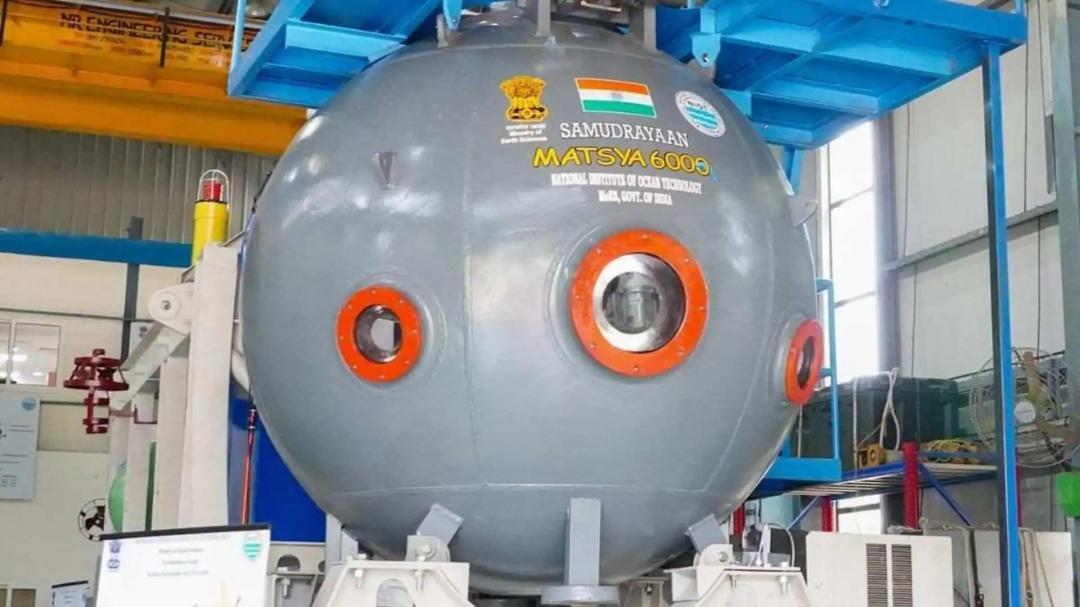
India’s ambitious Samudrayaan mission, which aims to send a manned submersible to a depth of 6,000 meters underwater, has hit a roadblock. The mission, led by the National Institute of Ocean Technology (NIOT), has been delayed due to the late delivery of a critical component from France. The component in question is syntactic foam cladding, a vital material that provides buoyancy to the submersible. The delay has pushed back the testing schedule, with trials now expected to commence by April next year.
The Samudrayaan mission is a significant undertaking for India, with the potential to unlock new avenues for deep-sea exploration, research, and even mining. The mission’s primary objective is to design, develop, and test a manned submersible that can withstand the extreme conditions of the deep ocean. The submersible will be equipped with state-of-the-art technology, including advanced life support systems, communication equipment, and sampling gear.
The NIOT, a premier research institution under the Ministry of Earth Sciences, is spearheading the Samudrayaan mission. The organization has been working tirelessly to develop the submersible, with a team of scientists, engineers, and technicians collaborating to bring the project to fruition. However, the delay in receiving the syntactic foam cladding from France has thrown a spanner in the works, forcing the team to reassess their timeline.
Syntactic foam cladding is a critical component of the submersible, providing the necessary buoyancy to maintain its stability and balance underwater. The material is made from a combination of hollow glass microspheres and a polymer resin, which provides exceptional strength, durability, and resistance to water pressure. The cladding is essential for the submersible’s ability to dive to extreme depths and withstand the crushing pressure of the deep ocean.
The delay in receiving the syntactic foam cladding has significant implications for the mission’s timeline. The NIOT had initially planned to conduct a series of tests and trials in the coming months, with the aim of deploying the submersible in the deep ocean by the end of the year. However, with the delayed delivery of the critical component, the team has been forced to push back their schedule.
The new timeline suggests that the tests will now commence by April next year, with the submersible expected to undergo a series of rigorous trials to test its performance, safety, and reliability. The trials will involve a series of dives to progressively deeper depths, with the submersible being subjected to a range of tests, including pressure hull tests, life support system tests, and communication system tests.
Despite the delay, the NIOT remains committed to the Samudrayaan mission, with the organization’s scientists and engineers working tirelessly to ensure that the submersible is ready for deployment as soon as possible. The mission’s success has the potential to unlock new avenues for deep-sea exploration, research, and mining, with India poised to join the ranks of a select group of countries that have achieved manned deep-sea submersible capabilities.
The Samudrayaan mission is a significant milestone in India’s oceanographic research program, with the potential to contribute significantly to our understanding of the deep ocean. The mission’s success will also pave the way for future deep-sea exploration and research initiatives, with India poised to play a leading role in the global effort to explore and understand the world’s oceans.
In conclusion, the delay in India’s Samudrayaan mission is a setback, but it is not a setback that will derail the project entirely. The NIOT and its team of scientists and engineers remain committed to the mission, with the organization working tirelessly to ensure that the submersible is ready for deployment as soon as possible. With the syntactic foam cladding expected to arrive soon, the team can refocus their efforts on preparing the submersible for its maiden voyage to the deep ocean.
News Source: https://www.newsbytesapp.com/news/science/samudrayaan-mission-delayed-due-to-late-delivery-of-french-foam/story
About the Author