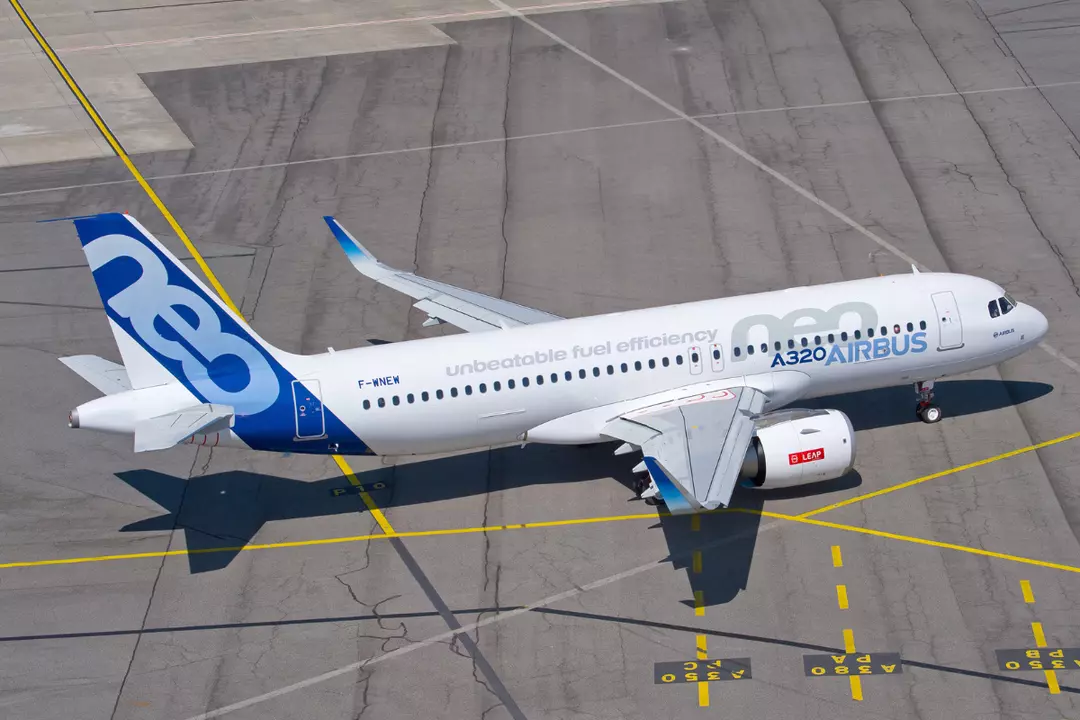
What is the Airbus A320 software issue and why are 6,000 planes grounded?
The aviation industry has been plagued by a recent software issue affecting the Airbus A320, one of the most widely used commercial aircraft in the world. The problem, which was discovered after an A320 aircraft suddenly nosedived in the US without pilot input, has led to the recall of approximately 6,000 planes. The sudden altitude loss was reportedly caused by solar radiation corrupting data in the aircraft’s ELAC (Elevator and Aileron Computer) system, which translates pilot commands to the wings and tail. This issue has raised concerns about the safety and reliability of these aircraft, and experts are working to understand the root cause of the problem.
The incident that led to the discovery of the software issue occurred when an A320 aircraft, operated by a major airline, experienced a sudden and unexpected loss of altitude while flying over the US. The plane, which was carrying hundreds of passengers, nose-dived without any input from the pilots, resulting in injuries to several people on board. An investigation into the incident revealed that the cause of the sudden altitude loss was not a mechanical failure or pilot error, but rather a software issue that was triggered by solar radiation.
The ELAC system, which is responsible for controlling the aircraft’s elevators and ailerons, relies on complex software to translate pilot commands into precise movements of the wings and tail. However, experts have discovered that solar radiation can release charged particles that can disrupt the aircraft’s electronics, including the ELAC system. This disruption can cause the system to malfunction, leading to unpredictable and potentially catastrophic consequences.
The software issue affecting the A320 is not a new problem, but rather a previously unknown vulnerability that has been exposed by the increasing levels of solar radiation in the Earth’s atmosphere. Solar radiation, also known as space weather, is a natural phenomenon that occurs when the sun emits charged particles into space. These particles can interact with the Earth’s magnetic field, causing disruptions to electronic systems and communication networks.
In the case of the A320, the solar radiation is believed to have corrupted the data in the ELAC system, causing the aircraft to malfunction and lose altitude suddenly. The investigation into the incident has revealed that the software issue is not a simple glitch, but rather a complex problem that requires a comprehensive solution.
Airbus, the manufacturer of the A320, has taken swift action to address the software issue, recalling approximately 6,000 planes and issuing a software patch to fix the problem. The recall is a precautionary measure, aimed at ensuring the safety of passengers and crew, and preventing any further incidents.
The recall of the A320 planes has significant implications for the aviation industry, with many airlines facing disruptions to their schedules and operations. The software issue has also raised concerns about the safety and reliability of other aircraft, and the potential risks associated with solar radiation.
Experts are working to understand the root cause of the software issue and to develop solutions to mitigate the risks associated with solar radiation. The incident has highlighted the importance of robust software testing and validation, as well as the need for ongoing monitoring and maintenance of aircraft systems.
In conclusion, the Airbus A320 software issue is a complex problem that has significant implications for the aviation industry. The recall of 6,000 planes is a precautionary measure, aimed at ensuring the safety of passengers and crew, and preventing any further incidents. As the investigation into the incident continues, it is clear that the software issue is not a simple glitch, but rather a previously unknown vulnerability that has been exposed by the increasing levels of solar radiation in the Earth’s atmosphere.
About the Author