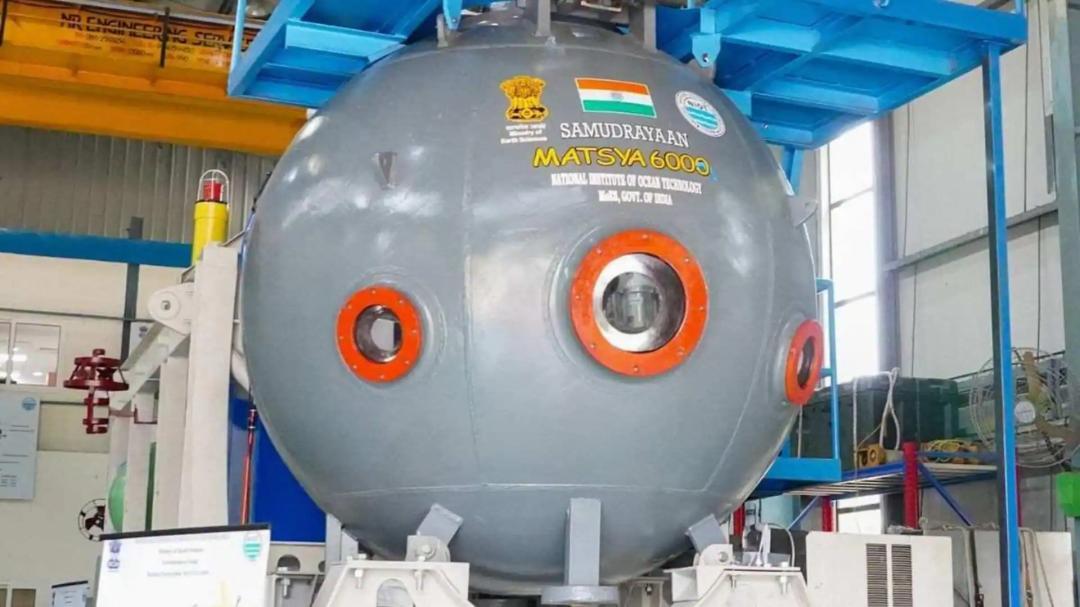
What is causing the delay in India’s Samudrayaan mission?
India’s ambitious Samudrayaan mission, aimed at sending a manned submersible to a depth of 6,000 meters underwater, has hit a roadblock. The mission, led by the National Institute of Ocean Technology (NIOT), has been delayed due to the late delivery of a critical component from France. The component in question is syntactic foam cladding, which is vital for the submersible’s buoyancy. In this blog post, we will delve into the details of the mission, the importance of syntactic foam cladding, and the implications of the delay.
The Samudrayaan mission is a significant undertaking for India, as it aims to explore the ocean floor, collect samples, and pave the way for deep-sea mining. The mission is expected to provide valuable insights into the ocean’s ecosystem, geology, and potential mineral resources. The manned submersible, designed to withstand the immense pressure of the deep sea, will be capable of carrying a crew of three scientists to the ocean floor. The submersible will be equipped with advanced sensors, sampling equipment, and communication systems, enabling the crew to collect data and samples from the ocean floor.
Syntactic foam cladding is a critical component of the submersible, as it provides the necessary buoyancy to maintain the vessel’s stability and balance underwater. The foam cladding is made from a combination of hollow glass microspheres and a polymer matrix, which provides excellent thermal insulation and resistance to water pressure. The syntactic foam cladding is essential for the submersible’s ability to dive to great depths and return to the surface safely.
The delay in the delivery of the syntactic foam cladding from France has pushed back the mission’s timeline. Initially, the mission was expected to commence in 2022, but the delay has forced the NIOT to reschedule the tests to April next year. The NIOT has been working closely with the French supplier to expedite the delivery of the foam cladding, but the delay has inevitably affected the mission’s progress.
The Samudrayaan mission is not just about exploring the ocean floor; it also has significant economic implications. The mission is expected to pave the way for deep-sea mining, which could provide India with access to valuable mineral resources such as copper, zinc, and gold. The ocean floor is believed to be rich in these resources, and the Samudrayaan mission could provide the necessary data and insights to support the development of deep-sea mining operations.
The delay in the Samudrayaan mission has also raised concerns about India’s ability to meet its deadlines for other space and ocean exploration missions. India has been actively pursuing various space and ocean exploration initiatives, including the Gaganyaan mission, which aims to send an Indian astronaut to space by 2023. The delay in the Samudrayaan mission has highlighted the challenges and complexities involved in these missions and the need for careful planning and execution.
In conclusion, the delay in the Samudrayaan mission is a setback for India’s ocean exploration ambitions. However, the mission remains a critical component of India’s efforts to explore the ocean floor and unlock its secrets. The NIOT and its partners are working tirelessly to resolve the issues and get the mission back on track. The Samudrayaan mission has the potential to make significant contributions to our understanding of the ocean and its resources, and it is essential that the mission is completed successfully.
The delay in the Samudrayaan mission serves as a reminder of the complexities and challenges involved in space and ocean exploration. It highlights the need for careful planning, execution, and collaboration between different stakeholders. Despite the delay, the Samudrayaan mission remains an exciting and ambitious undertaking, and its success could have significant implications for India’s ocean exploration and mining capabilities.
As we wait for the Samudrayaan mission to commence, it is essential to recognize the significance of this mission and the potential benefits it could bring to India. The mission has the potential to unlock new resources, provide valuable insights into the ocean’s ecosystem, and pave the way for deep-sea mining. The delay may have pushed back the mission’s timeline, but it has not diminished the excitement and anticipation surrounding this ambitious undertaking.
In the coming months, we can expect to hear more about the progress of the Samudrayaan mission. The NIOT and its partners will continue to work tirelessly to resolve the issues and get the mission back on track. As we look to the future, it is essential to recognize the importance of space and ocean exploration and the role that missions like Samudrayaan will play in shaping our understanding of the world and its resources.
News Source: https://www.newsbytesapp.com/news/science/samudrayaan-mission-delayed-due-to-late-delivery-of-french-foam/story
About the Author