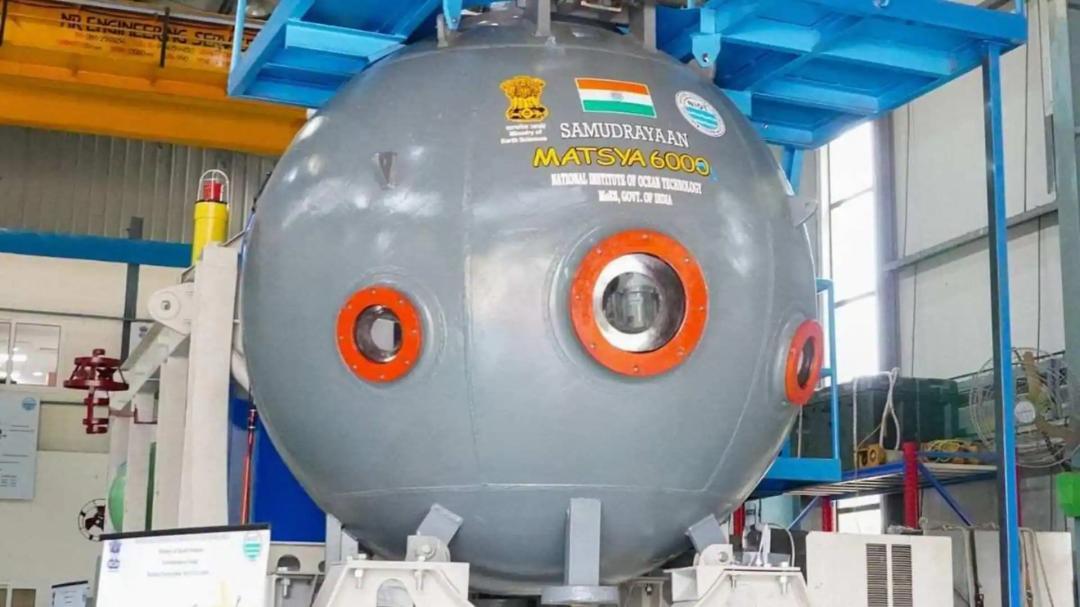
What is causing the delay in India’s Samudrayaan mission?
India’s ambitious Samudrayaan mission, aimed at sending a manned submersible to a depth of 6,000 meters underwater, has hit a roadblock. The mission, led by the National Institute of Ocean Technology (NIOT), has been delayed due to the late delivery of a critical component – syntactic foam cladding – from France. This vital component is essential for the submersible’s buoyancy, and its delay has pushed back the mission’s timeline.
The Samudrayaan mission is a significant undertaking for India, with the objective of exploring the ocean floor, collecting samples, and paving the way for deep-sea mining. The mission is expected to provide valuable insights into the ocean’s ecosystem, geology, and potential mineral resources. However, the delay in the delivery of the syntactic foam cladding has thrown a spanner in the works, and the mission is now expected to undergo tests only by April next year.
The syntactic foam cladding is a critical component of the submersible’s design, providing the necessary buoyancy to ensure the vehicle’s stability and safety at extreme depths. The foam cladding is designed to withstand the immense pressure of the deep ocean, and its late delivery has forced the mission team to reassess their timeline. The NIOT team had initially planned to conduct the tests earlier, but the delay in receiving the critical component has forced them to push back the schedule.
The Samudrayaan mission is a complex and challenging undertaking, requiring the development of advanced technologies and systems. The mission involves the design and development of a manned submersible capable of withstanding the extreme conditions of the deep ocean. The submersible must be able to withstand pressures of over 1,000 times that of the atmospheric pressure at sea level, as well as temperatures near freezing point. The development of such a submersible requires significant advances in materials science, engineering, and life support systems.
The delay in the Samudrayaan mission is a setback for India’s ambitious plans to explore the ocean floor and harness its resources. The country has been actively pursuing deep-sea mining, with the aim of extracting minerals such as copper, zinc, and gold from the ocean floor. The Samudrayaan mission is a critical step towards achieving this goal, as it will provide valuable insights into the ocean’s geology and ecosystem.
The NIOT team is working closely with international partners, including the French company that is supplying the syntactic foam cladding, to ensure that the mission gets back on track. The team is also working on developing indigenous technologies and systems to reduce dependence on foreign suppliers. This will not only help to accelerate the mission’s timeline but also enhance India’s self-reliance in critical technologies.
The delay in the Samudrayaan mission is a reminder of the challenges and complexities involved in deep-sea exploration. The development of advanced technologies and systems required for such missions is a significant undertaking, requiring significant investment and expertise. However, the potential rewards of deep-sea exploration and mining are substantial, and India is committed to pursuing this ambition.
In conclusion, the delay in the Samudrayaan mission is a setback, but it is not a roadblock. The NIOT team is working tirelessly to get the mission back on track, and the delay has provided an opportunity to review and refine the mission’s plans. The Samudrayaan mission is a critical step towards India’s ambition to explore the ocean floor and harness its resources, and its success will have significant implications for the country’s economy and environment.
As the mission team works to overcome the current challenges, it is essential to recognize the significance of the Samudrayaan mission and its potential to transform India’s deep-sea exploration capabilities. The mission’s success will depend on the team’s ability to develop and integrate advanced technologies, as well as their capacity to work with international partners to overcome common challenges.
The Samudrayaan mission is a testament to India’s growing ambitions in the field of deep-sea exploration and mining. The country is committed to pursuing this ambition, and the mission’s success will have significant implications for the country’s economy, environment, and scientific community. As the mission team works to overcome the current challenges, it is essential to recognize the significance of the Samudrayaan mission and its potential to transform India’s deep-sea exploration capabilities.
News source: https://www.newsbytesapp.com/news/science/samudrayaan-mission-delayed-due-to-late-delivery-of-french-foam/story
About the Author