What is causing the delay in India’s Samudrayaan mission?
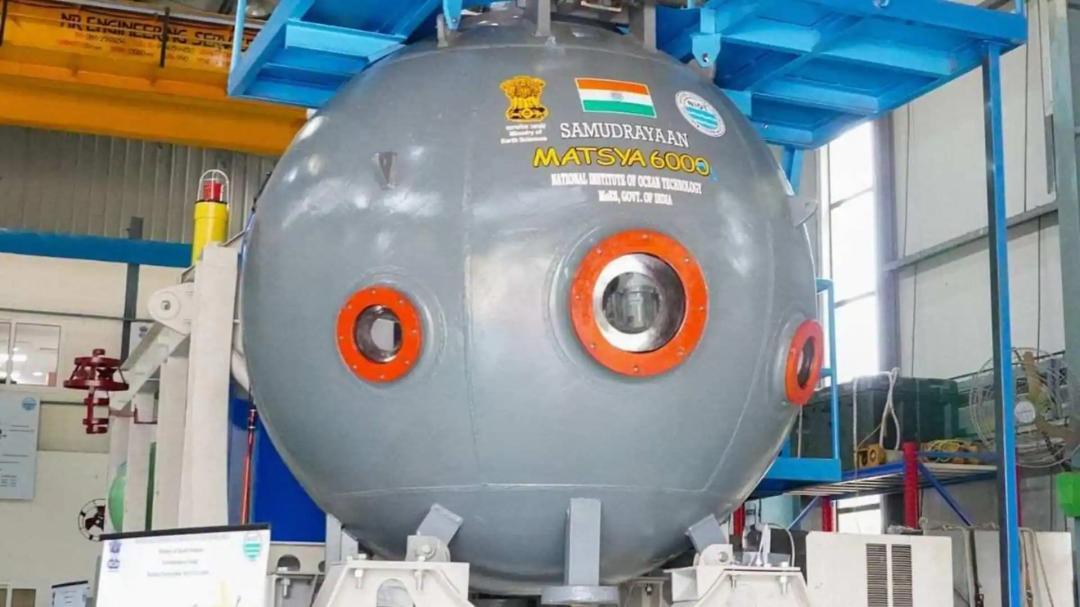
India’s ambitious Samudrayaan mission, aimed at sending a manned submersible to a depth of 6,000 meters underwater, has hit a roadblock. The mission, led by the National Institute of Ocean Technology (NIOT), has been delayed due to the late delivery of a critical component from France. The component in question is syntactic foam cladding, a vital material required for the submersible’s buoyancy. The delay has pushed back the testing schedule, with trials now expected to commence by April next year.
The Samudrayaan mission is a significant undertaking for India, with the potential to unlock the secrets of the ocean floor and pave the way for deep-sea mining. The mission aims to explore the uncharted regions of the ocean, collect samples, and conduct experiments to better understand the marine ecosystem. The submersible, designed to withstand the immense pressure of the deep sea, will be manned by a team of scientists and engineers who will embark on a journey to the unknown.
The syntactic foam cladding, sourced from a French company, is a critical component of the submersible’s design. The foam provides the necessary buoyancy to the submersible, allowing it to descend to great depths and withstand the crushing pressure of the water. Without this component, the submersible would be unable to function, making it essential to the success of the mission.
The delay in delivery of the syntactic foam cladding has significant implications for the mission’s timeline. The original schedule had envisioned the submersible undergoing tests by the end of this year, with the manned mission planned for early next year. However, with the delay, the testing schedule has been pushed back, and the mission is now expected to commence by April next year.
The National Institute of Ocean Technology (NIOT), the lead agency responsible for the Samudrayaan mission, has been working tirelessly to overcome the challenges posed by the delay. The team has been actively engaged with the French company to expedite the delivery of the syntactic foam cladding, and alternative arrangements are being explored to minimize the impact of the delay.
Despite the setback, the Samudrayaan mission remains a top priority for the Indian government, with significant investments being made to support the project. The mission has the potential to unlock new avenues for scientific research, exploration, and economic development, making it an essential component of India’s maritime strategy.
The delay in the Samudrayaan mission serves as a reminder of the complexities and challenges involved in deep-sea exploration. The development of advanced technologies, such as the submersible, requires careful planning, precise engineering, and meticulous testing. The mission’s success will depend on the ability of the team to overcome the technical hurdles and deliver a robust and reliable system.
As India prepares to embark on this ambitious journey, the country is poised to join an elite group of nations that have successfully explored the deep sea. The Samudrayaan mission has the potential to make significant contributions to our understanding of the ocean and its ecosystem, with far-reaching implications for science, technology, and economy.
In conclusion, the delay in the Samudrayaan mission is a temporary setback, and the team is working diligently to overcome the challenges. The mission’s success will depend on the ability of the team to deliver a reliable and robust system, and the Indian government’s commitment to supporting the project. As we look forward to the commencement of the mission, we can expect significant breakthroughs in our understanding of the ocean and its ecosystem.
About the Author