What is causing the delay in India’s Samudrayaan mission?
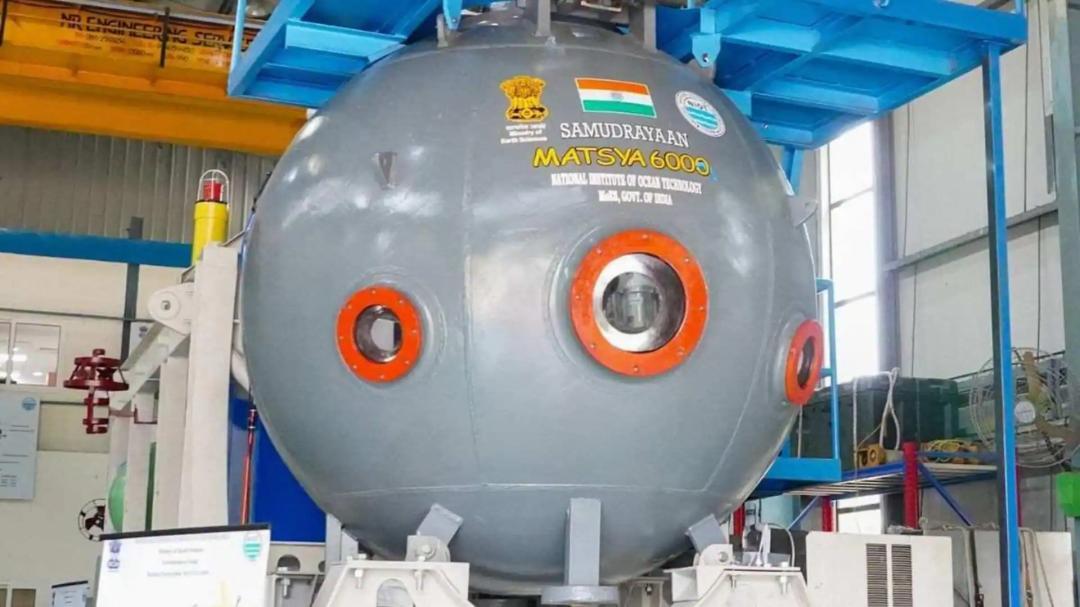
India’s ambitious Samudrayaan mission, aimed at sending a manned submersible to a depth of 6,000 meters underwater, has hit a roadblock. The mission, led by the National Institute of Ocean Technology (NIOT), has been delayed due to the late delivery of a critical component from France. The component in question is syntactic foam cladding, which is essential for the submersible’s buoyancy. In this blog post, we will delve into the details of the delay, the significance of the Samudrayaan mission, and what this means for India’s deep-sea exploration ambitions.
The Samudrayaan mission is a pioneering effort by India to explore the ocean floor, collect samples, and pave the way for deep-sea mining. The mission involves sending a manned submersible, capable of withstanding immense pressure at great depths, to the ocean floor. The submersible will be equipped with state-of-the-art technology, including sensors, cameras, and sampling equipment, to collect data and samples from the ocean floor. The mission is expected to provide valuable insights into the ocean’s ecosystem, geology, and potential mineral resources.
The syntactic foam cladding, which is being imported from France, is a critical component of the submersible’s design. The foam cladding provides buoyancy to the submersible, allowing it to maintain its position and stability underwater. Without the foam cladding, the submersible would be unable to operate safely and effectively. The delay in the delivery of the foam cladding has pushed back the mission’s timeline, with tests now expected to take place by April next year.
The delay in the Samudrayaan mission is a setback for India’s deep-sea exploration ambitions. The mission is a significant step towards exploring the ocean’s resources and understanding its ecosystem. The delay may also impact India’s plans to exploit the ocean’s mineral resources, including polymetallic nodules, which are found in abundance on the ocean floor. These nodules contain valuable metals such as copper, zinc, and nickel, which are essential for India’s growing economy.
The Samudrayaan mission is also significant from a scientific perspective. The mission will provide valuable insights into the ocean’s ecosystem, including the distribution of marine life, the impact of climate change, and the ocean’s geology. The mission will also help to advance our understanding of the ocean’s dynamics, including ocean currents, temperature, and salinity. This knowledge will be essential for predicting weather patterns, understanding the impact of climate change, and managing the ocean’s resources sustainably.
The delay in the Samudrayaan mission highlights the challenges of deep-sea exploration. The ocean is a hostile environment, with extreme pressure, temperature, and corrosion, which makes it difficult to design and operate submersibles. The mission requires significant investment in technology, infrastructure, and human resources. The delay also highlights the importance of international collaboration in deep-sea exploration. The import of syntactic foam cladding from France is a testament to the global nature of deep-sea exploration, where countries collaborate to share technology, expertise, and resources.
In conclusion, the delay in the Samudrayaan mission is a setback for India’s deep-sea exploration ambitions. However, the mission remains a significant step towards exploring the ocean’s resources and understanding its ecosystem. The delay highlights the challenges of deep-sea exploration and the importance of international collaboration. As India continues to pursue its deep-sea exploration ambitions, it is essential to address the challenges and delays that arise, to ensure that the mission is completed successfully and safely.
The Samudrayaan mission is a testament to India’s commitment to exploring the ocean and understanding its ecosystem. The mission has the potential to unlock the secrets of the ocean, provide valuable insights into its ecosystem, and pave the way for deep-sea mining. As the mission progresses, it is essential to stay updated on the latest developments, challenges, and achievements. With the tests now expected to take place by April next year, the wait for the Samudrayaan mission to commence is almost over. The world will be watching as India takes a significant step towards exploring the ocean’s depths.
News Source: https://www.newsbytesapp.com/news/science/samudrayaan-mission-delayed-due-to-late-delivery-of-french-foam/story
About the Author