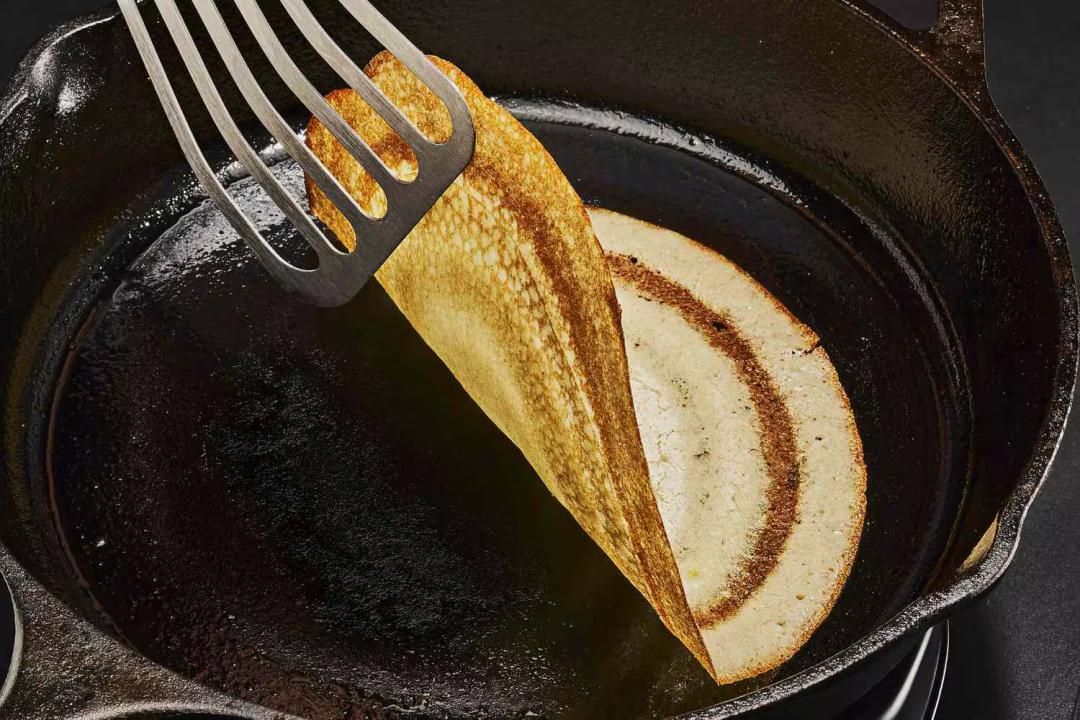
IIT-Madras professor explains why dosas are crispy on outside & soft on inside
Dosa, a traditional South Indian dish, has been a staple in many households for centuries. The delicate balance of crispy exterior and soft interior has always fascinated food enthusiasts. While many of us have tried to perfect the art of making dosas, few have stopped to think about the science behind this phenomenon. Recently, Prof Mahesh Panchagnula from IIT-Madras shed some light on the fascinating physics that makes dosas crispy on the outside and soft on the inside.
According to Prof Panchagnula, the secret to achieving the perfect dosa lies in the way the tawa (or griddle) is prepared before pouring the batter. The practice of sprinkling water on a hot tawa before cooking the dosa is not just a traditional habit, but is actually linked to a scientific phenomenon known as the Leidenfrost Effect. This effect, identified in Germany in the 18th century, explains how a liquid can float on a thin layer of vapor when it comes into contact with a hot surface.
When the tawa is not hot enough, the water sprinkled on it evaporates slowly, creating a sticky surface that can cause the dosa to adhere to it. However, when the tawa is heated to the right temperature, the water glides and floats on a thin vapor layer, creating a non-stick surface. This is where the magic happens, and the dosa starts to cook evenly, with the outside becoming crispy and the inside remaining soft.
The Leidenfrost Effect is a fascinating phenomenon that has been observed in various everyday situations, from cooking to industrial processes. In the context of dosa-making, it plays a crucial role in preventing the dosa from sticking to the tawa and allowing it to cook evenly. When the dosa batter is poured onto the hot tawa, it comes into contact with the thin vapor layer created by the sprinkled water. This layer acts as a buffer, preventing the dosa from sticking to the tawa and allowing it to cook evenly.
As the dosa cooks, the heat from the tawa causes the water molecules in the batter to evaporate, creating a crispy exterior. At the same time, the interior of the dosa remains soft and fluffy, thanks to the moisture trapped inside. The combination of the Leidenfrost Effect and the careful balance of heat and moisture creates the perfect conditions for a crispy exterior and a soft interior.
Prof Panchagnula’s explanation has sparked a lot of interest among food enthusiasts and scientists alike. The idea that a traditional cooking technique can be explained by a fundamental scientific principle is a testament to the ingenuity of our ancestors, who developed these techniques through trial and error.
In addition to the Leidenfrost Effect, there are several other factors that contribute to the crispy exterior and soft interior of a dosa. The type of batter used, the temperature of the tawa, and the cooking time all play a crucial role in determining the final texture of the dosa. However, the Leidenfrost Effect remains a critical component of the dosa-making process, and understanding it can help cooks to perfect their technique.
For those who are interested in trying their hand at making dosas, Prof Panchagnula’s explanation provides a valuable insight into the science behind this traditional dish. By understanding the Leidenfrost Effect and its role in dosa-making, cooks can experiment with different techniques and ingredients to create the perfect dosa.
In conclusion, the secret to making dosas crispy on the outside and soft on the inside lies in the combination of traditional techniques and fundamental scientific principles. The Leidenfrost Effect, identified in Germany in the 18th century, plays a crucial role in creating the perfect conditions for a crispy exterior and a soft interior. By understanding this phenomenon, cooks can perfect their dosa-making technique and create delicious, authentic dosas that are sure to impress.
News source: https://x.com/iitmadras/status/1993901259925909929
About the Author